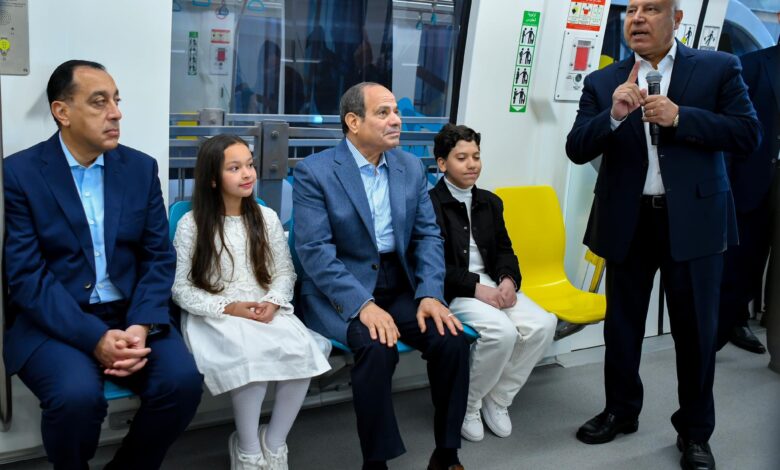
In a move that signals a profound shift in regional infrastructure, Egypt has officially inaugurated the East Nile Monorail. Stretching 56.5 kilometers from the urban density of Nasr City to the burgeoning New Administrative Capital, this project is not merely a transport link; it is a civilizational leap that places Cairo at the vanguard of global green mobility.
A Technical Masterpiece in the Heart of Cairo
The inauguration, led by President Abdel Fattah al-Sisi, unveiled a driverless system that stands as the longest single monorail line in Africa. This achievement is a testament to the country’s indefatigable efforts to modernize a transit network that has long struggled with chronic congestion. By elevating the tracks, engineers have bypassed the urban gridlock, creating a streamlined path that connects residential zones with the nation’s new financial and administrative hub.
The system, built by a consortium including Alstom, Orascom, and Arab Contractors, operates 40 state-of-the-art trains. These units are capable of reaching speeds of 80 km/h, with intervals as short as 90 seconds. Such frequency ensures that the flow of commuters remains constant, preventing the stultifying delays often associated with surface-level transport.
The Green Imperative: Sustainability and Innovation
Beyond the sheer scale, the East Nile Monorail is a triumph of eco-friendly engineering. The rubber-tyred, fully automated system is remarkably quiet, reducing noise pollution in populated areas. More importantly, it consumes approximately 30% less energy than conventional electric rail systems. This efficiency is a crucial step toward Egypt’s goal of expanding green mobility—a necessary transition in an era of global environmental concerns.
A Network of Continental Proportions
While the East Nile route holds the record for a single line, it is part of a larger, more ambitious vision. When integrated with the upcoming second line linking 6th of October City, the total network will span 96 kilometers. This will solidify Cairo’s position as the host of Africa’s largest monorail system. The network is designed for seamless integration, linking with Metro Line 3 and the Light Rail Transit, with future connections planned for Metro Lines 4 and 6.
Technical Insight: Why the Monorail System?
The concept of the “monorail” dates back to the 19th century, but it only gained significant momentum with the evolution of megacities that could no longer accommodate further underground tunneling or the sacrifice of surface-level street space.
Structural Advantage:
The monorail requires a minimal footprint. The slender columns supporting the tracks can be placed within the median strips of existing roads. This eliminates the need for extensive land expropriation or the disruption of intricate underground utilities—such as water and sewage networks—that often hinder traditional subway construction.
Acoustic Technology:
Thanks to its rubber-tyred wheels, the monorail eliminates the characteristic iron screeching of traditional trains. This makes it a silent neighbor for residential areas, hospitals, and universities along its route, significantly reducing urban noise pollution.
Automation and Artificial Intelligence:
As a fully automated, dedicated guideway system, the probability of accidents is reduced to near zero. Centralized computers manage the headway between trains with exacting precision, allowing for increased passenger capacity during peak hours without safety risks.
Visual Integration:
Unlike heavy rail, the elevated monorail offers a sleek profile that integrates with the modern urban landscape without creating a massive visual barrier, preserving the aesthetic integrity of the city.
read more :
Abdelatty Defines Gulf Security as a Fundamental Pillar of Egypt’s Regional Vision