The Sudanese Crisis Between the Failure of Fragile Settlements and Conflicting Regional and International Interests

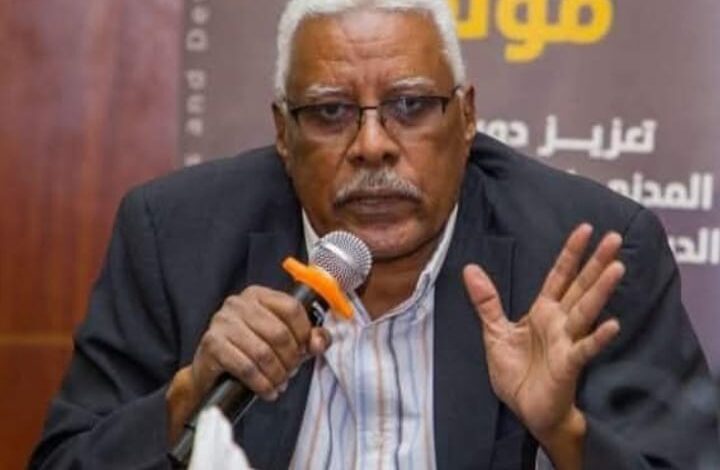
Professor Hassan Bashir Mohamed Nour
The Sudanese crisis represents one of the most complex political, humanitarian, and security crises in the region, not only because of the nature of the war and the multiplicity of local actors, but also due to the overlapping and conflicting regional and international interests surrounding Sudan.
The past three years have demonstrated that most regional and international initiatives and mediation efforts were not based on a deep understanding of the root causes of the Sudanese crisis, but rather on calculations of influence, interests, and short-term political balances, which contributed to further complicating the crisis instead of resolving it.
Numerous initiatives have emerged through different regional and international platforms, led in turn by various quadrilateral and quintilateral groups, as well as regional and international organizations.
However, the common denominator among them has been the pursuit of rapid and fragile settlements between parties involved in the war and grave violations, without genuinely addressing the structural causes behind the collapse of the Sudanese state or developing a comprehensive national project for its reconstruction.
Instead of laying the foundation for a just and sustainable peace, Sudan has often been treated merely as a crisis to be managed rather than a problem to be solved.
The Sudanese crisis is highly complex, and therefore no state, group of states, or regional and international organization will be able to contribute meaningfully to its resolution unless it adopts a proper approach that addresses the roots of the problem rather than merely its symptoms.
A sound approach cannot be based on creating a temporary political settlement between armed centers of power; rather, it must focus on protecting Sudan’s unity and territorial integrity, safeguarding its national security, preserving its resources and strategic interests, while simultaneously building a democratic civilian system of governance founded on popular legitimacy, the rule of law, and strong institutions.
Any serious project for resolving the crisis must also be based on justice and the rejection of impunity, since ignoring the crimes and widespread violations committed during the war constitutes a guaranteed recipe for reproducing violence and collapse.
Modern history in the region and around the world demonstrates that settlements based on bypassing justice and recycling armed elites into fragile political arrangements inevitably collapse, plunging countries into new and even more violent and complex cycles of conflict.
Real peace in Sudan cannot be achieved without a broad national project to rebuild the state on new foundations. This must include reforming state institutions, restructuring the Sudanese economy, uprooting corruption, reforming military and security institutions, and launching a national reconciliation process based on truth, justice, and fairness.
Such a process must involve broad participation from Sudan’s diverse political, civil, and societal components, while excluding all those proven responsible for crimes and violations from political participation until justice and accountability mechanisms are completed.
The greatest danger threatening Sudan and the region today is the growing tendency to impose settlements based on balances of power, weapons, and narrow external interests rather than on the interests of peoples and the stability of states.
Such settlements, even if they temporarily succeed in achieving a ceasefire or power-sharing arrangement, will remain distorted, fragile, and short-lived because they ignore the real causes of war and collapse. Moreover, they institutionalize a culture of impunity and transform violence into a legitimate means of acquiring power and achieving political gains.
The danger of such settlements is not limited to Sudan alone but extends to its entire regional environment. Due to its geographical location, resources, and open borders, Sudan constitutes a central element in the security and stability of the region.
Any prolonged disintegration of the Sudanese state or its transformation into an open arena for regional and international conflict would have serious repercussions on regional security, trade and migration flows, the spread of armed groups, arms and human trafficking, in addition to deepening economic and humanitarian crises throughout the region.
Some regional political projects that view Sudan as a sphere of influence, a source of resources, or a battleground for reshaping geopolitical balances deal with the Sudanese crisis through the logic of narrow interests rather than through the logic of peoples’ stability and their right to build stable national states.
This short-sighted approach threatens not only Sudan but the future of the entire region, because genuine stability cannot be built through weakening states, fragmenting societies, and fueling internal conflicts.
Such a vision may not be acceptable to many regional and international decision-making circles in the context of an unstable and contradiction-filled international order, especially in the case of a country suffering from exhaustion and institutional failure such as Sudan.
Nevertheless, the course of events over recent years has proven beyond any doubt that ignoring the roots of the crisis, relying on temporary settlements, and seeking to recycle the crisis rather than resolve it have all led to further collapse and fragmentation.
Today, the Sudanese state is disintegrating before the eyes of the world, while the international community contents itself with endless statements, conferences, and remote crisis management. Indeed, some actors have found in the Sudanese tragedy an opportunity to achieve political, economic, and commercial gains at the expense of the suffering of millions of Sudanese people facing war, displacement, hunger, and the total collapse of public services.
Sudan today does not need another fragile political settlement. Rather, it needs a historic project to re-establish the national state on the foundations of justice, citizenship, democracy, and balanced development.
It also needs an independent national will that recognizes that the future of the country cannot be built through temporary deals or dependence on external actors, and that genuine peace can only be achieved by addressing the roots of the crisis, ensuring justice, and safeguarding the dignity of the Sudanese people and their right to a stable and just state capable of protecting their interests and future.
read more
Mekki Elmograbi : Ethiopia Must Stop Supporting RSF, Sudanese Civilians Are Paying the Price