” Sentinel of Memory”: How Boubacar Boris Diop Transformed African Trauma into Universal Truth

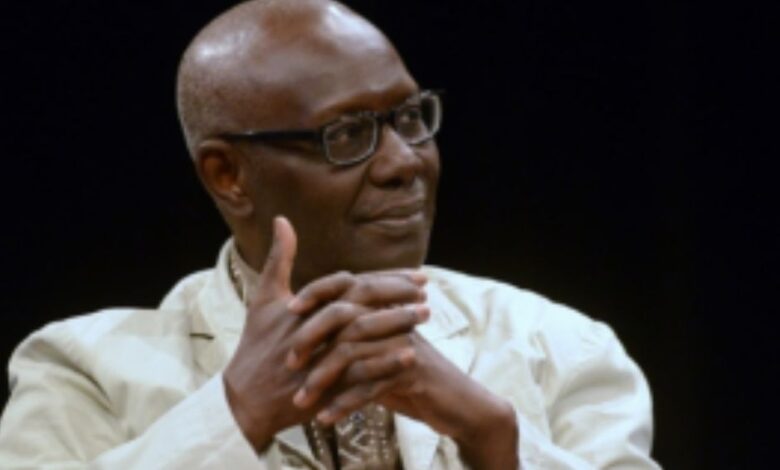
Boubacar Boris Diop, the eminent recipient of the 2022 Neustadt International Prize for Literature, is not merely a novelist; he is a cartographer of the African soul, Born in the vivid city of Dakar in 1946, Diop’s intellectual journey began in the classrooms of Senegal, where he taught literature and philosophy.
This dual background—the lyrical beauty of letters and the strict logic of philosophy—provided him with the luminous tools necessary to deconstruct the complex realities of a post-colonial continent.
As a journalist, he was a pioneer of the free press, founding the independent newspaper Sol, where he cultivated a voice characterized by absolute integrity and a refusal to bow to political practicality.
However, the crucial moment of Diop’s life and career arrived in the late 1990s.
While many intellectuals remained sheltered in the veil of blindness, Diop accepted an invitation to the Duty of Memory project in Rwanda. Standing amidst the bone-chilling silence of Murambi, surrounded by the physical remains of the 1994 genocide, Diop underwent a deep internal metamorphosis.
He realized that the traditional role of the writer was insufficient; he had to become a vessel for the voices that history had attempted to erase.
From this instinctive encounter with horror, he produced his most celebrated work, Murambi: The Book of Bones.
In Murambi, Diop achieved what Toni Morrison described as a miracle.
He exceeded the limitations of partisan narrative by blending the testimonies of the victims with the chillingly ordinary rationalizations of the persecutors.
By doing so, he did not just report on a massacre; he performed a literary autopsy on the nature of evil. This novel, eventually listed among Africa’s 100 Best Books of the 20th Century, stands as a great act of resistance against the roaring lights of global indifference.
It transformed a localized ethnic tragedy into a universal Logos, forcing the world to acknowledge the fragility of our shared humanity.
Yet, Diop’s rebellion was not limited to themes of memory and trauma; it extended to the very medium of expression. In a bold act of linguistic decolonization, he turned his back on the prestige of French to write in his native tongue, Wolof.
His novel Doomi Golo is a testament to his belief that knowledge and light are most potent when expressed in the language of one’s ancestors.
By choosing Wolof, Diop challenged the dominance of colonial languages, asserting that African tongues possess the sophistication to articulate the most complex philosophical and artistic truths.
This transition was not a retreat into provincialism, but a journey toward a genuine universality.
Today, Diop continues to be a persistent voice in the foreign press, contributing to outlets like Neue Zürcher Zeitung and Afrique, perspectives et réalités.
His work serves as a spearhead for a new generation of African thinkers who seek to reconcile their heritage with the demands of the modern world.
Whether he is advising a cultural minister in Dakar or receiving international awards in New York, Diop remains anchored in his centric vigilance.
He understands that the writer’s pen is a sacred instrument, one that must be used to illuminate the facts without distortion, ensuring that the light of truth remains unconquerable.
read more
Kwame Nkrumah … From the Struggle for Ghana’s Independence to the Dream of African Unity