Eritrea has hit back at its neighbour Ethiopia describing accusations that its troops were on Ethiopian territory as “false”.
On Saturday, a letter sent from Ethiopia’s foreign minister to his Eritrean counterpart demanded that the soldiers withdraw.
It also accused Eritrea of “outright aggression” saying it was conducting joint manoeuvres with Ethiopian rebels in the north and supplying them with weapons. In its response Eritrea said this was part of a “spiral of hostile campaigns against Eritrea for more than two years”.
There has long been a history of tension between Ethiopia and Eritrea, which split off from its larger neighbour three decades ago, and there are fears of a renewed conflict with escalating war of words between both parties which triggers fears of stark confrontation .
The two had been allies in Ethiopia’s recent civil war when Eritrea supported its army against Tigrayan forces, but things have once again soured.
Relations between the two Horn of Africa countries have long been fraught but in recent months, Addis Ababa has accused Eritrea of supporting insurgents on Ethiopian soil , allegations Asmara denies.
Addis Ababa also accused Asmara of collaborating with rebel groups fighting federal forces, particularly in the Amhara region, labelling them not “just provocations but acts of outright aggression”.
One of the points of tension is the call from landlocked Ethiopia for access to the sea, which Abiy has described as an existential matter. He said that losing a port as a result of Eritrean independence was a “mistake”.
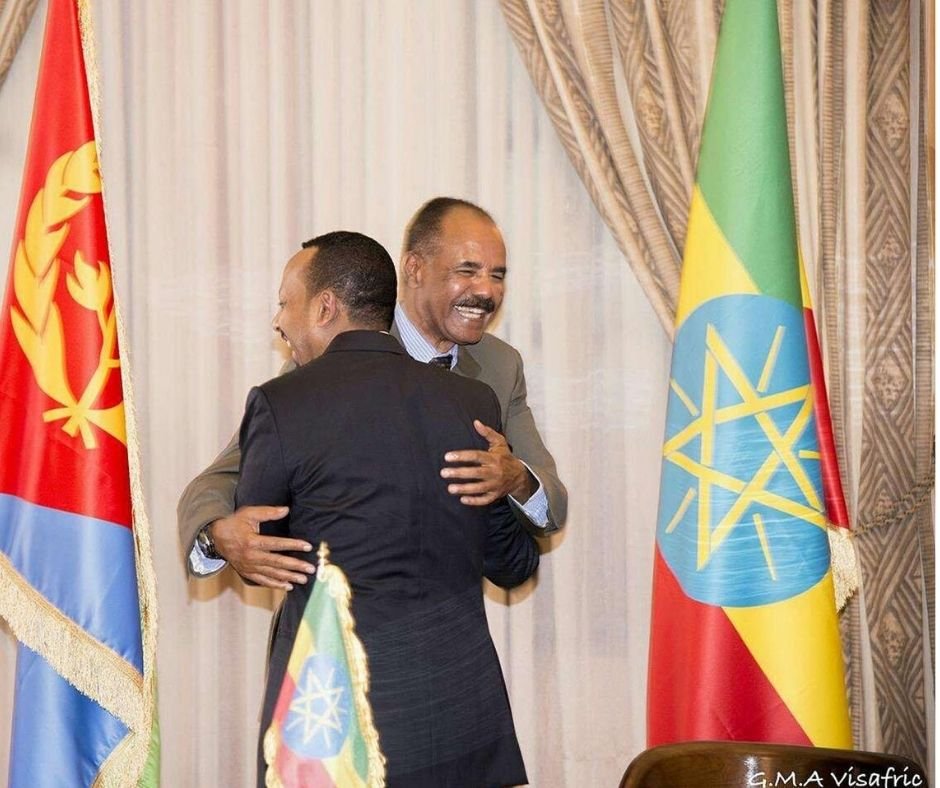
The countries fought a border war between 1998-2000 in which more than 100,000 people died. A peace deal was never fully implemented and relations only eased after Ethiopia’s Prime Minister Abiy Ahmed, who later won the Nobel Peace Prize for his efforts, travelled to the Eritrean capital, Asmara, in 2018.
In his letter, the foreign minister said that if Eritrea’s soldiers withdraw then the two countries could start talks including over “the issue of access to the sea through the port of Assab”.
In its response, Eritrea’s information ministry said the “patently false and fabricated accusations… [were] astounding in its tone and substance, underlying motivation, and overarching objective.
“As underlined before, the Government of Eritrea has no appetite for, or desire to, engage in meaningless acrimony to add fuel and exacerbate the situation.”
Last week, in a further sign of deteriorating relations, Abiy said for the first time that during to the 2020-2022 civil war in Tigray Eritrean troops had massacred people in the Ethiopian city Aksum. These were allegations Eritrea had previously denied following reports of mass killings that took place in the historic city in November 2020.
In shifting alliances, Ethiopia now says that Eritrea is supporting rebels in Tigray who oppose the peace deal that ended the civil war.
Last month, Ethiopian police said they seized thousands of rounds of ammunition sent by Eritrea to rebels.
Eritrea denied the allegation and accused Ethiopia of “floating false flags to justify the war that it has been itching to unleash for two long years”.