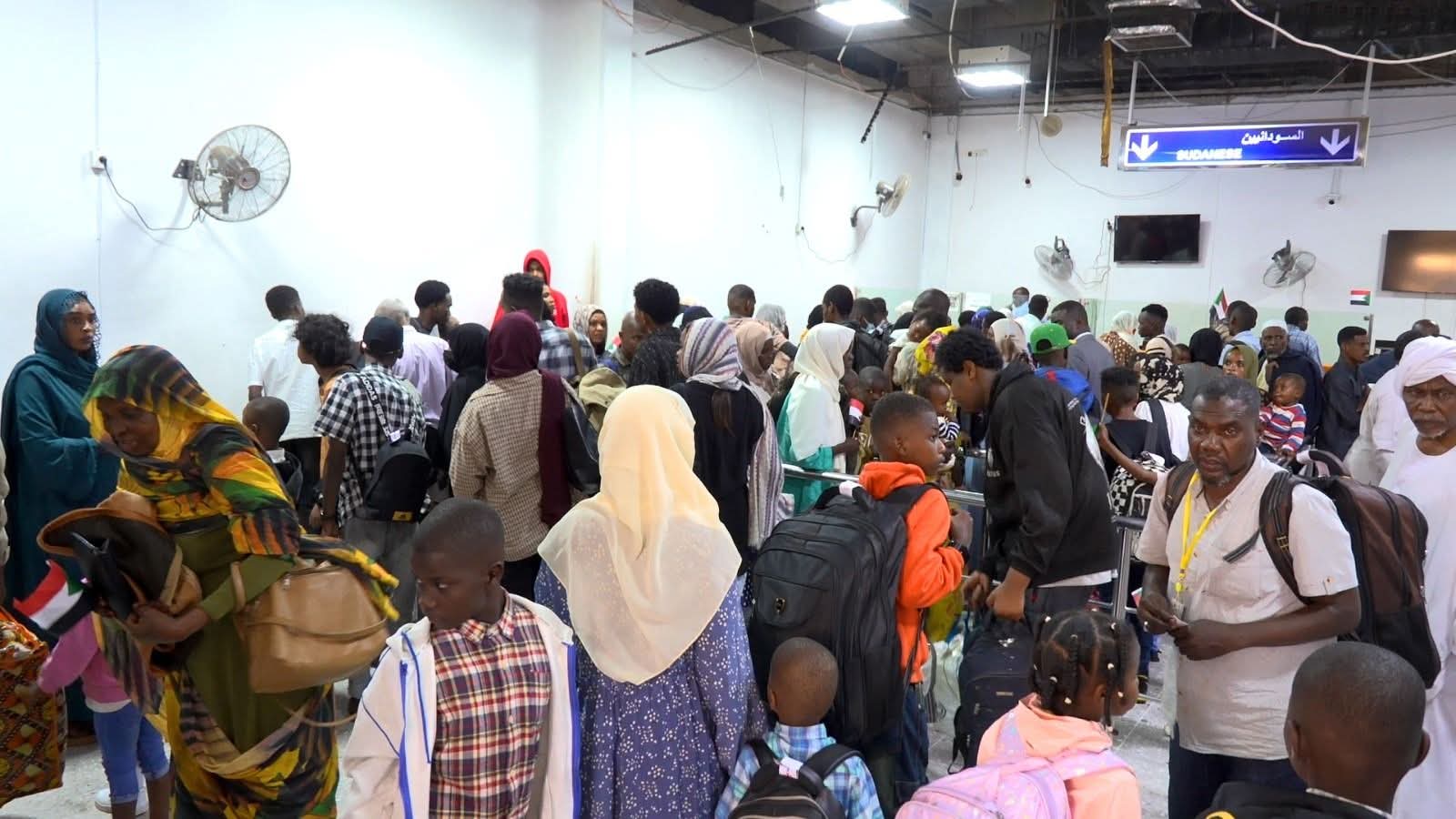
Port Sudan International Airport welcomed on the first group of Sudanese refugees voluntarily returning from Uganda, nearly three years after war forced them to flee.
The first flight carrying them, chartered by a non-governmental committee in Uganda, touched down with 150 returnees on board, most originally from the capital Khartoum.
Since mid-April 2023, the Sudanese Armed Forces and the paramilitary Rapid Support Forces have been engaged in a war that has killed tens of thousands of people and displaced millions both within Sudan and beyond.
As government forces have regained control over large parts of central Sudan, the number of returnees has risen in recent months. Official figures indicate the largest influx has been into Khartoum State, home to the capital.
Still, returning home does not mean returning to stability.
On Jan. 29, the International Organization for Migration reported that more than three million people had returned to their areas of origin in Sudan, despite the extensive damage to housing, basic services and vital infrastructure.
The organization warned that the return could become “another chapter of hardship,” and called for sustained funding to meet growing needs in return areas.
Some 4.3 million Sudanese refugees remain displaced within the region, most of whom are in Egypt and eastern Chad.
The Sudan war erupted in mid-April 2023, with the national army and the paramilitary Rapid Support Forces (RSF) locked in a brutal power struggle.
Mamadou Dian Balde, UNHCR’s Regional Director for Eastern and Southern Africa, said the need for a fourth annual appeal underscores the relentless impact of the war and a humanitarian response struggling to keep up.
“Sudan remains the world’s largest displacement and worst humanitarian crisis, unfolding in the wake of the most severe global funding crunch in decades,” he told journalists in Geneva.
As fighting continues in several parts of the country, essential services have collapsed while humanitarian access remains restricted in many areas.
“Thousands of people continue to flee across borders each week, often arriving in already vulnerable yet generous regions, where public services and economic opportunities were limited even before the crisis,” he said.
According to a recent report from the UN Human Rights Office based on victims and witnesses’ testimonies, more than 6,000 people were killed in three days when Sudan’s paramilitary Rapid Support Forces (RSF) captured the city of El Fasher last year. The key city of Darfur came under 18 months of sustained siege. This is where some of the most harrowing stories have emerged out of this brutal conflict.
“There are millions of children who’ve had to flee their homes several times, not only once or twice, but more than that,” underlined Ms. Hinds.
These children end up in camps for internally displaced, which are very difficult places to grow up in, with cramped spaces and very limited access to safe water, food and opportunities to continue learning.
“Their sense of safety has been shaken as they’ve been forced to flee and they’ve seen things that many children have never seen and should never see,” she said.
Their routines, friendships and sense of security have been completely upended as they struggle with the most basic things, such as getting food and enough water to drink and wash.
MSF urges warring parties in Sudan to immediately spare civilians and humanitarian workers