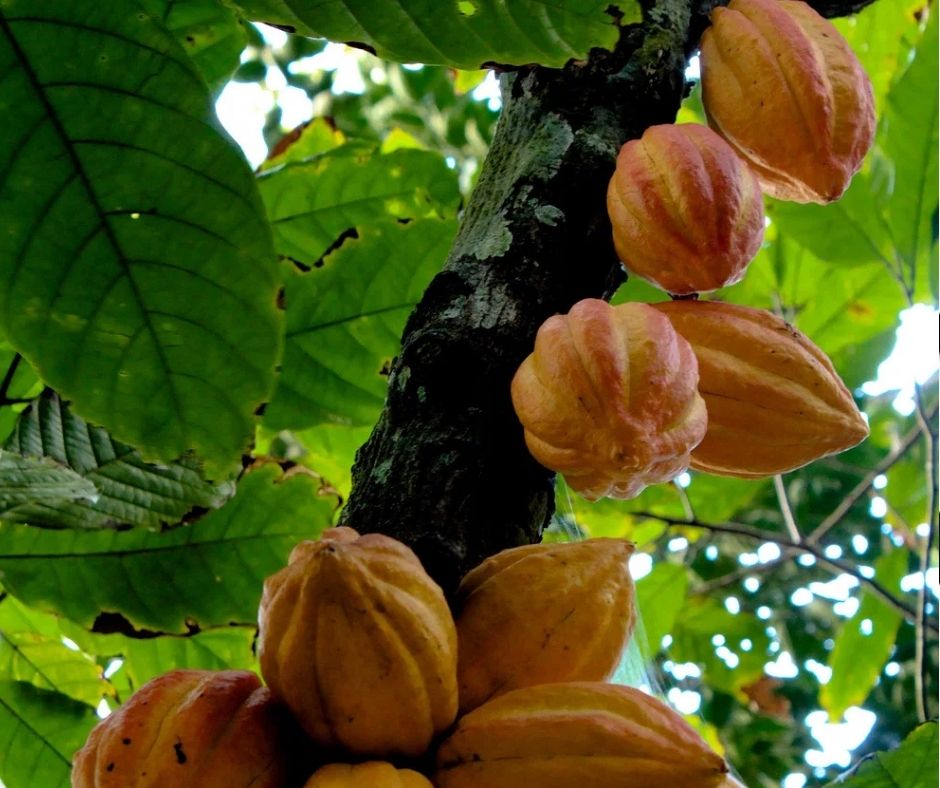
The cocoa tree (Theobroma cacao) is an exceptionally fragile species. It requires specific conditions—high humidity, constant rain, and nitrogen-rich soil—found only within 20 degrees north and south of the Equator.
The world’s chocolate supply is under immediate threat, according to a series of climate and economic reports highlighted by Le Figaro.
Experts warn that if current environmental trends continue, chocolate as we know it could effectively disappear from mass-market shelves by the year 2050.
The Climatic Trap: The 2.1°C Threshold
The primary driver of this crisis is the extreme sensitivity of the Theobroma cacao tree. Production is heavily concentrated in a narrow “Cocoa Belt” near the Equator.
- Evapotranspiration: According to climate models, a projected temperature rise of 2.1°C in West Africa (specifically Côte d’Ivoire and Ghana) will not only stress the trees but will cause a massive loss of moisture through evaporation.
- Geographic Displacement: As the lowlands become too dry, cultivation would need to move to higher altitudes. However, these areas are often protected mountainous rainforests, creating a conflict between food production and environmental conservation.
The Structural Deficit:
Le Figaro highlights a deepening “structural deficit” in the global market. We are currently witnessing a historic era where global demand for cocoa consistently outpaces production.
- The Asian Demand Surge: The emergence of a massive middle class in China and India has transformed chocolate from a niche product into a daily craving for billions, causing stocks to dwindle.
- Price Volatility: The result is a sharp spike in raw cocoa prices on international exchanges, signaling the end of “cheap chocolate.”
The Triple Threat: Labor, Age, and Disease
Beyond the weather, the industry faces three internal collapses:
- Aging Trees: Most plantations have reached the end of their biological productivity cycle, leading to smaller and weaker harvests.
- Generational Flight: Young people in farming communities are migrating to urban centers, leaving an aging workforce unable to manage the labor-intensive demands of cocoa harvesting.
- Pathogens: Fungal diseases and “Black Pod” rot currently destroy nearly 30% to 40% of the global crop annually—a figure expected to increase as trees become climate-stressed.
Record high gold prices help South Africa to revive sector — WSJ reports