The Economic Community of West African States (ECOWAS) has voiced deep concern over the recent escalation of tensions in the Gulf region. In a statement issued , ECOWAS aligned itself with the African Union Commission’s assessment of the situation, noting that the intensification of military actions poses a significant risk of widening instability in the Middle East, with potential repercussions for international peace and security. This unrest could severely impact global energy markets, trade, and food supply chains, particularly affecting vulnerable regions, including Africa.
ECOWAS therefore calls on all parties to exercise maximum restraint and to act in full compliance with the United Nations Charter and international law, particularly the principles of sovereignty, territorial integrity, and the peaceful settlement of disputes. The protection of civilian lives and critical infrastructure must remain paramount,” the statement said. ECOWAS also calls for renewed diplomatic initiatives within established international and regional frameworks to promote dialogue, mitigate tensions, and restore stability in the region.
ECOWAS reiterates West Africa’s firm commitment to multilateralism and the peaceful resolution of disputes, highlighting the importance of collaborative efforts in ensuring lasting peace and stability in the Gulf region and beyond.
Additionally , The Nigerian government has expressed deep concern about the evolving situation in the Middle East following military operations by Israel and the United States against targets in Iran. In a formal response to the surge in hostilities late Saturday, the Ministry of Foreign Affairs noted the impact of these developments on regional stability and international security, saying they pose “grave consequences.”
Read also : The Middle East on Fire: The United States and Iran Enter Open Conflict
“Nigeria calls on all parties to exercise maximum restraint and refrain from actions that could intensify hostilities, and prioritize dialogue over confrontation,” the foreign ministry said, emphasizing the imperative of restraint in the use of lethal force to prevent further loss of civilian lives and avoid any actions that could undermine established norms of international law. It added that as a longstanding advocate of non-alignment, multilateralism, and constructive engagement, Nigeria supports renewed diplomatic efforts within established international and regional frameworks to resolve the crisis.
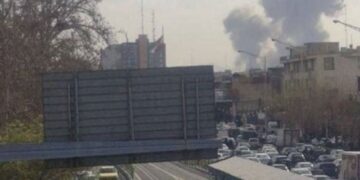
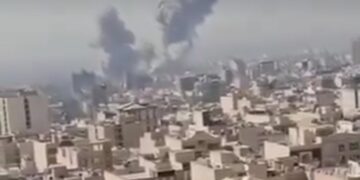
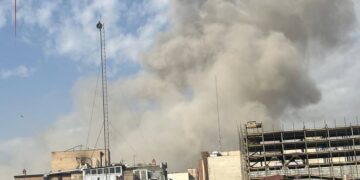
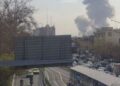
The Israeli military said on Sunday that it struck targets deep inside Tehran, a day after a joint US-Israeli attack killed Iran’s supreme leader Ali Khamenei. “The IDF is striking targets that belong to the Iranian terror regime in the heart of Tehran,” the military said. “Over the past day, the Israeli Air Force conducted large-scale strikes in order to establish aerial superiority and to pave the path to Tehran.”
The Israeli military revealed on Sunday that Khamenei was killed in large-scale operation carried out by the Israeli air force. It added that its initial strike on Iran the previous day killed 40 senior commanders along with Khamenei. “The first step of this operation was the opening strike in which we eliminated 40 senior commanders, including Khamenei, in one minute in two different locations over a thousand miles from Israel in broad daylight,” military spokesman Lieutenant Colonel Nadav Shoshani told journalists.
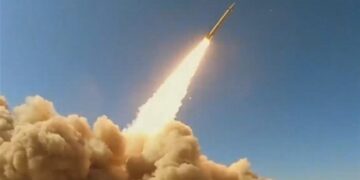
ran for its part said on Sunday that it launched a new wave of missile and drone strikes targeting US military bases in the region and Israel, state media said, in retaliation for a massive attack that killed supreme leader Ali Khamenei. US President Donald Trump on Sunday threatened Iran against retaliating saying that if they do “we will hit them with a force that has never been seen before.”
Read more :
Iran hit with more strikes after Khamenei’s death.. Trump issues new warning