Solar Gold Rush: Investors from Washington to Beijing Alerted by Nigeria’s $750M Mini-Grid Rollout

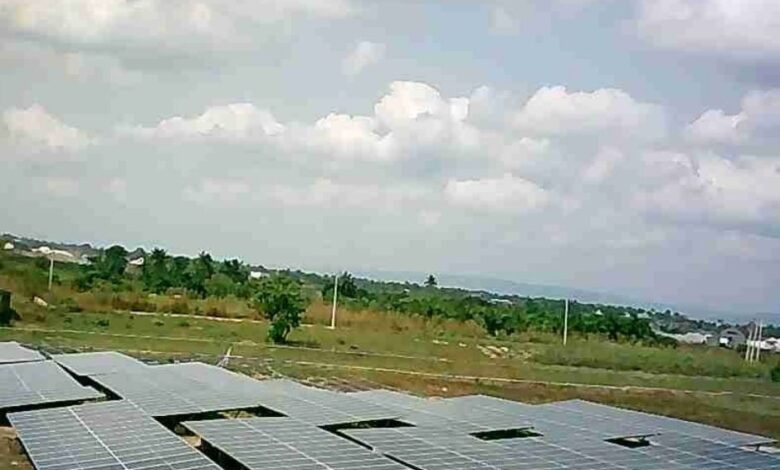
Nigeria has launched an ambitious $750 million renewable electrification programme aimed at expanding electricity access through solar mini-grids and off-grid power systems, a move officials say could unlock over $1.1 billion in private investment and reshape the country’s energy landscape. The programme is expected to mobilise $1.1 billion in private-sector funding and improve access to power for underserved communities.
Large-scale solar projects under the Energising Education Programme are providing electricity to universities and teaching hospitals. Government agencies and public institutions are also benefiting from the National Public Sector Solarisation Initiative, which reduces reliance on costly generators.
The initiative, being implemented by the Rural Electrification Agency (REA), is expected to deploy 1,350 solar mini-grids nationwide, including 250 interconnected systems that will feed power directly into Nigeria’s national grid. Speaking in Abuja during a visit by a delegation from the National Judicial Institute, REA Managing Director Abba Aliyu described the programme as a landmark intervention in Nigeria’s decades-long struggle with electricity shortages.
“For the first time, we are witnessing the implementation of the biggest publicly funded renewable electricity project in the entire world. It is a $750 million project that will catalyse $1.1 billion in private sector funding to deploy 1,350 mini-grids across the country,” Aliyu said.
Nigeria, Africa’s most populous nation, continues to face persistent power supply challenges despite decades of reforms and investments in the electricity sector. Millions of households and businesses rely on diesel and petrol generators due to unreliable grid power, leading to high operating costs and environmental concerns.
Officials believe decentralised solar systems could provide a faster and cleaner solution for underserved communities, particularly in rural areas where extending the national grid is expensive and slow.
Aliyu said the mini-grid programme is designed to provide electricity to communities currently outside the grid while strengthening existing infrastructure by integrating some of the new solar installations directly into the national power network.
Beyond rural electrification, the REA is also expanding solar power projects through its Energising Education Programme, which provides dedicated renewable electricity to universities and teaching hospitals.
According to Aliyu, 15 large solar projects have already been completed under the initiative, including installations capable of supplying entire campuses.“In one of the projects, we deployed 12 megawatts in a single university to power the campus, the teaching hospital, and even the water treatment plant through a new distribution network,” he said.
Public institutions to receive dedicated solar power under new initiative
Solar power systems have already been deployed in several federal institutions, including the University of Maiduguri, Federal University Gashua in Yobe State, the Federal University of Agriculture in Akure, and universities across Nasarawa, Kogi, Imo, Ebonyi, Rivers, Akwa Ibom, and Cross River states. Aliyu added that another eight large solar installations are in the pipeline, targeting institutions such as the University of Lagos, the University of Ibadan Teaching Hospital, the University of Nigeria, Nsukka, the University of Benin, Federal University Wukari in Taraba State, and Federal University Dutse in Jigawa State.
The federal government is also scaling up renewable electricity for public institutions through the National Public Sector Solarisation Initiative, which Aliyu said has received ₦100 billion in funding, equivalent to roughly $74 million based on recent exchange rates. The programme is intended to reduce electricity costs for government agencies while improving power reliability in critical facilities.
Installations have already begun in several institutions, including the Department of State Services, the Economic and Financial Crimes Commission, the Independent Corrupt Practices and Other Related Offences Commission, and the National Hospital in Abuja.
Aliyu noted that additional educational institutions are also being integrated into the programme as part of a broader strategy to stabilise power supply across Nigeria’s public sector. “The essence of that programme is to provide intervention for public institutions that are underserved or facing difficulty paying for the electricity they consume,” he said.
For global investors, the scale of Nigeria’s solar rollout signals growing opportunities in Africa’s largest economy, particularly as governments across the continent accelerate the transition toward decentralised and renewable power systems. With its combination of public funding, private investment incentives, and expanding infrastructure projects, Nigeria’s latest energy push could become one of the most closely watched renewable programmes in emerging markets.
Egypt Offers Condolences to Nigeria Following Terrorist Attack in Zamfara State