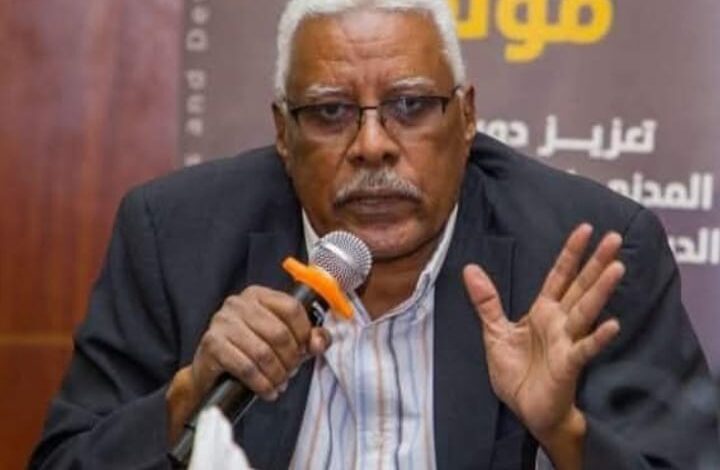
By Professor Hassan Bashir Mohamed Nour
Did the Berlin Conference rise to the level of Sudan’s catastrophe?
The recent Berlin Conference on Sudan carried symbolic importance in keeping the Sudanese crisis within the sphere of international attention. Yet, in practical terms, it did not produce a meaningful political or humanitarian breakthrough. Most of its conclusions merely reiterated familiar principles that had already been emphasized in previous meetings, without moving toward new implementation mechanisms or addressing the structural gaps that continue to undermine crisis management.
Several critical shortcomings deserve closer examination.
Failure to Establish a Binding Humanitarian Ceasefire Mechanism
Although the conference repeatedly emphasized the protection of civilians, it failed to propose a clear timetable for a humanitarian ceasefire. More importantly, it did not establish an independent monitoring mechanism capable of supervising any potential cessation of hostilities.
No accountability framework was introduced for parties obstructing humanitarian assistance, nor were any binding regional or international obligations imposed on the warring sides. What was urgently needed was a joint international mechanism involving the United Nations, the African Union, and IGAD to oversee a temporary humanitarian truce and ensure compliance on the ground.
Insufficient Attention to Humanitarian Corridors
The conference also failed to adequately address one of the most urgent priorities: secure humanitarian access.
Areas such as Darfur and Kordofan are experiencing some of the worst humanitarian conditions in Sudan, yet the conference did not sufficiently address:
the opening of safe humanitarian corridors into inaccessible regions;
protection for food and medical convoys;
the restoration of humanitarian air bridges;
concrete safeguards for aid workers;
and the prevention of starvation from being used as a weapon of war.
These are not secondary concerns. Millions of Sudanese civilians remain beyond the reach of regular humanitarian assistance across vast and devastated regions.
Neglect of the Parallel Economic Collapse
As has often been the case in international conferences on Sudan, the deeper economic crisis running parallel to the war was largely ignored.
While humanitarian relief received attention, the conference did not seriously confront:
the collapse of Sudan’s banking system;
the severe depreciation of the Sudanese pound;
the destruction of household incomes;
the dramatic rise in poverty;
and the near paralysis of local markets.
Equally concerning is the collapse of agricultural production, which remains central to both food security and the livelihoods of millions of Sudanese citizens.
A credible conference should have discussed an emergency economic stabilization program aimed at:
preserving purchasing power;
financing food supply chains;
supporting agricultural production;
stabilizing exchange rates;
and sustaining essential services such as healthcare and education.
Such measures would not serve the armed parties. They would serve the survival of Sudanese society itself.
Weak Practical Protection for Women and Children
Despite repeated rhetorical references by international organizations to the protection of women and children, the conference did not prioritize enforceable action.
Insufficient attention was given to:
combating sexual violence;
protecting child soldiers;
supporting education in displacement camps;
and creating specialized protection systems for vulnerable groups
These issues were acknowledged in language, but not translated into operational commitments.
Symbolic Participation Versus Real Influence
Another notable weakness was the presence of actors whose participation appeared more symbolic than substantive.
Several delegations represented:
small European states with limited involvement in Sudan;
regional organizations with largely procedural roles;
and Sudanese political figures with little or no meaningful influence inside the country.
At the same time, more consequential actors were either absent or insufficiently engaged, including regional powers with leverage over the conflict and institutions capable of monitoring or restricting arms flows to the belligerents.
Broad attendance does not necessarily translate into political effectiveness.
The Missing Strategic Question
The significance of the conference did not lie primarily in Germany itself, nor in the secondary actors present, but rather in whether the European Union as a collective intends to engage more seriously in Sudan.
However, the absence of the key diplomatic grouping led by the United States raises important questions:
If a future settlement emerges through the Quartet framework, will the European Union play a meaningful role in shaping that process?
This question becomes more significant amid growing strategic tensions across the Atlantic between Washington and European capitals. Britain may retain a larger role because of its historical involvement in Sudan, but how a future American administration may handle the Sudan file remains uncertain.
What the Conference Needed to Achieve a Breakthrough
The Berlin Conference might have achieved greater results had it included several missing elements.
1. A Smaller Contact Group
Instead of a broad diplomatic gathering, the conference could have created a smaller and more effective contact group including:
Germany and the European Union;
the United States and other Quartet members;
the African Union;
and the United Nations.
Such a body could have been given direct authority to pressure the warring parties.
2. Conditional Funding
Financial assistance should have been linked to measurable political conditions, including:
halting attacks on civilians;
opening humanitarian crossings;
protecting hospitals and schools;
safeguarding markets and civilian gathering spaces;
and releasing detainees.
Aid without conditionality risks sustaining the crisis rather than resolving it.
3. Monitoring Arms Flows
One of the conference’s greatest omissions was the failure to create a mechanism to monitor the continued flow of weapons into Sudan.
Arms transfers were discussed politically, but no implementation framework was introduced.
4. Inclusion of Genuine Local Actors
Instead of relying heavily on external political elites, the conference should have involved:
local emergency response rooms;
grassroots resistance committees
community leaders;
and Sudanese civil society networks still operating inside the country.
These actors often possess greater legitimacy on the ground than many formal political organizations abroad.
The Funding Problem Is Not Only About Money
Germany pledged an additional 212 million euros in humanitarian assistance. The European Union and its member states collectively announced 811.8 million euros, while Britain increased support for local response networks.
These contributions are significant, but they remain far below the nearly six billion dollars the United Nations says is required to address Sudan’s humanitarian crisis.
More importantly, the real problem is not only the amount pledged. It is:
the slow disbursement of funds;
restricted humanitarian access;
politicization of aid;
excessive intermediaries;
and weak accountability.
The Sudanese crisis is no longer simply a funding crisis.
It has become a crisis of political management of humanitarian catastrophe.
The Three Missing Elements
Ultimately, the Berlin Conference lacked three essential components required for a real breakthrough:
First, a binding humanitarian ceasefire mechanism.
Second, a clear linkage between funding and a political process.
Third, the transfer of part of the decision-making and funding authority to local Sudanese actors.
Without these elements, the Berlin Conference remains an important diplomatic gesture, but one that still falls short of the scale and complexity of Sudan’s catastrophe.
The central question remains:
Was Berlin attempting to complement the Quartet process, or to create an alternative path?
The answer will depend not on conference statements, but on whether those who attended can demonstrate genuine effectiveness on the ground rather than merely participating in another international gathering that generates attention without producing action.
Read more
Sudan Crisis: Millions Reduced to One Meal per Day as Famine Conditions Spread