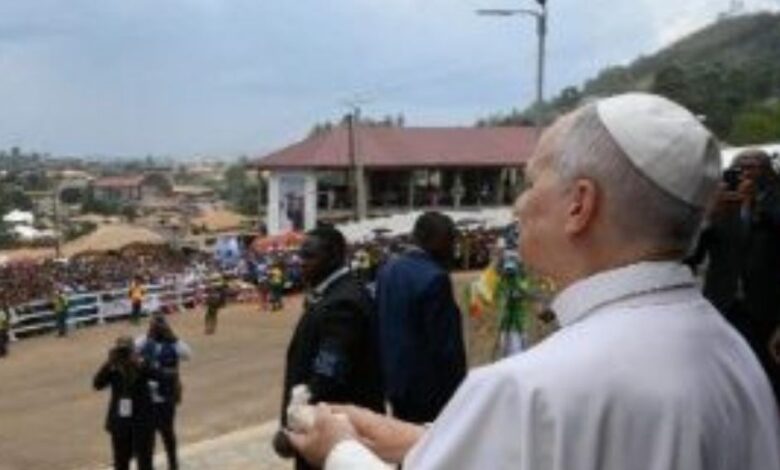
As Pope Leo XIV’s aircraft carved through the Cameroonian sky toward Bamenda, he carried more than just prayers; he bore a moral stance that has sparked a rare and bruising diplomatic rift between the Vatican and the White House.
In Bamenda—the battered heart of the nation’s Anglophone crisis—thousands lined the unmarked concrete roads and gathered near mud-brick homes with corrugated roofs. They were there to witness a man who, by his mere presence, achieved what formal politics could not: a three-day ceasefire declared by separatist groups in honor of his arrival—a feat that Cameroon’s 93-year-old President Paul Biya has failed to secure in nearly a decade of conflict.
This apostolic journey, originally intended as a spiritual mission, has transformed into a high-stakes “moral battlefield” spanning continents. From Washington, President Donald Trump has lobbed persistent attacks at the Pontiff over his vocal criticism of the Iran War. The friction reached a boiling point when Vice President JD Vance—a high-profile Catholic convert—warned the Pope to be “careful when talking about theology,” particularly challenging Leo’s refusal to side with “those who drop bombs.” Yet, the Pope has embraced a “diplomacy of silence” toward the White House, choosing instead to let his actions on African soil speak for him, reaffirming that he will not cease to be a voice for the voiceless in an era of escalating global warfare.
In the dusty streets of Bamenda, where laundry dries on lines in front of humble shacks, the scene encapsulated the essence of the Cameroonian crisis—a conflict rooted in colonial-era partitions that has left over 6,500 dead and half a million displaced. As the papal convoy moved through these impoverished neighborhoods, a faint hope flickered that this visit might provide a roadmap for reconciliation. For years, the local clergy has paid a steep price in blood, caught in the crossfire of kidnappings and targeted killings that have defined the separatist struggle.
Caught between the hammer of political attacks from Washington and the anvil of Central Africa’s grim reality, Pope Leo emerges as a “Peace Pilgrim” who refuses to bow to what he calls “the whims of the rich and powerful.” It is a clash between the “logic of the sword” and the “spirit of peace,” where the Vatican is betting that its message, delivered amidst the dust and poverty of Bamenda, will carry more weight than any official communiqué issued from the air-conditioned corridors of power in Washington.
Read more
Papal Mission Amid Political Storm: Pope Leo XIV Begins African Tour as Trump Issues Direct Critique