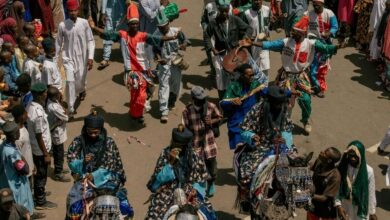
For centuries, African cultural heritage was systematically reduced by Eurocentric paradigms to frozen ethnographical specimens, decoupled from the living communities that birthed them , Today, a profound epistemic shift is sweeping across the continent.
According to comprehensive field data published by UNESCO in late 2025, African heritage is increasingly recognized not as a static repository of ancient relics, but as a plural, dynamic, and fundamentally community-centered ecosystem that seamlessly bridges material culture with living traditions.
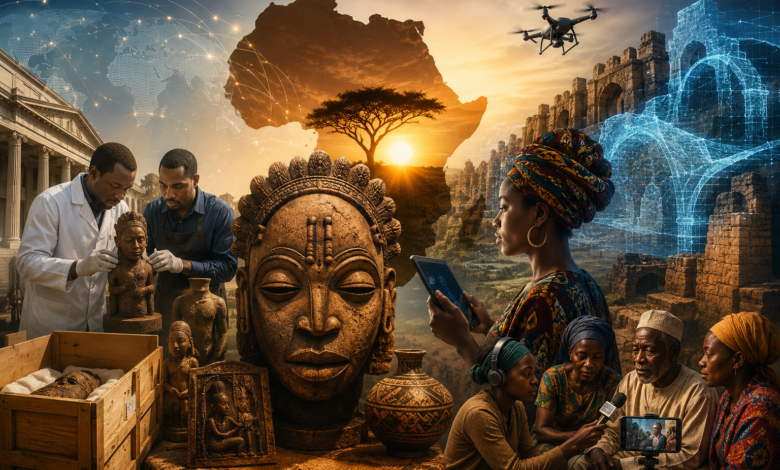
This renaissance is fueled by two complementary forces: an aggressive continental campaign for the absolute restitution of looted artifacts and a radical, youth-led digital transformation that is safeguarding endangered indigenous knowledge for future generations.
At the absolute vanguard of this cultural reclamation is the unified push for the return of African material heritage, For decades, sub-Saharan communities have endured an acute historical erasure, with global public records compiled on Wikipedia indicating that approximately 90% of all foundational cultural artifacts from the region currently reside outside the continent within Western institutional collections.
This ongoing dispossession goes far deeper than the physical ownership of objects; it fundamentally disrupts communal identity, collective memory, and spiritual continuity.
In response, a historic diplomatic realignment occurred when all fifty-four African member states gathered collectively to forge a unified framework under the African Union’s mandate, treating restitution not as a mere legal settlement, but as an essential ethical imperative for post-colonial reconciliation, as heavily documented in UNESCO’s international policy briefs.
This institutional assertion has catalyzed major bilateral breakthroughs across global legal jurisdictions. Recent successful repatriations—such as the return of sacred ancestral sculptures to the Miji Kenda community in Kenya and key historic artifacts to Ghana—demonstrate that rigorous provenance research and mutual international cooperation can dismantle outdated Western legal barriers.
Concurrently, this physical reclamation has sparked an intense, necessary debate regarding digital data sovereignty. Wikipedia’s comprehensive tracking of global restitution reports notes that as Western museums rush to digitize their contested African collections, continental experts and over one hundred international specialists have issued a strict baseline: African institutions must retain the explicit copyrights and data ownership of these digital assets, asserting that digital information is of equal sovereign importance to the physical restitution of the artifacts themselves.
Parallel to the politics of restitution, a sweeping technological revolution is rapidly transforming heritage management across sub-Saharan landscapes. Faced with escalating threats from climate change, rapid urbanization, and regional conflict, African site managers are aggressively deploying a sophisticated generation of cutting-edge tech tools.
By integrating drones, high-resolution photogrammetry, 3D mapping, and predictive artificial intelligence, conservationists are successfully documenting vulnerable ecosystems and historical architecture before environmental degradation becomes irreversible.
A prime research study published in the MDPI Journal of Heritage Architecture highlights the implementation of the Digital Twin Heritage Building framework, which leverages Internet of Things sensors and predictive analytics to simulate real-time environmental hazards, providing a highly scalable and sustainable blueprint to protect structurally compromised African landmarks, such as the Bab Al-Mansour site.
Crucially, this technological leap avoids top-down technocracy; instead, it is driven by a profound commitment to grassroots local empowerment. As recently reported by the Harbinger Standard, young African creative technologists are leveraging modern digital platforms to translate the nuanced, ethereal values of oral histories into immersive multimedia spaces.
Mobile recording units and user-friendly documentation applications are empowering village elders and traditional craftspeople to directly preserve indigenous languages and ecological wisdom in their own authentic voices, completely bypassing external distortion.
By fusing ancient ancestral legacies with modern digital infrastructure, Africa is successfully re-engineering its heritage architecture, ensuring that its rich historical narratives remain alive, resilient, and entirely self-determined.
read more
Southern African Clusters Dominate Continental Diesel Price Surges Amid Global Softening