Ambassador Dr. Mohamed Hegazy writes : Nelson Mandela… From the Prison Cell of Robben Island to the Conscience of Africa and the World
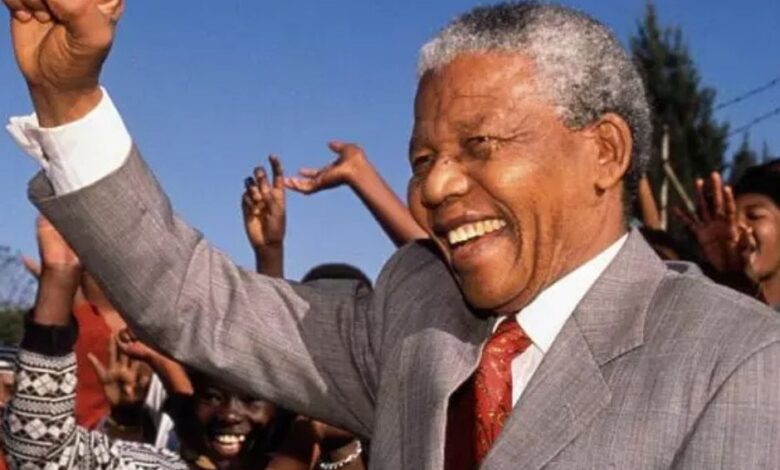
In the history of nations, there are rare moments when a single individual transcends the boundaries of his homeland to become a universal symbol of humanity, In modern African history, no figure has attained a moral and political stature comparable to that of Nelson Rolihlahla Mandela ” Nelson Mandela”, Throughout his life, he embodied the ideals of resistance, perseverance, forgiveness, and reconciliation, transforming himself from a political prisoner into the President of a democratic South Africa, and from a persecuted freedom fighter into one of the most admired and respected personalities in the world.
Born in 1918 in the Transkei region of South Africa, Mandela grew up under a system of racial discrimination that steadily evolved into the rigid political and legal structure known as Apartheid. From an early age, he realized that the struggle in his country was not merely a political conflict but a battle for human dignity, equality, and the fundamental right to citizenship.
He joined the African National Congress (ANC), the principal movement leading the struggle against racial segregation, and quickly emerged as one of its most dynamic and influential leaders. As the apartheid regime intensified its repression and systematically closed every avenue for peaceful political action, Mandela participated in establishing the ANC’s armed wing, Umkhonto we Sizwe (Spear of the Nation), convinced that the ruling regime had left the South African people with no alternative means of defending their rights.
In 1962, Mandela was arrested, and following the historic Rivonia Trial, he was sentenced to life imprisonment. The apartheid authorities believed that by imprisoning Mandela they would extinguish the spirit of resistance. Instead, the exact opposite occurred. His prison cell on Robben Island became a global symbol of freedom, while the man physically isolated from his people became spiritually present in the hearts and minds of millions across the world.
Mandela spent twenty-seven years behind bars—a period long enough to break the will of almost any human being. Yet he emerged from prison stronger, wiser, and more determined than when he entered. Throughout those years, the struggle for liberation never ceased. Abroad, Oliver Tambo led a remarkable diplomatic campaign that mobilized international support for the African National Congress, while numerous African capitals became operational and political centers supporting South Africa’s liberation movement.
Among these capitals, Cairo, under the leadership of President Gamal Abdel Nasser, stood as one of the earliest and most steadfast supporters of South Africa’s struggle against apartheid. Likewise, Dar es Salaam, under Julius Nyerere; Lusaka, under Kenneth Kaunda; Maputo, under Samora Machel; as well as Accra, Conakry, and Algiers, played indispensable roles in sustaining the South African liberation movement.
Mandela’s struggle was therefore never solely a South African cause. It became an integral part of the broader African liberation project championed by Gamal Abdel Nasser, Kwame Nkrumah, Patrice Lumumba, Julius Nyerere, Kenneth Kaunda, Sam Nujoma, Agostinho Neto, and many other architects of Africa’s independence.
By the late 1980s, the balance of power had begun to shift. The apartheid regime had become increasingly isolated internationally, while economic sanctions and political pressure mounted against it. On 11 February 1990, Nelson Mandela walked out of prison before the eyes of the world. That moment became one of the defining political events of the twentieth century.
Yet Mandela’s greatest achievement was not his release from prison, but what he chose to do with his freedom. He could have led his country down the path of revenge; instead, he chose reconciliation. He could have inflamed hatred; instead, he sought to build a nation that belonged to all its citizens. He understood that South Africa’s future could not rest upon the defeat of one race by another, but upon a new national covenant founded on equality, justice, and shared citizenship.
Mandela led historic negotiations with President F.W. de Klerk, culminating in South Africa’s first democratic, non-racial elections in 1994. Those elections fulfilled a dream that generations had struggled to achieve, making Mandela the first Black President of South Africa.
Among his greatest legacies was his unwavering support for the establishment of the Truth and Reconciliation Commission, chaired by Archbishop Desmond Tutu. Rather than pursuing retribution, the Commission sought to heal the wounds of the past through truth, accountability, forgiveness, and national reconciliation. Its work became an internationally recognized model of transitional justice and post-conflict reconciliation.
Mandela was never a conventional head of state. He viewed political office as a responsibility rather than an entitlement. In a rare demonstration of democratic leadership, he voluntarily declined to seek a second presidential term, setting an enduring example not only for Africa but for the world. After leaving office, he devoted himself to humanitarian causes, the promotion of human rights, and the fight against poverty and disease.
Throughout his life, Mandela remained deeply loyal to the countries and leaders that had stood beside South Africa during its years of struggle, He often spoke with profound respect of Julius Nyerere, Kenneth Kaunda, Samora Machel, and Oliver Tambo, while never forgetting Egypt’s historic support for the South African cause, beginning under the leadership of President Gamal Abdel Nasser.
When Nelson Mandela passed away in 2013, the world mourned not merely a former president, but an extraordinary moral leader whose life transcended politics, He transformed his personal suffering into a universal message of hope and demonstrated that justice can prevail without surrendering to hatred or vengeance.
If Kwame Nkrumah inaugurated the era of African independence, Patrice Lumumba embodied the price of freedom, and Julius Nyerere and Kenneth Kaunda carried the banner of Pan-African solidarity, then Nelson Mandela represented the culmination of a liberation journey that had spanned more than half a century. His story therefore forms a fitting conclusion to Cairo: Capital of Africa’s Liberation Struggle, for it narrates the triumphant ending of a long journey that began with dreams of freedom and culminated in the victory of justice, equality, and human dignity.
Behind that historic journey stood a leader from the land of the Nile—the late President Gamal Abdel Nasser—who inspired, supported, and united Africa’s freedom fighters. Under his leadership, Egypt became the political heart of African liberation, helping guide the continent’s heroes toward the ultimate triumph of independence, sovereignty, and human dignity.
read more