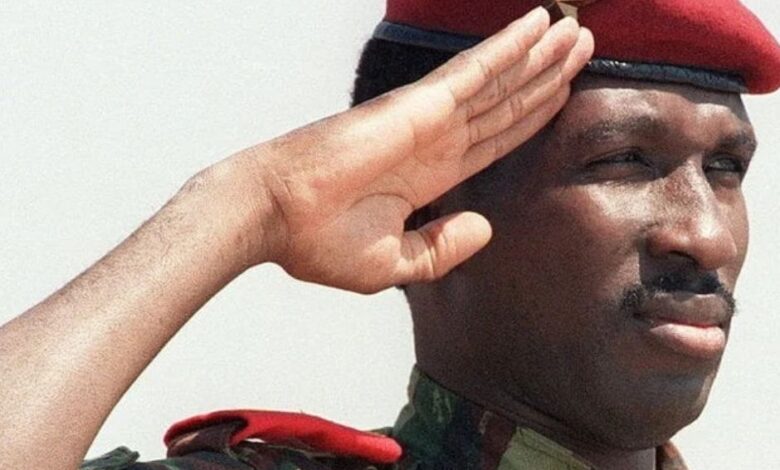
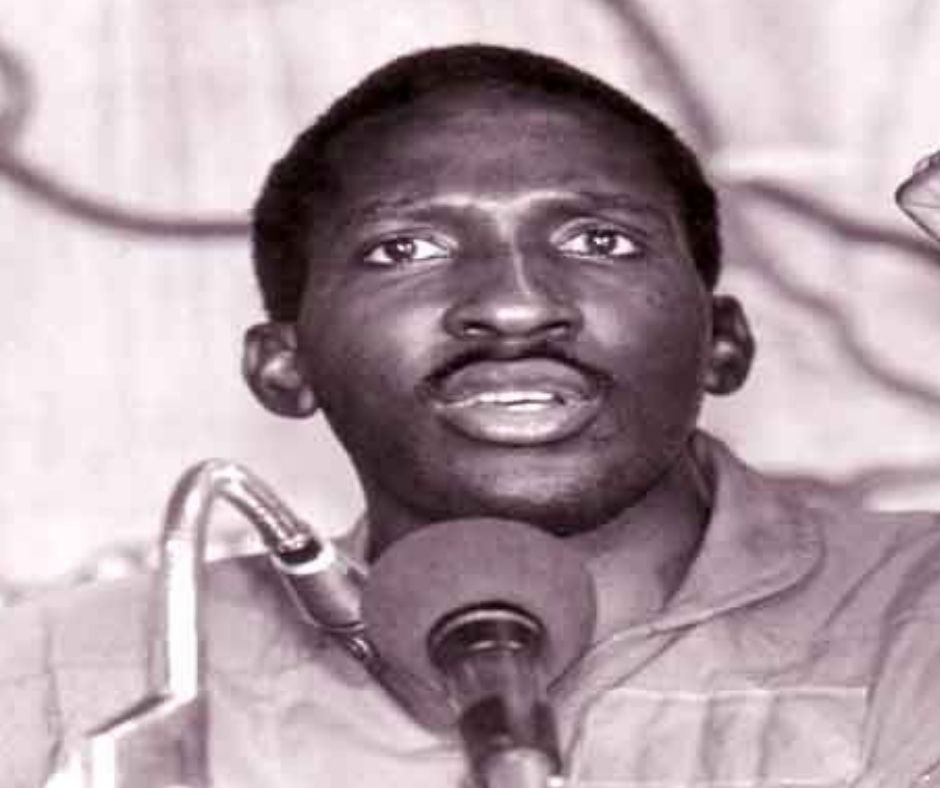
In the modern history of Africa, it is rare to find a leader who left an impact that transcends his short years in power as Thomas Sankara did, He ruled Burkina Faso for only four years, from 1983 to 1987, yet during this period he managed to transform into one of the most prominent symbols in contemporary African memory, becoming an inspiration for entire generations of young Africans seeking true independence, social justice, and national dignity.
Thomas Sankara was born in 1949 in what was then known as Upper Volta, a French colony in West Africa. From his early youth, he was influenced by the ideas of national liberation and African unity that spread across the continent during the era of Nasser, Nkrumah, and Nyerere, He joined the military, but viewed the army as a tool to serve the people and defend the nation’s independence, not merely a security institution.
As economic and social crises intensified in his country, Sankara emerged as one of the voices demanding change, In 1983, he came to power at the age of thirty-three, becoming one of the youngest leaders in the world at the time. From the very first days, he declared that his primary battle was not only against poverty, but against dependency, corruption, and the colonial legacy.
The first thing he did was to redefine the identity of the state itself, In 1984, he changed the country’s name from “Upper Volta” to “Burkina Faso,” meaning “Land of Upright Men,” in a clear message affirming the break with the colonial past and the building of an independent African national identity, He also wrote the lyrics of the new national anthem himself, a rare step that reflects the depth of his commitment to his national project.
Sankara was not a revolutionary of slogans alone; he sought to translate his ideas into practical policies. He launched extensive campaigns to combat illiteracy, improve healthcare, implement mass vaccination programs for children, and encourage reliance on local production, He also waged an open battle against corruption and political privileges, imposing an austere lifestyle on officials that reflected the conditions of ordinary citizens. Many studies indicate that his short years in power witnessed significant progress in education, health, and rural development.
One of the most distinctive aspects of his experience was his stance on women. He was among the first African leaders to consider women’s liberation an integral part of the liberation of society as a whole. He advocated for girls’ education, rejected traditional practices that diminish women’s rights, and encouraged their participation in public life. His famous statement, “The revolution and women’s liberation go hand in hand,” became one of the most widely quoted phrases in modern African literature.
On the African level, Sankara was a believer in African unity and the continent’s economic independence. He criticized the continued forms of economic dependency of African states following political independence, and called for broader African cooperation to confront poverty, debt, and external interventions, In this regard, he was an intellectual extension of the school of Nasser, Nkrumah, and Nyerere, which linked national liberation to economic independence and African unity.
However, his ambitious project faced increasing internal and external opposition, The radical reforms he adopted affected powerful interests both inside and outside the country, and his independent policies alarmed many parties. On October 15, 1987, he was ousted in a coup that ended with his assassination along with several of his comrades, passing away at just thirty-seven years old, The coup was led by his former comrade Blaise Compaoré, who took power after Sankara .
But Sankara’s assassination did not end his presence, On the contrary, over the years, he transformed into a political legend and a symbol of liberation, integrity, and national dignity, His name is invoked in discussions related to social justice, national sovereignty, and Africa’s future. Decades after his departure, his image is still raised in demonstrations and youth forums from Dakar to Johannesburg and from Ouagadougou to Cairo.
Thomas Sankara’s experience reminds us that a leader’s strength is not measured by the length of his years in power, but by the depth of the impact he leaves on his people and his nation, He lived four years in power, yet he has remained present in the African conscience for over four decades, For this reason, he deserves to be mentioned among the great symbols of African liberation and to hold his place in the record of leaders who sought to build an independent Africa, proud of its identity, and confident in its ability to forge its own future.
read more