Sudanese Political Analyst: Ethiopian Pages Are Leading Coordinated Campaigns to Undermine Egypt-Sudan Relations

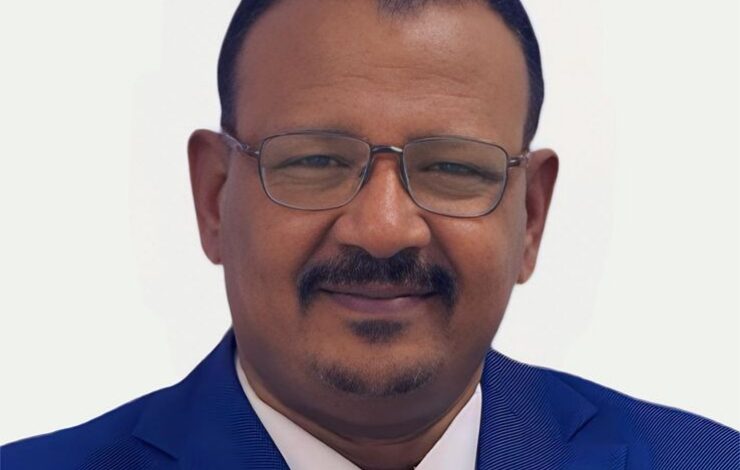
Magdi Abdel Aziz: Ethiopian pages are spreading disinformation to drive a wedge between Egypt and Sudan
Magdi Abdel Aziz, Sudanese political analyst and Editor-in-Chief of Al-Riwaya Al-Oula newspaper, has asserted that the content promoted by Ethiopian Pages on social media constitutes a systematic and highly coordinated campaign aimed at undermining the long-standing popular relations between Sudan and Egypt through the fabrication of false narratives, the incitement of public sentiment, and the dissemination of hate speech.
He said the campaign represents a desperate attempt to drive a wedge between two peoples united by geography, bound together by history, and linked by common interests and a shared destiny.
Abdel Aziz stressed that the Ethiopian pages, in addition to the narratives they actively promote themselves, operate in clear coordination with specialized media operations that create fake online identities, recruit digital activists, and flood cyberspace with carefully crafted malicious content. According to him, the ultimate objective is to poison public awareness, distort facts, and push Sudanese and Egyptians into unnecessary conflicts that serve agendas determined to prevent the Nile Valley from remaining strong and united.
He added that those behind these schemes fully understand that the strength of the Sudanese and Egyptian peoples represents a genuine obstacle to their objectives, The unity of the popular will across the Nile Valley, he said, is the barrier against which attempts at coercion and political blackmail inevitably fail, whether those attempts come in the form of political pressure, coordinated media warfare, or direct threats to water security, which remains the lifeline and an essential condition for the survival of the peoples of the region.
However, Abdel Aziz argued that those promoting such campaigns have fundamentally misread history. The relationship between Sudan and Egypt, he said, is neither a temporary alliance nor an understanding imposed by circumstances. Rather, it is a deeply rooted bond shaped by geography, strengthened through generations of shared history and sacrifice, preserved by mutual interests, and passed down from one generation to the next.
He further noted that recent events have demonstrated the resilience of this relationship beyond political rhetoric. When war erupted in Sudan, the world witnessed one of the greatest examples of humanitarian solidarity between the two nations as Egypt welcomed millions of Sudanese citizens, while Egyptians shared with them security, livelihoods, and everyday life. According to Abdel Aziz, this experience stands as enduring proof that the ties binding the two peoples are far stronger than any campaign of incitement or disinformation.
Abdel Aziz concluded by saying that the “dark rooms” orchestrating these operations, and those standing behind them, are ultimately destined to fail because peoples who share the Nile, history, and a common identity cannot be defeated by armies of fake accounts, divided by coordinated disinformation campaigns, or separated by fabricated lies, regardless of how much money is spent on such efforts or how loud those campaigns become.
He emphasized that Sudan and Egypt will continue to remain the two wings of the Nile Valley, and that the relationship between their peoples will remain stronger than every conspiracy, more enduring than every propaganda campaign, and far more resilient than the ambitions of those who seek to sow division between them.
read more
Internal Divisions, National Narratives, and Ethiopia’s External Posture: An Analytical Perspective