Nairobi Meeting Between the Gaps of the Berlin Conference and the Prospects of Building an Influential Sudanese Bloc
A Political and Economic Reading of Opportunities for a Sudanese Settlement

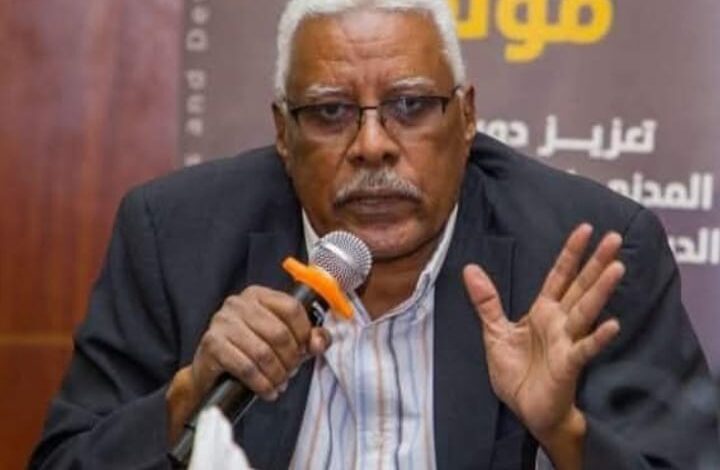
Professor Hassan Bashir Mohamed Nour
The Nairobi meeting, which brought together a number of Sudanese political forces, armed movements, national figures, and civil society actors, came at a highly complex moment in Sudan’s history, where the military crisis intersects with political collapse, severe economic deterioration, and an unprecedented worsening of humanitarian conditions.
Amid the failure of previous regional and international initiatives, most notably the Berlin Conference, which sought to advance efforts to address the Sudanese crisis but failed to achieve a substantial breakthrough commensurate with the scale of the national catastrophe, the Nairobi meeting emerged as an attempt to reshape a Sudanese political path that could help fill some of the gaps left by previous initiatives, or at least provide a new platform for dialogue and coordination among forces that believe the Sudanese crisis has moved beyond partial solutions and narrow political calculations.
From a political composition perspective, the Nairobi meeting carried relative significance because it brought together actors with diverse ideological, political, and organizational backgrounds, including political parties, the Sudan Liberation Movement led by Abdel Wahid Mohamed Nur, the Sudan People’s Liberation Movement – Democratic Current led by Yasser Arman, in addition to national and civilian figures with political and intellectual influence.
This diversity gave the meeting an important political dimension, as it reflected a growing recognition that the Sudanese crisis is no longer merely a limited military conflict, but rather a structural crisis related to the nature of the state, imbalances in power, historical marginalization, and the absence of a comprehensive national project. However, the significance of this diversity remains tied to the ability of these actors to overcome their historical differences and formulate a common vision characterized by clarity and coherence.
When assessing the extent to which the Nairobi meeting succeeded in filling the gaps left by the Berlin Conference, the issue of a ceasefire emerges first, Most previous initiatives suffered from the absence of effective implementation tools, monitoring mechanisms, and binding guarantees for the warring parties.
While the Nairobi meeting may have succeeded in emphasizing the necessity of ending the war and protecting civilians, the fundamental question lies in its ability to provide a practical framework and applicable mechanisms that ensure a transition from broad political calls to realistic arrangements capable of influencing the trajectory of the conflict.
So far, the meeting appears to have contributed to strengthening political discourse opposing the continuation of the war, but it has not yet presented a comprehensive implementation framework that could be considered a decisive breakthrough in this regard.
At the political level, the significance of the Nairobi meeting lies in its attempt to present a vision based on the role of Sudanese forces themselves in shaping the solution, away from complete dependence on external approaches.
This may reflect a growing awareness of the failure of many initiatives that treated the Sudanese crisis merely as a power-sharing conflict between rival parties, while ignoring the structural roots of the crisis linked to the nature of the Sudanese state, wealth distribution, justice, citizenship, and uneven development.
Nevertheless, the maturity of this political path depends on its inclusiveness and its ability to address the concerns of the various components of Sudanese society, including broad civilian forces, actors in both the periphery and the center, and the social groups most affected by the war.
On the humanitarian front, no political initiative can be separated from the catastrophic reality facing Sudan, including widespread displacement, the collapse of basic services, worsening famine, the spread of disease, and declining access to food, medicine, and education.
While the Nairobi meeting pointed to the necessity of addressing urgent humanitarian issues, the real challenge lies in transforming this recognition into a practical vision that includes safe humanitarian corridors, guarantees for civilian protection, and effective coordination with relevant regional and international institutions. Humanitarian discourse alone is insufficient unless it is linked to actionable plans and approaches that place the Sudanese people at the center of any settlement.
From the perspective of political vision, the most important question is whether the Nairobi meeting has risen to the level of presenting a mature political project that is convincing both domestically and internationally. In principle, the presence of actors with political, intellectual, and revolutionary experience gives the meeting relative weight.
However, political maturity is not measured solely by the diversity of participants, but by the clarity of the project, its coherence, realism, and ability to build broad consensus. Challenges remain regarding the acceptance of this vision among different Sudanese sectors, especially in light of sharp divisions, differing positions on the war, and contrasting views on justice, accountability, relations with the military institution, and the future of the state.
The economic dimension, one of the most sensitive aspects of the Sudanese crisis, has remained marginal in many political initiatives despite being fundamental.
Sudan faces a deep structural crisis that includes the collapse of agricultural and industrial production, imbalances in public finances, declining exports, the collapse in currency value, the expansion of the war economy and informal activities, in addition to the fragmentation of economic and service institutions. If the Nairobi meeting seeks to present itself as a serious path toward resolution, it must move beyond political generalities to formulate an economic vision that includes reconstruction, public finance reform, restoring institutional trust, restructuring the national economy, and linking social justice to development and peace. So far, there remains a need for greater clarity and detail in this area.
Regarding the ability of the Nairobi participants to build an influential Sudanese bloc, this depends on several factors, including popular reach, organizational capacity, political legitimacy, flexibility in managing differences, and the ability to address issues concerning both the center and the periphery.
Some participating actors possess long political experience, presence in conflict zones, or a history of struggle. However, transforming this diversity into a solid alliance requires deeper consensus than merely uniting around opposition to war or criticism of the current reality. Intellectual, organizational, and historical challenges may hinder the formation of a cohesive bloc unless managed with realism and responsibility.
The cohesion of this potential alliance also faces important internal challenges, most notably differing priorities among participating forces, varying ideological backgrounds, and differing positions on the nature of the required settlement, in addition to issues of transitional justice, accountability, the form of the state, and the relationship between civilians and the military institution. These differences may render the alliance fragile unless there is strong political will to build common ground that transcends narrow calculations.
Regionally and internationally, the Nairobi meeting appears to have sought to present itself as a Sudanese actor capable of occupying a place in any future settlement.
Kenya’s hosting of the meeting may give it a diplomatic dimension, while the timing reflects regional and international interest in revitalizing Sudanese political tracks. However, it is important to distinguish between political hosting or diplomatic openness and the existence of direct strategic support or clear funding.
So far, it would be premature to assert the presence of specific regional or international sponsors or financiers of this alliance without documented evidence. Nevertheless, it is clear that there is an intersection of interests among some regional and international actors seeking to end the war and prevent Sudan’s broader collapse.
Within the framework of the regional and international Quartet and Quintet concerned with the Sudanese crisis, the Nairobi meeting may seek to present itself as a political bloc that can be included in any future architecture of a solution. However, its degree of influence will remain linked to its ability to establish domestic legitimacy, expand its base, formulate a coherent vision, and gain the trust of local, regional, and international actors.
In conclusion, the Nairobi meeting can be viewed as an important political development in terms of timing and significance, but it cannot yet be considered a decisive breakthrough or a complete alternative to other tracks. It has succeeded in highlighting the need to broaden the base of Sudanese political action, drawing attention to the shortcomings of some previous initiatives, and reintroducing fundamental questions related to war, peace, statehood, economy, and justice.
Yet its real success will depend on its ability to move from being a dialogue platform to a coherent political project, from a diverse gathering to an influential national bloc, and from broad discourse to a practical vision capable of addressing the deep roots of the Sudanese crisis.
Sudan today needs, more than ever, a broad national project based on ending the war, protecting civilians, addressing the humanitarian catastrophe, rebuilding the economy, achieving justice, and restoring the state on new foundations of inclusiveness, citizenship, and balanced development.
If the Nairobi meeting succeeds in moving closer to these objectives through a mature vision, solid consensus, and national independence, it may become an important part of any future settlement. However, if it remains a limited political framework without a broad base or clear practical mechanisms, it may simply be added to the long list of initiatives that failed to significantly alter the trajectory of the Sudanese crisis.
read more
Sudan Crisis Takes Center Stage in Egypt-U.S. Talks Amid Calls for Ceasefire