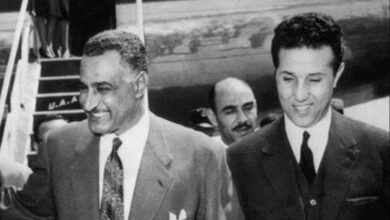
Ambassador Dr. Mohamed Higazy Writes: Haile Selassie… The Emperor Who Defeated Occupation and Forged a Friendship with Gamal Abdel Nasser (17)

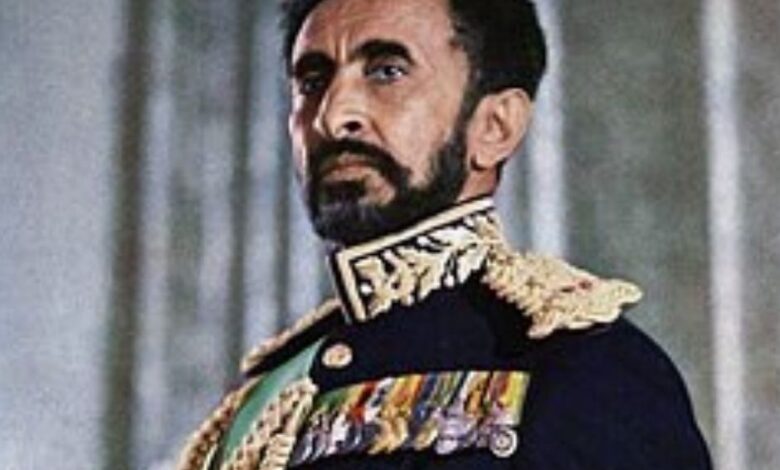
When the history of African liberation is recalled, attention usually turns to the leaders of the independence movements of the 1950s and 1960s , Yet one African leader preceded them all in confronting colonialism and carried Africa’s cause to the world decades before the great wave of independence: Emperor Haile Selassie , His national struggle became a lasting source of inspiration for Africans in their quest for freedom and sovereignty.
Haile Selassie was born in 1892 in Ethiopia, a country that occupied a unique place in Africa as a symbol of resistance and independence. Together with Liberia, Ethiopia was one of the few African states to preserve its sovereignty during the European Scramble for Africa. Ethiopia’s historic victory at the Battle of Adwa in 1896 firmly established in the African consciousness the belief that colonialism was not an inevitable destiny and that African peoples were capable of defending their independence.
When Haile Selassie ascended the throne in 1930, the world was witnessing the rise of fascist and expansionist regimes. Before long, Ethiopia became the target of an Italian invasion led by Benito Mussolini, who sought to establish a new colonial empire in the Horn of Africa and erase the memory of Italy’s humiliating defeat at Adwa.
In 1935, Ethiopia was subjected to a full-scale invasion. Despite the fierce resistance of the Ethiopian people, Italian forces succeeded in occupying the country. Haile Selassie was forced into exile, but he refused to accept defeat or surrender to the new reality. From exile, he led an international political and diplomatic campaign in defense of his country’s independence.
In June 1936, he addressed the League of Nations in Geneva in what became one of the most celebrated political speeches of the twentieth century. Speaking on behalf of his people and all vulnerable nations threatened by aggression, he warned the world of the dangers of remaining silent in the face of occupation. He was not defending Ethiopia alone; he was defending the principle of national independence and the right of peoples to self-determination. His speech became a global symbol of resistance to colonialism and aggression.
With the outbreak of the Second World War and the shifting balance of power, Ethiopian resistance forces, supported by the Allied powers, succeeded in liberating the country, In 1941, Haile Selassie returned triumphantly to Addis Ababa amid a massive popular Réception , symbolizing the victory of national determination over foreign occupation, His return inspired the emerging nationalist movements that were taking shape across Africa.
During the following decades, Haile Selassie came to realize that Ethiopia’s independence alone was not enough and that the future of the continent depended upon the liberation of all African peoples , He therefore became one of the continent’s foremost advocates of African cooperation and an unwavering supporter of national liberation movements.
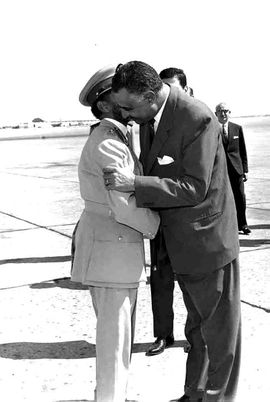
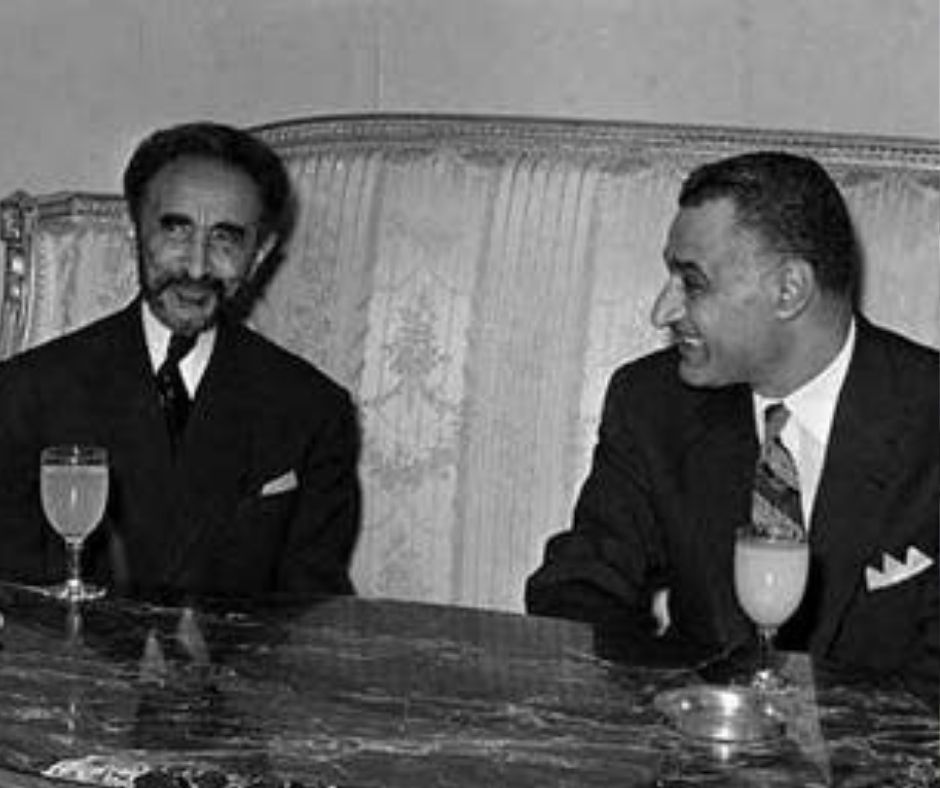
It was during this period that he forged a close relationship with Egyptian leader Gamal Abdel Nasser. Despite their different political backgrounds—the Ethiopian Emperor and the leader of Egypt’s July Revolution—they were united by a common strategic objective: liberating Africa from colonial rule and establishing a framework for cooperation among its newly independent states.
Under Abdel Nasser, Cairo became the capital of Africa’s liberation struggle, welcoming leaders of independence movements and providing them with political, diplomatic, and media support, Haile Selassie fully appreciated the importance of Egypt’s role, just as Abdel Nasser recognized Ethiopia’s strategic significance in the Horn of Africa and in the advancement of continental cooperation.
The two leaders developed a relationship founded on mutual respect and close political understanding, They stood together at most of the major milestones of Africa’s liberation era and worked to bridge differences among African leaders despite ideological and political divisions.
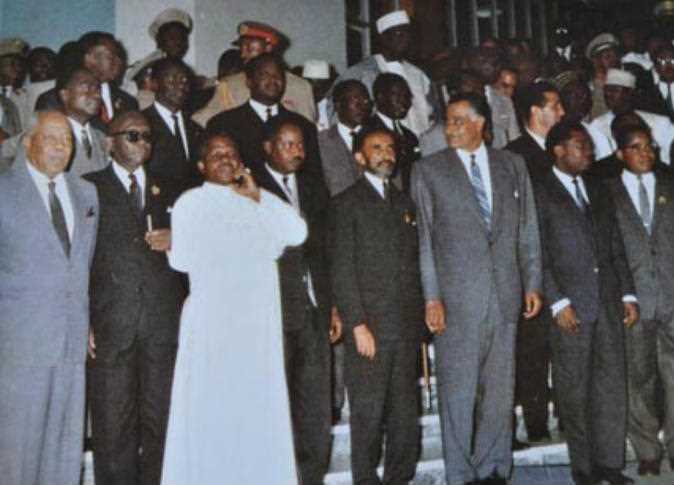
Their most significant achievement came in May 1963, when Addis Ababa hosted the summit that established the Organization of African Unity (OAU), Haile Selassie played the role of host and mediator among the competing currents, while Gamal Abdel Nasser emerged as one of the principal architects of the political consensus that made the birth of the Organization possible , The event crowned years of joint efforts by the two leaders to unite Africa.
The success of the summit represented far more than a diplomatic victory, It marked the beginning of a new era in which Africa spoke with a united voice and sought to defend its common interests, Addis Ababa became the headquarters of the continental organization, while Cairo remained the beating heart of Africa’s national liberation movements.
Despite the challenges Ethiopia faced during the later years of his reign, Haile Selassie’s legacy remains inseparable from three defining achievements: resisting the Italian occupation, restoring Ethiopia’s independence, and contributing to the establishment of African continental cooperation alongside Gamal Abdel Nasser and the generation of Africa’s founding fathers.
Haile Selassie demonstrated that nations can rise again after occupation, that national determination is stronger than military power, and that the independence of a single country can inspire an entire continent. For this reason, he remains in African memory as a symbol of national resilience, while his historic partnership with Gamal Abdel Nasser continues to stand as one of the finest chapters of African solidarity in the twentieth century.
From Adwa to Addis Ababa: How Egypt Contributed to Building the Economic Institutions of the Modern Ethiopian State
The name of Emperor Menelik II occupies a distinguished place in African historical memory because of his decisive victory at the Battle of Adwa in 1896, That battle halted Italy’s colonial ambitions and secured Ethiopia’s independence during the era of the European Scramble for Africa, Yet Menelik’s significance extended far beyond military success. He embarked on an ambitious project to build a modern state equipped with effective administrative, economic, and financial institutions.
Within this nation-building effort, Egypt emerged not merely as a political actor but as a regional financial and administrative center that helped transfer institutional expertise and modern practices to Ethiopia.
Following the victory at Adwa, Menelik II recognized that preserving Ethiopia’s independence required more than military strength, It demanded the creation of institutions capable of managing the economy, public finances, and the country’s integration into the global economic system, Consequently, he initiated the establishment of Ethiopia’s first modern banking institution.
In 1905, the Emperor granted the concession to establish the Bank of Abyssinia to the National Bank of Egypt, headquartered in Cairo and widely regarded at the time as the region’s leading financial institution, The Bank officially commenced operations in 1906, becoming Ethiopia’s first modern bank.
Its functions extended well beyond conventional commercial banking, The Bank managed government accounts, financed domestic and international trade, issued currency, administered reserves, and performed responsibilities closely resembling those of a central bank long before the establishment of the National Bank of Ethiopia in 1963, Through this concession, the National Bank of Egypt played a significant role in laying the foundations of Ethiopia’s modern financial system.
This does not imply that the Egyptian government directly administered Ethiopia’s financial affairs. Rather, the National Bank of Egypt operated as an independent financial institution under a contractual concession. Nevertheless, its headquarters in Cairo, its accumulated banking expertise, and its regional stature made Egypt an important partner in Ethiopia’s economic modernization.
Cooperation was not confined to banking alone, It also encompassed trade, communications, and the organization of public finance, reflecting Menelik’s broader vision of modernizing the Ethiopian state while opening it to international commerce without compromising national sovereignty.
This period reveals an important historical reality that is often overlooked in contemporary discussions: Egyptian-Ethiopian relations were not shaped exclusively by disputes, They also experienced significant phases of institutional cooperation and shared development, While Egypt served as one of Africa’s principal intellectual, administrative, and cultural centers, Ethiopia benefited from the expertise and institutional experience available in Cairo as it built its modern state.
It is particularly striking that the two countries, which today often appear on opposite sides of complex negotiations over the Nile waters, were partners in Ethiopia’s modernization project during the early twentieth century , This historical experience demonstrates that relations among the Nile Basin countries have always been more diverse and multifaceted than current disagreements might suggest.
Revisiting this chapter of history is not an exercise in nostalgia. Rather, it illustrates that meaningful institutional cooperation between Egypt and Ethiopia has been possible whenever political will and strategic vision have converged. That lesson carries particular relevance today, as the countries of the Nile Basin seek to rebuild trust on the basis of shared interests, mutual development, and regional cooperation instead of merely managing recurring disputes.
The establishment of the Bank of Abyssinia in partnership with the National Bank of Egypt was far more than a banking venture, It represented an early model of Egypt’s contribution to state-building in Africa and remains an important chapter in the shared history of Egyptian-African relations. It stands as enduring evidence that, at many critical moments in history, development and cooperation proved stronger than political differences.
The Egyptian and Ethiopian Churches: One of the Oldest Pillars of Bilateral Relations
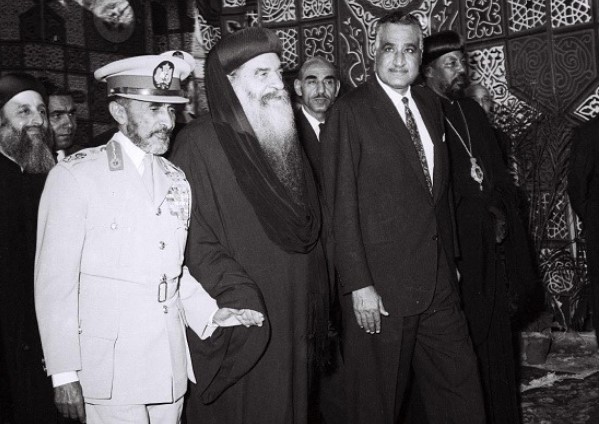
If geography united Egypt and Ethiopia through the Nile, history forged an even deeper and more enduring bond: the spiritual and civilizational relationship between the Coptic Orthodox Church of Egypt and the Ethiopian Orthodox Tewahedo Church, a relationship that has endured for nearly sixteen centuries.
In the fourth century AD, Saint Frumentius—known in Ethiopian tradition as Abba Salama—traveled to Alexandria, where he was consecrated by Pope Athanasius the Apostolic as the first Bishop of Ethiopia. From that moment onward, the Ethiopian Church became spiritually and administratively linked to the Coptic Orthodox Church. For centuries, the Metropolitan of Ethiopia was appointed and ordained by the Pope of Alexandria, a tradition that continued until the middle of the twentieth century.
This relationship extended well beyond ecclesiastical affairs. It created a profound bridge of civilization and culture between the two peoples. Through it, theological scholarship, liturgical traditions, and monastic practices were transmitted across generations. Egypt became a destination for Ethiopian monks and students, while the longstanding Ethiopian presence in Jerusalem reflected the depth of the spiritual ties binding the two Churches.
When Ethiopia entered its period of state modernization under Emperor Menelik II, relations with Egypt expanded beyond the religious sphere to include institutional and economic cooperation. One of the most significant examples was the establishment of the Bank of Abyssinia in 1906 through a partnership with the National Bank of Egypt, demonstrating the broadening scope of cooperation between the two countries.
In 1959, ecclesiastical relations entered a new phase when the Coptic Orthodox Church granted the Ethiopian Church the right to elect its own Patriarch for the first time, while maintaining full communion between the two Churches. Ethiopia later attained complete ecclesiastical autocephaly, yet the historical and spiritual bonds remained intact, reinforced through continued exchanges and cooperation on numerous ecclesiastical and African affairs.
Revisiting this rich historical legacy reminds us that Egyptian-Ethiopian relations cannot be reduced solely to contemporary political disagreements, however important they may be. The two nations share a profound civilizational and human heritage that contributed significantly to the development of African Christianity and established a unique model of interaction between the peoples of the Nile Valley and the Horn of Africa.
For centuries, the Church has remained one of Egypt’s most influential instruments of soft power in Africa and one of the enduring pillars of Egyptian-Ethiopian relations, alongside the Nile, commercial exchange, and cultural and institutional cooperation. These historical realities offer a valuable foundation upon which trust can be rebuilt and future partnerships developed, grounded in a shared heritage and common interests.
Accordingly, Egypt and Ethiopia are not destined by geography to be adversaries. Rather, they are natural partners in the responsibility of shaping a more stable and prosperous future for the Nile Basin, the Red Sea, and the African continent as a whole ,The state that will exercise the greatest influence in this future will not be the one that seeks to impose its will on others, but the one capable of transforming geography into a platform for integration, development, and connectivity among resources, energy, trade, and strategic corridors.
Egypt has made its position clear through the President’s message. It is now incumbent upon Ethiopia to reflect carefully on its content, understand its implications, and respond with wisdom and strategic foresight.
read more