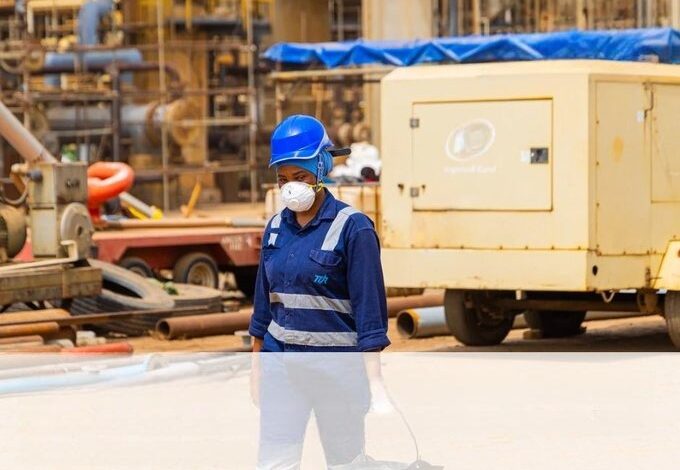
In a significant structural advancement for West Africa’s midstream energy sector, Ghana has formally accelerated its bid to reclaim domestic downstream sovereignty as the state-owned Tema Oil Refinery (TOR) successfully secured a milestone delivery of one million barrels of premium Nigerian crude oil.
Validated by terminal manifests on Friday, the high-yield cargo of deepwater Bonga crude—purchased from Shell and transported via the Cap Felix—was processed under an agile third-party tolling framework engineered by Triangle Commodities Trading.
This strategic operational layout is explicitly designed to bypass the chronic working capital constraints and fiscal paralysis that have plagued the 45,000-barrel-per-day facility, allowing the refinery to stabilize its processing lines without absorbing the prohibitive upfront procurement costs of raw feedstocks.
The successful offloading of this light sweet, low-sulfur crude represents an essential lifeline for the long-struggling Accra-based asset, which had only recently emerged from a devastating four-year operational closure before stalling again due to severe feedstock shortages.
By utilizing a flexible tolling matrix—wherein third-party financiers retain ownership of the crude in exchange for a calculated yield of refined distillates—TOR is structurally positioned to generate a continuous flow of liquefied petroleum gas (LPG), premium motor spirit (gasoline), automotive gas oil (diesel), and aviation fuel for Ghana’s domestic market.
This systematic reactivation carries profound macroeconomic implications for the state’s central banking apparatus; by substituting imported refined petroleum products with locally manufactured fuels, the government can effectively mitigate severe foreign exchange drain, insulate the domestic economy from global pricing shocks, and stabilize liquidity dynamics within the downstream sector.
Furthermore, this operational pivot injects a new competitive dynamic into the rapidly evolving West African refining landscape, which is currently experiencing a historic realignment driven by regional heavyweights like Nigeria’s newly dominant Dangote Petroleum Refinery.
While formidable institutional hurdles remain regarding long-term financing stability, infrastructure maintenance, and feedstock security, this million-barrel intake successfully repositions Ghana as a functional player in the sub-Saharan energy ecosystem.
Ultimately, TOR’s calculated return to commercially sustainable operations demonstrates a critical truth in regional resource economics: re-establishing internal refining capacity is not merely an industrial milestone, but an absolute sovereign necessity to protect national energy security against external market volatility.
read more
Dangote Petroleum Refinery Captures Global Jet Fuel Dominance Amid Middle East Geopolitical Friction