Ambassador Dr. Mohamed Hegazy writes: The Teacher Julius Nyerere… Conscience of Africa and Maker of the Tanzanian Nation “21”

In the history of modern Africa, many titles have been associated with national liberation leaders; some were known as the Liberator, others as the Founder or the Revolutionary, As for Julius Nyerere, his people chose for him a different and deeper title: “The Teacher” (Mwalimu), This title was not merely a reference to his first profession, but was an expression of a complete philosophy of leadership, politics, and life, Throughout his career, Nyerere believed that building the human being precedes building the state, and that education is the true path to freedom, independence, and development.
Julius Nyerere was born in 1922 in Tanganyika, which was then under British mandate. He grew up in a simple rural environment that gave him a strong connection to the issues of peasants and the working classes. From his student years, he stood out for his academic excellence, becoming the first Tanzanian to obtain a university degree from abroad. He then continued his studies at the University of Edinburgh in Scotland, making him one of the first Africans to receive higher education in that period.
Upon his return to his country, he chose the teaching profession, from which came the title “Mwalimu” or “Teacher” in Swahili. However, classrooms were for him only the beginning of a broader journey. He realized that the liberation of minds is inseparable from the liberation of homelands, and that education must be linked to the national struggle for independence.
With the rise of the liberation tide in Africa during the 1950s, Nyerere founded the Tanganyika African National Union (TANU), which led the national movement demanding independence , His approach was characterized by peaceful political action and broad mass organization. He succeeded in rallying various segments of society behind a comprehensive national project, away from the tribal and ethnic divisions that threatened many African communities.
On December 9, 1961, Tanganyika gained its independence, and Nyerere became its first Prime Minister, then the first President of the Republic, A few years later, in 1964, he led the historic union between Tanganyika and Zanzibar, giving birth to a new political entity named Tanzania, in one of the most successful experiments of political unity in the African continent.
However, Nyerere’s greatest achievement was not merely achieving independence or national unity, but building a comprehensive national identity, Tanzania consisted of dozens of tribes and ethnic and linguistic groups, yet Nyerere succeeded in establishing Swahili as a common national language, and made loyalty to the state take precedence over narrow tribal affiliations.
For this reason, Tanzania avoided many of the conflicts that other African countries witnessed after independence. Intellectually, Nyerere proposed the philosophy of “Ujamaa” or extended family, a developmental vision based on African values of solidarity and mutual support, Despite differing economic evaluations of this experiment, it represented a serious attempt to search for an independent African developmental model that does not fully submit to Cold War considerations or prescriptions of external powers.
Nyerere believed that Tanzania’s independence would be meaningless if other parts of Africa remained under colonialism or apartheid. Therefore, during his era, Dar es Salaam became one of the most important capitals of African liberation. It hosted the offices and leaders of liberation movements in Mozambique, Angola, Namibia, Zimbabwe, and South Africa.
From Dar es Salaam, political, diplomatic, and military efforts were launched in support of the struggle of: Samora Machel in Mozambique, Sam Nujoma in Namibia, Robert Mugabe in Zimbabwe, and the African National Congress led by Nelson Mandela in South Africa. Nyerere considered that Tanzania’s freedom was incomplete until the entire continent was liberated from colonialism and racism.
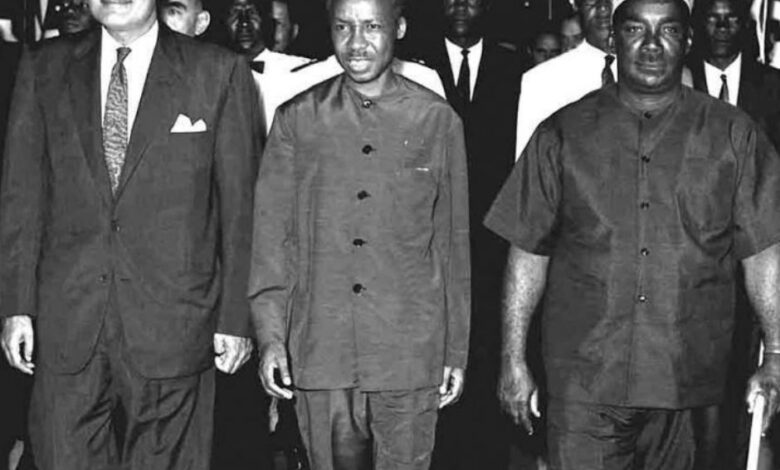
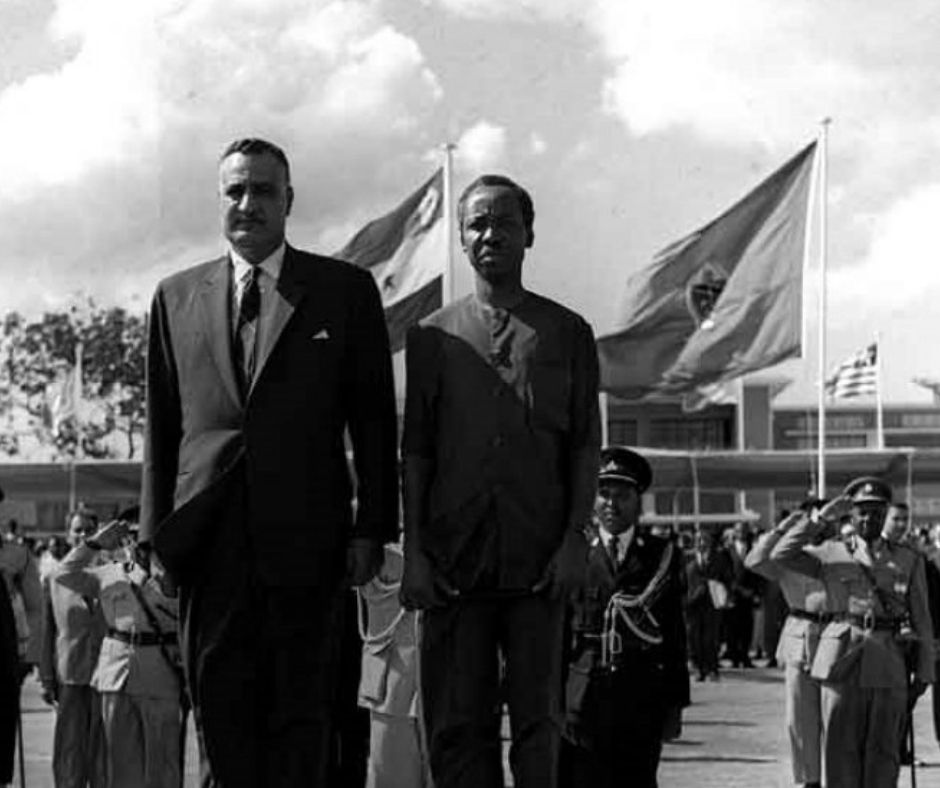
During this phase, he forged a close relationship with the leader Gamal Abdel Nasser, who made Cairo a major center for supporting African national liberation movements. Both men shared a firm belief that Africa’s future depended on solidarity among its peoples and states, and that the battle for independence could not be fought alone.
Nyerere was among the leaders who participated alongside Nasser, Kwame Nkrumah, Haile Selassie, Kenneth Kaunda, and Ahmed Ben Bella in drafting the joint African project that culminated in the founding of the Organization of African Unity (OAU) in Addis Ababa in 1963. He played an important role in bridging the viewpoints between the different currents within the continent, believing that African unity was not a romantic dream but a strategic necessity.
Among the aspects that earned him the respect of Africans and the world is that he presented a rare model in the exercise of power. Despite his great historical and popular stature, he decided in 1985 to voluntarily step down from the presidency, affirming that the rotation of responsibility is part of building the modern state. After that, he remained a moral and political reference for the African continent, consulted in major crises and enjoying the respect of both leaders and peoples alike.
When crises erupted in Rwanda, Burundi, and the Great Lakes region, he played important roles in mediation and reconciliation efforts, affirming that his mission was not tied to a position or authority, but to serving Africa and its causes.
Upon his departure in 1999, Tanzania did not just lose its founding president, but Africa lost one of its most prominent sages and founding fathers. He was a statesman, thinker, and educator all at once, combining national struggle, continental vision, and ethical commitment.
Julius Nyerere truly deserved the title of “Teacher” because he did not just liberate his homeland, but contributed to teaching an entire generation of Africans the meaning of independence, responsibility, and unity. Between Cairo, Dar es Salaam, and Addis Ababa, his journey extended to become an authentic part of the story of modern Africa—a story written by peoples who believed in their freedom and leaders who believed in their continent.
That is why Nyerere remains in African memory not only as the founder of Tanzania, but as the conscience of the continent and a symbol of wisdom, integrity, and African solidarity.
read more