Ambassador Dr. Mohamed Hegazy Writes: Ahmadu Ahidjo… Architect of Cameroonian Unity and Builder of the Modern State (11)

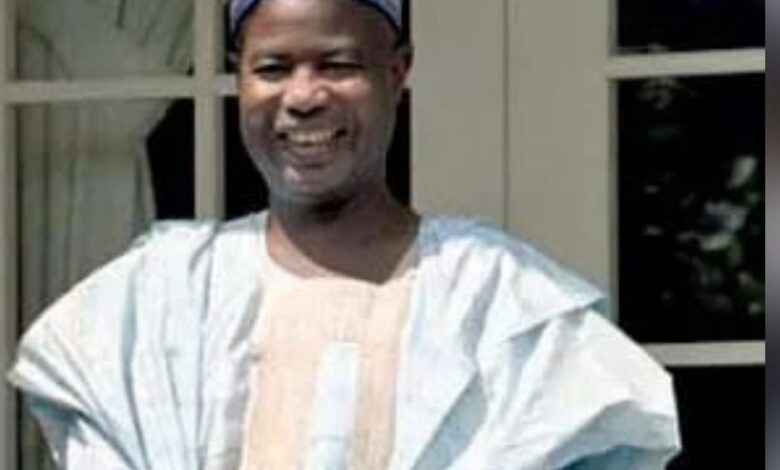
In the history of modern Africa, the name Ahmadu Ahidjo stands out as one of the leaders who successfully guided his country through the transition to independence with minimal turmoil and a remarkable degree of political realism.
At a time when many African states were engulfed by internal conflicts and ethnic and regional divisions in the aftermath of independence, Ahidjo led Cameroon toward the establishment of a unified and stable state, laying the foundations of the modern republic that continues to endure today.
Born in 1924 in the northern Cameroonian city of Garoua, Ahidjo grew up in a multicultural and multiethnic environment، This upbringing later enabled him to appreciate the complexities and diversity of Cameroonian society.
As the era of French colonial rule drew to a close, he emerged as one of the country’s young political leaders who sought independence through negotiation and political engagement rather than through open confrontation that could endanger national unity.
When Cameroon gained its independence on 1 January 1960, Ahidjo became the country’s first President, Yet the greatest challenge was not merely achieving independence but building a state capable of surviving and remaining cohesive within a complex regional and international environment.
Cameroon was burdened by historical divisions resulting from French colonial administration in one part of the country and British colonial administration in another, creating profound administrative, linguistic, and political differences.
Ahidjo recognized early on that the success of the new nation depended upon its ability to overcome these divisions, Consequently, he made national unity the cornerstone of his political project.
In 1961, he successfully achieved the reunification of French Cameroon with the Southern Cameroons formerly administered by Britain—a step that many historians regard as one of the greatest political achievements in the country’s modern history.
Ahidjo was not a proponent of fiery revolutionary rhetoric. Rather, he was a pragmatic statesman who believed in gradual progress and stability.
He concentrated his efforts on building state institutions, strengthening public administration, improving infrastructure, and promoting national economic development.
Under his leadership, Cameroon enjoyed a notable degree of political stability compared with many countries in Sub-Saharan Africa during the 1960s and 1970s.
In foreign affairs, Ahidjo pursued a balanced policy that enabled Cameroon to maintain constructive relations with diverse international partners while remaining firmly committed to its African identity and to cooperation among the newly independent African states.
He believed that building a strong national state was the essential prerequisite for any successful African integration project.
Although his government faced criticism for the concentration of political power and restrictions on political pluralism during that period, many scholars argue that his overriding priority was to protect the young state from the fragmentation and instability threatening many newly independent African countries.
In a rare move in African political history, Ahidjo voluntarily stepped down from power in 1982, handing over the presidency peacefully to his Prime Minister, Paul Biya.
At the time, this orderly transfer of power was considered an exceptional event on the continent, Although relations between the two men later deteriorated, Ahidjo’s decision to resign remains a testament to his recognition of the importance of state continuity and institutional stability.
Ahmadu Ahidjo’s legacy has become synonymous with building the state before promoting slogans, prioritizing national unity over division, and choosing stability over political adventurism.
For this reason, he continues to be remembered in both Cameroon and Africa as one of the founding fathers of the modern Cameroonian state and as a leader who understood that genuine independence is achieved not only by ending colonial rule but also by building strong national institutions and safeguarding national cohesion.
Decades after his passing, his experience continues to attract the attention of scholars and historians as a distinctive African model for managing the transition from colonial rule to sovereign statehood.
He succeeded where many others failed: transforming diversity into a source of strength, making unity the foundation of stability, and establishing the state as the common framework embracing all components of society.
The story of Ahmadu Ahidjo is not merely the biography of a president who led his country to independence, It is the story of a statesman who believed that nation-building begins with national consensus, and that Africa’s future will be shaped less by conflict than by wisdom and the ability to unite peoples around a shared national vision.
read more