The Unyielding Current: Sovereignty, Spirituality, and the Unbroken Soul of the Ashanti Empire

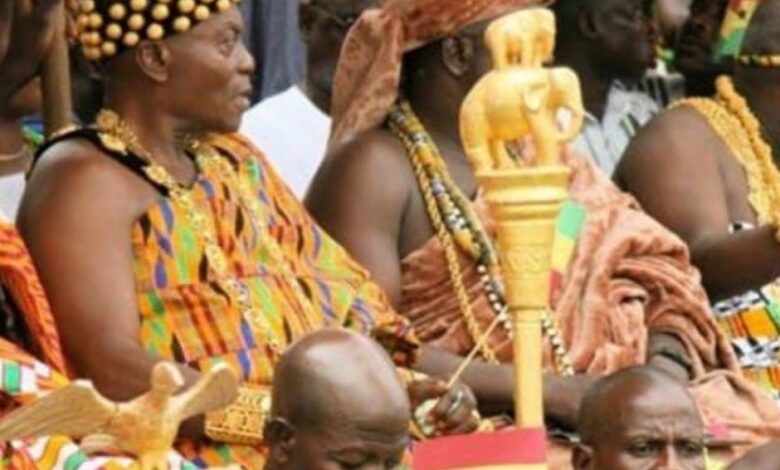
Deep within the dense, sun-dappled rainforests of West Africa, where ancient trees interlace with shifting light to create a continuous canopy of golden brilliance, the echo of the Golden Stool (Sika Dwa Kofi) still resonates as the ultimate declaration of living African sovereignty and spirituality, In this sacred cradle of modern-day Ghana, the Ashanti Empire (Asanteman) was never merely a transient political entity or a fleeting military power.
Instead, it operated as a highly sophisticated, holistic cosmic ecosystem that seamlessly welded the physical landscape, advanced spatial sciences, and ancestral metallurgy into an indomitable shield of cultural identity.
This is the epic of an extraordinary civilization that confronted colonial expansion with absolute spiritual resilience, demonstrating to the world that true thrones are forged from the illumination of collective consciousness rather than the transient spoils of the material world.
The genesis of this enduring civilization unfolded at the dawn of the eighteenth century, specifically in 1701, when the visionary leader King Osei Tutu I, guided by the profound cosmic insight of his chief priest and spiritual advisor Okomfo Anokye, orchestrated a brilliant political unification.
This strategic movement gathered fragmented, warring factions into a centralized federation capable of shattering the dominance of the neighboring Denkyira Kingdom, Historical records systematically preserved by the Ghana Museums and Monuments Board (GMMB) document that this definitive moment of unification was forged not by mere military coercion, but through a spiritual miracle.
Oral and written traditions recount that the priest Anokye conjured a solid-gold stool directly from the heavens, guiding it to descend gently through the air to rest upon the knees of King Osei Tutu.
Institutional archives at the University of Cambridge’s African Studies Centre note that this artifact was never intended to serve as a physical seat for human monarchs. Instead, it was consecrated as a sacred vessel containing the Sunsum—the collective soul, historical memory, and vital life force of the entire Ashanti nation, bridging the ancestral departed, the living population, and generations yet unborn.
Consequently, strict customary laws mandated that the stool must never touch the physical earth and could never be sat upon by any human, including the Emperor (Asantehene) himself. Instead, it was permanently elevated upon plush, sacred textiles, signaling that political authority was an absolute divine stewardship rather than the personal hubris of a human ruler.
The intellectual sophistication of the Ashanti extended far beyond statecraft and metaphysics into a masterclass of organic architecture and advanced urban planning, much of which was later devastated by British scorched-earth campaigns in the late nineteenth century.
Nevertheless, field preservation surveys published by UNESCO confirm that the surviving traditional Ashanti shrines surrounding the city of Kumasi present exceptional engineering, utilizing local clay mud-plaster, intricate wattle-and-daub matrices, and precisely woven bamboo thatch roofing.
These structures functioned as open, readable visual textbooks, with their facades beautifully embossed with intricate relief patterns known as Adinkra symbols—a complex visual taxonomy encapsulating profound philosophical, moral, and scientific concepts.
Academic research pioneered by Professor Ron Eglash in African Fractals (1999) proves that the Ashanti utilized self-similar, recursive mathematical structures (fractal geometry) to design their villages, agricultural grids, and symbolic textiles centuries before Western mathematicians formalized these concepts, reflecting a stunning historical integration of applied mathematics and structural culture.
This architectural and mathematical mastery was mirrored by a unique matrilineal social and political hierarchy. Research from the Institute of African Studies at the University of Ghana (2021) outlines that the empire’s entire lineage, property inheritance, and constitutional legitimacy were traced exclusively through the female line.
Within this balanced bureaucratic framework, the Queen Mother (Asantehemaa) reigned as the supreme moral and spiritual arbiter. According to the state records of the Manhyia Palace Museum in Kumasi, she possessed the exclusive constitutional veto power to nominate the new Emperor or depose an active ruler who strayed from the path of justice, establishing a federalized governance system that effectively protected the collective society from individual autocracy.
The absolute, non-negotiable nature of this cultural sovereignty culminated in a dramatic geopolitical standoff in 1900, famously known as the War of the Golden Stool, Seeking to complete the total colonial subjugation of the region, the British Governor, Sir Frederick Hodgson, committed a catastrophic cultural transgression when he aggressively demanded that the Ashanti surrender their sacred stool so that he, as a representative of Queen Victoria, could sit upon it.
To the Ashanti, this demand was an existential threat, equivalent to the spiritual execution of their nation. When male leaders hesitated under the shadow of superior British military technology, Yaa Asantewaa, the Queen Mother of Ejisu, stepped into the institutional vacuum.
As detailed in the Routledge Encyclopedia of African History (2005), she delivered a fiery mobilization speech, seized a rifle, and assumed supreme command of an insurgent army of thousands against the British forces. Although she was eventually captured and exiled, and the kingdom fell militarily, the British campaign failed completely in its primary strategic objective.
Not a single colonial operative ever laid eyes on or touched the Golden Stool; it was spirited away by a clandestine network of priests and masons who hid it deep within the virgin rainforests, keeping it uncompromised and free.
Today, the Ashanti Kingdom persists as an influential cultural and constitutional entity within the modern Republic of Ghana, proving that true national sovereignty is not sustained by foreign military dominance or financial hegemony, but by an unyielding cultural consciousness that refuses to let its sacred history be erased.
read more
Ghana Re-Enters West African Downstream Race with Million-Barrel Nigerian Crude Inflow