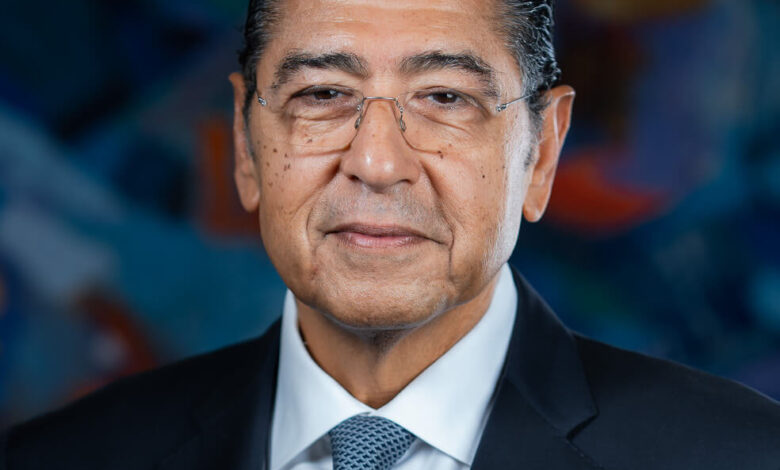
Hisham Ezz Al-Arab, CEO of Commercial International Bank – Egypt (CIB), has topped Forbes Middle East’s 2026 list of the Most Powerful CEOs in the Middle East, a ranking that highlights prominent executive leaders who have delivered strong financial performance and contributed to supporting development and strengthening economic resilience across the region.
Hisham Ezz Al-Arab Leads the Middle East’s Most Powerful CEOs
Forbes noted that Hisham Ezz Al-Arab was reappointed CEO and Board Member of Commercial International Bank – Egypt in November 2024. The magazine said the bank operates across Egypt, Kenya, and the UAE, serving more than 2.5 million customers through 214 branches, as of March 2026.
During the first quarter of 2026, the bank’s total assets reached $30.1 billion.
In 2025, CIB provided $638.8 million in long-term financing to the General Authority for the Suez Canal Economic Zone, supporting infrastructure and utilities projects.
In 2026, the bank also received approval from the Central Bank of Egypt to begin the due diligence process for HSBC Egypt’s retail banking portfolio.
Ezz Al-Arab previously served as Chairman and Managing Director of Commercial International Bank – Egypt for nearly two decades before returning as CEO and Board Member in November 2024.
Forbes: The CEO’s Role Has Evolved Amid Technological and Geopolitical Shifts
Forbes Middle East noted that the role of the CEO in the Middle East is no longer limited to leading companies through traditional approaches. Instead, executives are now expected to steer their companies through rapid technological transformation, geopolitical uncertainty, and an evolving capital-markets landscape.
Against this backdrop, Forbes Middle East unveiled its sixth annual list of the Most Powerful CEOs in the Middle East, highlighting executive leaders who have delivered strong financial performance while contributing to development and economic resilience across the region.
AI and Digital Transformation Top Corporate Priorities
Over the past year, companies across the region stepped up investments in a range of critical areas, including artificial intelligence, digital infrastructure, energy transition, and advanced manufacturing.
Artificial intelligence has also moved from the strategy-setting stage to actual implementation, while sustainability has evolved from being merely a compliance commitment into a fundamental requirement for doing business.
In 2025, Saudi Aramco announced plans to acquire a minority stake in Humain, an artificial intelligence company.
Meanwhile, International Holding Company (IHC) launched Judan Financial this year, an AI-powered company managing approximately $237 billion in assets.
Companies Expand Beyond Their Core Markets
At the same time, diversification strategies continued to shape corporate priorities, as companies expanded beyond their core markets through acquisitions and the launch of new projects.
In January 2026, NMDC Infra acquired a 51% stake in Spanish company Lantania Aguas, marking the NMDC Group’s first entry into the European market.
In June 2026, Emirates NBD Group acquired a 60% majority stake in India’s RBL Bank, through an initial capital injection of approximately $2.75 billion.
102 Executive Leaders Representing 21 Nationalities
Forbes Middle East’s 2026 list features 102 executive leaders across 100 entries, representing 21 nationalities.
Emirati executives lead the ranking with 31 CEOs, followed by Egyptians with 15 CEOs, and Saudis with 13 CEOs.
The CEOs featured on the list are based in eight countries across the region, including 49 in the UAE, 18 in Saudi Arabia, and 11 in Qatar.
Banking Sector Dominates the List
The Forbes ranking spans 29 industries, with the banking sector accounting for the largest share, with 30 entries, followed by the real estate and construction sector, with eight entries.
The list reflects the rapid transformation taking place across the region’s business environment, amid the growing importance of technology and artificial intelligence, rising investment in infrastructure and energy, and the expansion of companies into regional and international markets.
These developments are placing new demands on executive leaders, requiring them to deliver growth, sustainability, and resilience simultaneously.
read more