Dangerous Escalation in Ethiopia: Tigray Fighting Raises Fears of Conflict Spreading to Amhara and Oromia

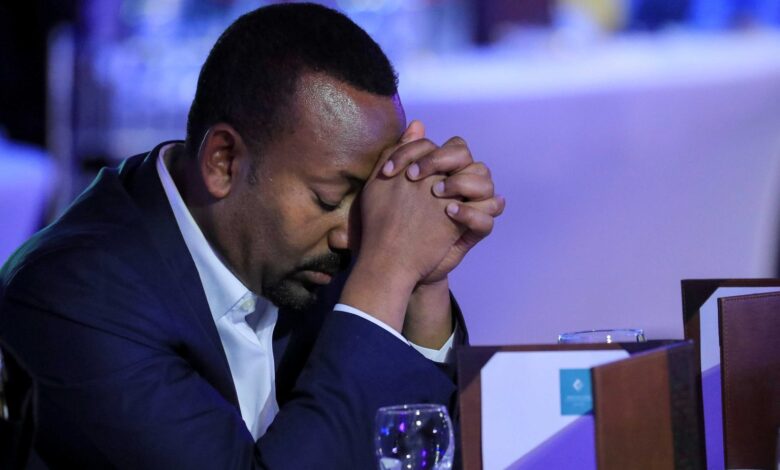
Military developments in Ethiopia are accelerating as the situation in the north becomes increasingly complex and fighting intensifies between the Ethiopian federal army and the Tigray People’s Liberation Front (TPLF), amid growing fears that the fighting could spread from the Tigray region to other Ethiopian regions, particularly Amhara and Oromia.
Reuters reported that flights to the historic Ethiopian city of Lalibela were suspended on Thursday due to fighting in nearby areas, according to seven sources, while residents of the northern Tigray region began stockpiling food and withdrawing cash, fearing that the renewed fighting could trigger another major war.
Tigray forces had seized three local airports and launched attacks in the Afar and Amhara regions in cooperation with their allies there this week, in an escalation described as the most serious since the devastating war that took place between 2020 and 2022 against Ethiopian government forces.
Ethiopian Army Says Attacks Repelled
In its first public comment on the fighting, the Ethiopian army said on Thursday that it had repelled the attacks, stating that more than 500 opposing fighters had been killed, wounded or captured.
Addis Ababa accused the region’s authorities, the Tigray People’s Liberation Front, of launching a large-scale attack, while TPLF leaders said they had entered a “defensive” war to confront what they described as aggression by the federal government, accusing the government of using drones, artillery and ground forces against them.
Reuters quoted a diplomatic source, citing local sources, as saying: “There are clashes around the city, but they have not reached inside it yet.”
A resident had earlier said that people were rushing to withdraw cash.
In Mekelle, the capital of the Tigray region, a resident said Tigray forces were patrolling the streets while drones were flying overhead, adding that residents were stockpiling food and withdrawing cash.
The source, who requested anonymity for security reasons, said residents feared facing siege-like conditions similar to those experienced during the previous war.
Panic and Shortages of Food and Medicine
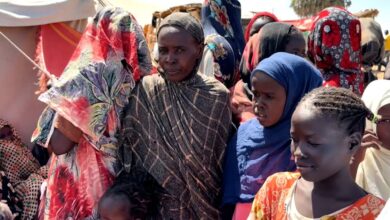
A resident of Adigrat, another town near the Eritrean border, described a state of panic and a rush to purchase goods, with shops being emptied of their supplies.
The resident told Reuters: “Food shortages are worsening, with market shelves remaining empty… essential medicines remain scarce and astronomically expensive.”
The resident added that daily survival had become a constant matter of calculation.
Both residents said they had witnessed young people being forced to join the war effort, raising widespread concerns among the population.
Referring to TPLF recruitment, a resident of Adigrat said: “I know an 18-year-old young man who lost his father in the last war and was forced to join the army.”
The Tigray People’s Liberation Front has previously denied carrying out forced recruitment.
Memories of the 2020-2022 War Return to Tigray
During the 2020-2022 war, Tigray was largely cut off from the outside world after communications were severed and access to food, cash and medicine was severely restricted, pushing hundreds of thousands of people into famine-like conditions.
The Tigray People’s Liberation Front said it had acted in self-defense to protect the people of Tigray from what it described as “all-out aggression” by the government, using ground forces backed by warplanes, drones and artillery.
In contrast, a government official told Reuters that the Tigray People’s Liberation Front had carried out a planned attack targeting civilian infrastructure, but stressed that the door to dialogue remained open to any groups that laid down their arms.
Lieutenant General Assefa Chikole, commander of Ethiopia’s Northeastern Command, said the TPLF attack had been repelled, stating that 272 attackers had been killed and 260 wounded.
Reuters was unable to independently verify these figures, and a TPLF spokesperson did not respond to a request for comment.
New Alliance of Armed Groups Against Abiy Ahmed’s Government
Following the previous war, divisions emerged within the Tigray People’s Liberation Front, and last year a hardline faction of the party regained control of the region and ousted the interim administration.
Since then, the Ethiopian army has carried out a series of drone strikes in Tigray.
More recently, the Tigray People’s Liberation Front formed an alliance with six other armed groups from across Ethiopia, including former adversaries from the war, with the aim of overthrowing Prime Minister Abiy Ahmed.
The Ethiopian government accused Eritrea of providing financial support to members of the alliance, allegations that Asmara denied.
European Union Calls for De-escalation in Ethiopia
The European Union called for de-escalation, referring to military operations carried out by both sides.
The EU said in a statement: “Disputes can only be resolved through dialogue, not military action.”
The European position reflects deep concern over the rapid deterioration of the security situation in northern Ethiopia following the renewed fighting between Tigray forces and federal forces, as well as reports that TPLF forces had seized the airports in Mekelle, Axum and Shire.
The statements, issued separately, called for an immediate de-escalation, the protection of civilians and a return to dialogue under the November 2022 Pretoria Agreement, which ended the two-year war between the Ethiopian federal government and the Tigray People’s Liberation Front.
The European Union said it was “deeply concerned by the rapidly deteriorating situation in northern Ethiopia and its impact on the population,” citing reports of military activity in multiple areas and the seizure of the three airports by TPLF forces.
The EU Ambassador to Ethiopia, Sophie From-Emmesberg, said the bloc was also deeply concerned about the military activity and the seizure of airports in Tigray.
She added that “house arrest and other measures taken by the Tigray People’s Liberation Front against opposition figures must stop,” stressing that the situation requires political dialogue rather than military action.
The European Union also said it was closely following with concern “the numerous airstrikes carried out by Ethiopian national forces using drones” in recent weeks.
The European Union said: “Immediate de-escalation is needed. It is not too late to decisively recommit to the Permanent Cessation of Hostilities Agreement.”
The EU’s official statement issued on September 23 confirmed that the bloc was following with concern reports of military activity in multiple areas and the seizure by TPLF forces of the airports in Mekelle, Axum and Shire. It also called for the protection of civilians and humanitarian access.
United Nations Warns of Expanding Fighting
The United Nations issued a similar urgent warning as fighting continued to intensify and spread beyond Tigray.
UN Secretary-General António Guterres said he was “deeply concerned” about the rapidly deteriorating situation in northern Ethiopia, including the seizure and occupation of the three airports in Mekelle, Axum and Shire.
In a second call within two days, the UN Secretary-General also expressed concern over the escalation of fighting “in and around Tigray” and the spread of hostilities to neighboring areas.
Guterres called on all parties to exercise maximum restraint, immediately reduce tensions, protect civilians and ensure safe and unhindered access for humanitarian partners to those in need, while avoiding any steps that could lead to a wider and more destructive conflict.
He also reiterated his support for efforts led by the African Union to bring the parties back to negotiations under the Pretoria Agreement.
African Affairs Expert: Developments Could Spread to Afar, Amhara and Oromia
Commenting on the latest developments in Ethiopia, Dr. Mohamed Torshin, an expert on African affairs, said developments in Ethiopia were accelerating following the unification of armed factions into a bloc or military alliance, noting that the impact of this alliance had begun to emerge on the ground after the group seized large areas.
Torshin told “Afronews24” that although the group had seized large areas, it had not so far announced control over the most important landmarks, key points, vital institutions and government facilities in the Tigray region.
He added: “And I believe they will not stop there and may expand toward the Afar region as well as the Amhara region. I believe that expansion into the Amhara and Afar regions would have implications for the cohesion of the central government in Addis Ababa and would also make it easier for this group to advance toward the Oromia region, where the capital is geographically located. In addition, other groups could become active in the Benishangul-Gumuz region.”
Torshin Rules Out Abiy Ahmed Making Concessions to Opposition
In response to a question about whether Ethiopian Prime Minister Abiy Ahmed might make concessions to the opposition, Dr. Mohamed Torshin ruled out such a possibility.
He said: “I do not believe Abiy Ahmed will make concessions because the differences are fundamental and zero-sum, given that these groups moved as a result of the recommendation of the recent National Dialogue Conference, which in one way or another contributed to strengthening Abiy Ahmed’s authority and transforming the system from an ethnic federal system into a centralized system, and their attempt to abolish the federal model and concentrate power in a single system, a one-party system, the Prosperity Party system.
“Therefore, the differences are zero-sum, and even with regard to the other political issues represented by the Pretoria agreements, the gaps remain wide. Therefore, I believe Abiy Ahmed will not make, and there will not be, any concessions offered by him from time to time.”
Expert: US Position May Not Affect Course of Military Operations
Regarding the ambiguity surrounding the US position on the developments in Ethiopia up to this point, Dr. Mohamed Torshin said:
“I believe the United States has interests with the Ethiopian government, but its relations with the Tigray Liberation Front are also close and strong. Therefore, its position may not be clear in the early days of the war, but ultimately it will stand in favor of the Ethiopian government and seek, in one way or another, to implement the Pretoria agreements, considering that they are part of this framework. But on the ground, I believe its position will not have much impact on the course of operations if this group obtains the necessary logistical, military and even diplomatic support.”
These developments come as international warnings over the expansion of the conflict continue to grow. The European Union and the United Nations are focusing on de-escalation, the protection of civilians and returning the parties to the political process and the Pretoria Agreement, while developments and reports from northern Ethiopia indicate that tensions and fighting continue in Tigray and surrounding areas.
read more
Ethiopia on a Knife-Edge: New Clashes in Tigray Raise Fears of a Return to War