The Pyramid of King Djedefre at Abu Rawash and the Discovery of an Early Dynastic Funerary Boat

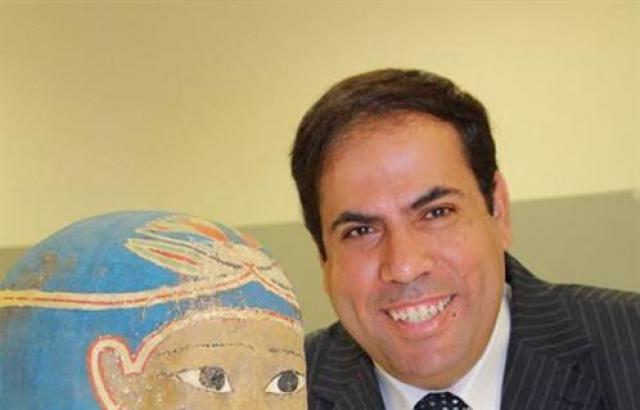
Dr. Hussein Bassir
Abu Rawash, located approximately eight kilometers north of the Giza Plateau, is one of the most important yet relatively less explored archaeological sites in the Memphite necropolis, Its significance extends far beyond the pyramid of King Djedefre, the fourth king of the Fourth Dynasty and son of King Khufu.
The archaeological discoveries made in this area reveal a remarkable history of royal and elite burials stretching from the Early Dynastic Period to the Old Kingdom.
The site offers an exceptional opportunity to examine the development of ancient Egyptian royal funerary architecture, burial customs, religious beliefs, and the symbolic importance of boats in ancient Egyptian civilization.
King Djedefre, also known as Radjedef, was a son of Khufu, the builder of the Great Pyramid at Giza. He succeeded his father and ruled during the Fourth Dynasty of the Old Kingdom, conventionally dated to approximately the twenty-sixth century BCE.
Djedefre chose Abu Rawash as the location for his royal pyramid complex. His decision to establish his funerary monument north of the main concentration of royal pyramids at Giza is an interesting feature of his reign.
The pyramid occupied an elevated position overlooking the surrounding landscape, providing a distinctive setting for his royal funerary establishment.
The pyramid was originally conceived as a monumental royal tomb, surrounded by subsidiary structures, temples, and associated architectural elements. Although much of the monument has disappeared or been dismantled over the centuries, its surviving remains provide important evidence of Djedefre’s architectural ambitions and the development of pyramid construction during the Fourth Dynasty.
The archaeological investigation of the pyramid complex was undertaken by the French Egyptologist Émile Chassinat between 1900 and 1902. His excavations revealed important architectural remains, fragments of royal sculpture, and evidence of the original arrangement of the funerary complex.
Among the discoveries was a large boat-shaped installation near the eastern side of the pyramid complex, close to the mortuary temple. This feature provides important evidence for the religious and funerary significance attached to boats in the royal burial traditions of the Old Kingdom.
The boat-shaped pit associated with Djedefre’s pyramid must be understood within the broader tradition of royal funerary boats. In ancient Egyptian religious thought, boats possessed a significance that went far beyond their practical function as means of transportation. They were closely associated with the sun god Re, the movement of the sun across the sky, and the passage of the deceased into the afterlife.
The king was expected to participate in the divine solar cycle, travelling across the heavens and overcoming the dangers of the underworld. Boats therefore represented an essential element of royal religious symbolism.
The installations at Abu Rawash should also be considered in relation to the famous boat pits associated with the pyramid of Khufu at Giza, particularly the extraordinary wooden vessel discovered beside the Great Pyramid.
However, the history of Abu Rawash did not begin with King Djedefre. Archaeological investigations have demonstrated that the area was already being used as a cemetery during the Early Dynastic Period, centuries before the construction of the Fourth-Dynasty pyramid.
The earlier cemetery, known as Cemetery M, contains large mudbrick mastabas belonging to members of the elite of the emerging Egyptian state. These tombs provide important evidence of the development of funerary architecture, social hierarchy, and elite culture during the First Dynasty.
The first major excavations in this cemetery were conducted by the French archaeologist Pierre Montet in 1913–1914. His investigations revealed a group of large tombs dating to the First Dynasty and contributed significantly to our understanding of early Egyptian funerary practices.
Among the remains recorded during these early investigations was a wooden structure that Montet interpreted as a floor associated with one of the mastabas. Its true significance would not become clear until almost a century later.
In 2008, a joint archaeological research project involving the Institut français d’archéologie orientale (IFAO) and Macquarie University in Sydney began investigating Cemetery M at Abu Rawash. The project aimed to re-examine the mastabas previously excavated by Montet and develop a more comprehensive understanding of the funerary architecture and society of the Early Dynastic Period.
The archaeological work was directed by the French Egyptologist Yann Tristant, who became particularly interested in the wooden remains previously recorded by Montet. He recognized that their arrangement might indicate something much more significant than an ordinary architectural floor.
The team returned to the location and resumed excavation. In 2012, their investigations revealed the remains of an ancient wooden boat associated with Mastaba M06.
The discovery was extraordinary. The vessel, approximately six metres long, belonged to the Early Dynastic Period and was associated with the reign of King Den, one of the most important rulers of the First Dynasty, who reigned around 3000 BCE.
The boat was constructed from wooden planks assembled using techniques involving ligatures and lashings. Its construction provides valuable evidence of the technological knowledge and boatbuilding traditions that existed during the earliest stages of Egyptian civilization.
The archaeological context and associated evidence were essential for establishing the boat’s chronology. Its discovery attracted considerable international attention because of its exceptional antiquity and its contribution to the study of early Egyptian funerary practices.
The importance of the discovery lies not only in the age of the vessel but also in its archaeological context. It was found associated with an elite burial rather than a royal pyramid complex. This demonstrates that boats formed part of the funerary traditions of high-ranking individuals during the earliest periods of Egyptian history.
The investigations continued, and the 2013 archaeological season produced further important evidence, including additional wooden remains belonging to funerary boats in the vicinity of the Early Dynastic cemetery. These discoveries suggested that the use of boats in funerary contexts at Abu Rawash was not an isolated phenomenon.
The wooden remains offered researchers an opportunity to investigate early Egyptian shipbuilding techniques, the selection of construction materials, and the methods used to assemble vessels. They also provided valuable evidence for the development of Egyptian maritime and riverine technology.
The religious significance of these discoveries is equally important. The Nile was not simply a geographical feature or an economic resource. It was central to Egyptian civilization, transportation, agriculture, communication, religious imagination, and ideas about life after death.
In ancient Egyptian cosmology, the journey of the deceased was closely connected with movement through different cosmic realms. The solar boat of Re represented the daily journey of the sun, while the deceased hoped to participate in the eternal cycle of renewal and regeneration.
Although we should not assume that every funerary boat had precisely the same religious function, the presence of these vessels in Egyptian cemeteries reveals the profound importance of boats in Egyptian conceptions of death and eternity.
The archaeological importance of Abu Rawash lies in the remarkable chronological sequence represented by its monuments. The Early Dynastic cemetery demonstrates that the area was already an important burial ground during the establishment of the Egyptian state. Approximately five centuries later, King Djedefre selected the same general area for his monumental royal funerary complex during the Fourth Dynasty.
It is essential, therefore, to distinguish between the two archaeological discoveries: the boat-shaped pit associated with Djedefre’s pyramid, investigated by Émile Chassinat in the early twentieth century, and the actual wooden funerary boat discovered in 2012 by the French Egyptologist Yann Tristant and his team in the Early Dynastic Cemetery M. The latter does not belong to Djedefre’s pyramid or to the Fourth Dynasty; it dates to approximately five centuries earlier.
The history of archaeological research at Abu Rawash is itself remarkable. Several generations of French archaeologists and their international colleagues have contributed to the investigation of the site. Émile Chassinat explored the pyramid complex of Djedefre, Pierre Montet investigated the Early Dynastic cemetery, and Yann Tristant’s later research brought new scientific approaches to the study of its ancient tombs and wooden remains.
Tristant’s discovery is an excellent example of how archaeological knowledge develops. Archaeology is not simply the discovery of new objects; it also involves revisiting old excavations, reconsidering earlier interpretations, and applying modern scientific methods to evidence that previous generations could not fully understand.
The results of this research were published in 2015 in the Bulletin de l’Institut français d’archéologie orientale in a study by Yann Tristant, François Briois, Georges Castel, and Olivier Onezime entitled Barques sur le Nil… Le mastaba M06 d’Abou Rawach et sa barque funéraire (Ire dynastie, règne de Den).
Abu Rawash deserves to be considered one of the important archaeological landscapes of ancient Egypt. Its significance extends from the beginnings of the Egyptian state to the great achievements of the Old Kingdom.
The Early Dynastic boat discovered by Yann Tristant offers a rare glimpse into the technological and funerary traditions of the earliest Egyptians, while the pyramid complex of King Djedefre demonstrates the architectural, political, and religious ambitions of the Fourth Dynasty.
Together, these discoveries tell a fascinating story about the development of Egyptian civilization, the emergence of royal power, the sophistication of early Egyptian craftsmanship, and the enduring human desire to overcome death through religious belief and the promise of eternity.
Abu Rawash is not simply the location of a pyramid. It is an archaeological archive of the early history of Egypt, where the remains of boats, tombs, royal monuments, and ancient communities preserve successive chapters of one of humanity’s oldest civilizations.
read more
Africa We Do Not Know: The Continent That Hid the Stories of the World in Its Memory