2026 Ibrahim Index : Slight progress in African governance over the past decade, driven by gains in economic and human development

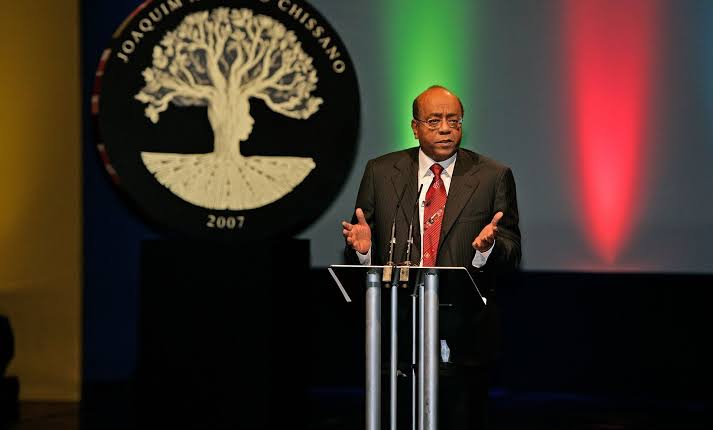
The Mo Ibrahim Foundation on Saturday released the 2026 Ibrahim Index of African Governance (IIAG), the most comprehensive assessment of public governance performance and trends across all 54 African countries, showing slight overall progress over the past decade, driven by improvements in economic and human development.
The Index combines Overall Governance scores across four main dimensions: Security and Rule of Law; Participation, Rights and Inclusion; Foundations for Economic Opportunity; and Human Development. These dimensions cover 16 sub-categories and draw on 96 indicators based on data produced by 51 sources.
Covering the period from 2016 to 2025, the Index shows that Overall Governance in Africa has improved despite cumulative global shocks, although these gains remain uneven and fragile.
Progress at the continental level has been driven by improvements in the economic and human development dimensions, namely Foundations for Economic Opportunity and Human Development, with notable advances in infrastructure, health and education.
Progress in Foundations for Economic Opportunity is particularly notable, having improved between 2016 and 2025 in 44 countries, which are home to 68% of the continent’s population. This demonstrates the continent’s resilience in the face of multiple challenges over the decade, including the COVID-19 pandemic, the impact of the Russia-Ukraine war on access to energy and food security, and historical decreases in development aid.
The greatest progress was recorded in infrastructure, the most improved of the Index’s 16 sub-categories. Gains were widespread, covering 52 countries – all except Nigeria and The Gambia – and 84% of the continent’s population. Progress in this area also accelerated over the decade, led by significant improvements in mobile connectivity, as well as access to energy and the internet.
Education also improved in 34 countries, home to 75% of the continent’s population, while health recorded progress in 40 countries, covering 87% of the population.
However, stronger and further progress remains constrained by continued deterioration in security, the rule of law and participation.
Both the Security and Rule of Law and Participation, Rights and Inclusion dimensions recorded declines over the decade in 34 and 31 countries, respectively, representing 78% and 60% of Africa’s population.
On a positive note, the deterioration in security has slowed since 2022, with signs of progress emerging in 27 countries.
The 2026 IIAG also shows that 25 countries, home to almost 47% of the continent’s population, managed to achieve economic progress despite the deterioration in security over the decade.
However, progress in Foundations for Economic Opportunity was stronger on average in countries where Security and Rule of Law also improved. This was the case in 20 countries, representing 22% of the continent’s population.
At the end of the decade under review, in 2025, Seychelles ranked first, while Morocco replaced Tunisia in the top ten.
Although South Africa remained among the top ten, ranking fifth, it followed a concerning trend of increasing deterioration.
The Index also found that Overall Governance had deteriorated over the decade in four of the continent’s most populous countries: Nigeria, the Democratic Republic of the Congo, South Africa and Sudan.
At the other end of the governance rankings, Angola and the Republic of the Congo moved out of the bottom ten, replaced by Libya and Guinea-Bissau.
Meanwhile, Sudan, the Central African Republic and Guinea-Bissau followed a trend of worsening deterioration over the decade.
Commenting on the findings, Mo Ibrahim, Chair and Founder of the Mo Ibrahim Foundation, said: “The 2026 IIAG results highlight Africa’s resilience in a challenging global environment. They also show that many countries manage to achieve economic and human development despite deterioration in security and rule of law. But this is not a sustainable trade-off. Economic and social gains will not last, and will anyway always be weaker, without progress in security, rule of law and participation”.
read more
Africa We Do Not Know: The Continent That Hid the Stories of the World in Its Memory