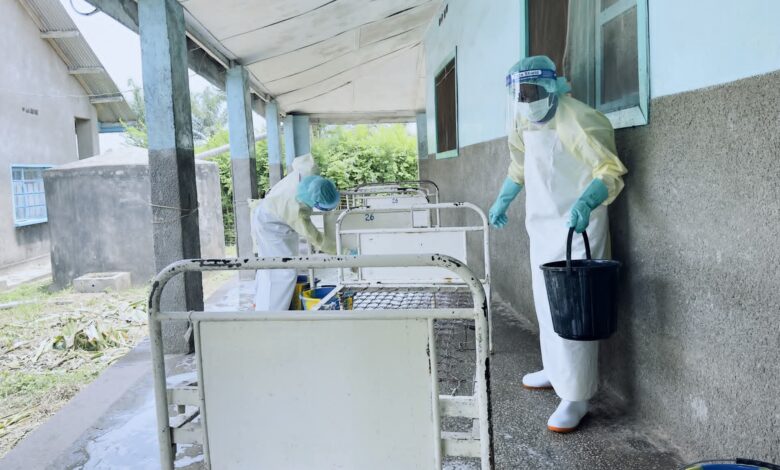
In a critical epidemiologic disclosure that has put regional public health networks on high alert, Democratic Republic of the Congo Health Minister Roger Kamba confirmed on Tuesday that the newly manifested Ebola outbreak remains in an aggressive, early growth phase.
Addressing a central press conference, Kamba revealed that health authorities have mapped approximately 1,000 suspected cases across affected sectors, with 101 individuals already testing positive through rigorous laboratory screening.
Preliminary epidemiological modeling indicates that between 200 and 220 fatalities are structurally linked to the widening contagion, with 17 deaths definitively confirmed via laboratory validation, signaling a precarious escalation since the official declaration of the outbreak on May 15.
The structural management of this epidemic is uniquely complicated by the specific pathogen involved—the rare Bundibugyo strain of the Ebola virus. While historically exhibiting a lower case-fatality rate than the highly lethal Zaire variant, Kamba warned that the Bundibugyo strain presents a profound institutional threat due to a complete absence of approved vaccines or targeted therapeutic treatments.
Compounding the containment challenge is the virus’s prolonged incubation period of up to 21 days, which has allowed the pathogen to circulate silently prior to official state detection, leaving field epidemiologists currently unable to identify the outbreak’s “patient zero” or trace the primary zoonotic transmission event.
In an aggressive tactical maneuver to isolate the primary transmission zones, the Kinshasa government has enforced strict transit restrictions, suspending all civilian passenger aviation networks to and from Bunia, the capital of Ituri Province and the definitive epicenter of the outbreak.
To maintain a vital logistical lifeline, specialized humanitarian flights remain operational under stringent bio-security protocols. With the state preparing for a protracted four-to-six-month response campaign, public health syndicates are deploying non-pharmaceutical interventions—relying entirely on synchronized contact tracing, localized diagnostic testing, strict isolation matrices, community engagement, and mandatory safe burials—to artificially suppress the transmission curve before the virus migrates into major metropolitan transport corridors.
read more