Convergence of Contagion and Conflict: Bundibugyo Ebola Strain Breaches Rebel-Held Sectors in Eastern DRC

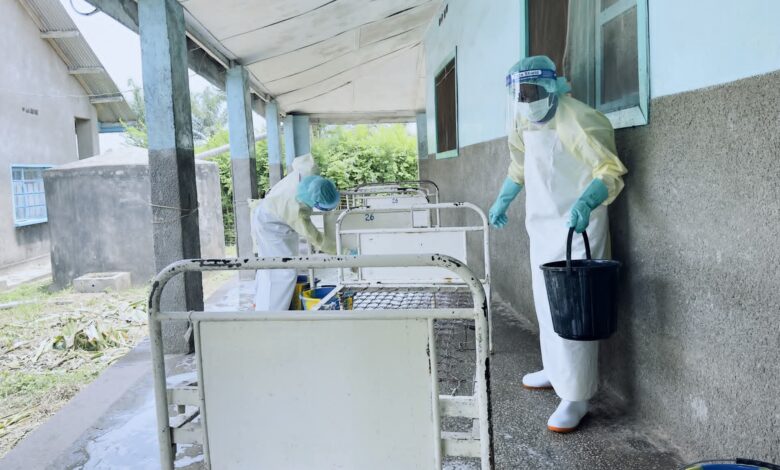
The declaration of the Democratic Republic of the Congo’s seventeenth Ebola outbreak has rapidly evolved into a volatile geopolitical and public health crisis, Less than a week after the official May 15 declaration, the virus has breached structural containment lines, spreading south into South Kivu Province.
The dynamic of the crisis is profoundly complicated by armed conflict; the March 23 Movement (M23) rebel group, which has occupied the strategic provincial capital of Bukavu since February 2025, officially confirmed a fatal case within the city.
This convergence of a highly lethal pathogen with deep regional displacement and non-state military occupation creates an asymmetric theater of operations that severely paralyzes traditional epidemiological containment strategies.
The biological profile of the pathogen represents an acute systemic threat to regional biosecurity. Unlike the more frequent Zaire ebolavirus outbreaks that have historically plagued the DRC, genetic sequencing confirms that this epidemic is driven by the rare Bundibugyo strain.
This specific variant carries a devastating case-fatality rate ranging between 30% and 50%. Crucially, the international community possesses zero approved vaccines or therapeutic countermeasures optimized for the Bundibugyo strain, as the widely stockpiled Ervebo vaccine is exclusively configured to neutralize the Zaire strain.
With candidate vaccines remaining months away from viable field deployment, healthcare syndicates are stripped of pharmaceutical shields, forcing them to rely entirely on mechanical isolation, aggressive contact tracing, and rudimentary supportive care.
The epidemiological trajectory indicates that the virus achieved significant velocity long before institutional detection.
The World Health Organization (WHO) estimates that silent community transmission initiated in late April, potentially amplified by localized superspreading events associated with traditional, high-contact funeral practices.
The caseload has expanded exponentially to 626 suspected cases and 159 probable deaths, with the geographical footprint expanding across Ituri, North Kivu, and South Kivu, alongside a cross-border spillover of two confirmed cases into neighboring Uganda.
The immediate focus of global anxiety has centered on Kisangani, the capital of Tshopo Province. While Tshopo has yet to register a positive case, its position as one of the DRC’s most heavily trafficked commercial and transport hubs means that if the virus has seeded within its highly mobile population, containment within the eastern borderlands will become mathematically impossible.
Compounding the clinical paralysis is an escalating wave of violent community resistance and deep-seated institutional distrust.
In Rwampara, the epicentre of the outbreak in Ituri Province, localized grievances boiled over into direct conflict, culminating in the intentional arson of an Ebola isolation facility. This civil friction is exacerbated by acute domestic suspicion toward federal health metrics dictates issued from the distant capital of Kinshasa.
Furthermore, international analysts emphasize that the current crisis represents a perfect storm born from a chronic decline in global health funding and the severe infrastructural degradation of a war-ravaged landscape.
As the WHO releases an emergency allocation of 3.9 million dollars to deploy first responders into contested zones, the operational reality remains stark: in an environment where health systems are fragmented by rebel governance and active combat, the virus is weaponized by the very geography of the conflict.
read more
WHO Declares Ebola Outbreak in DRC and Uganda a Public Health Emergency of International Concern