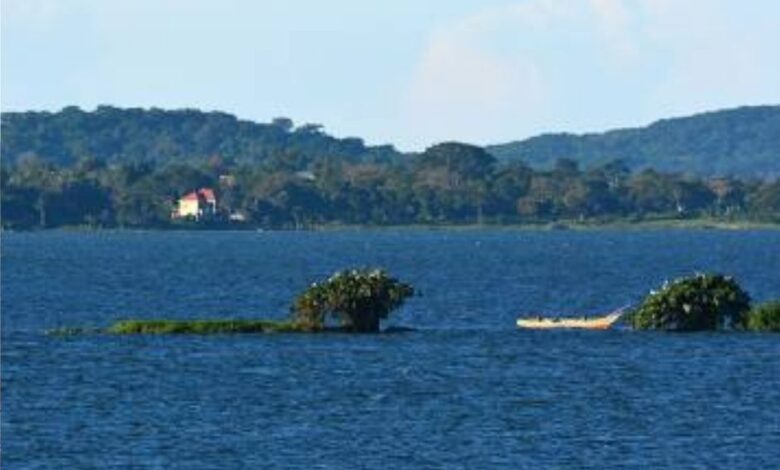
The East African Community (EAC) must transition from fragmented national policies to a highly coordinated, multilateral framework to arrest the rapid environmental degradation of Lake Victoria. Speaking at the closing ceremony of the inaugural Lake Victoria Day in Mwanza City, Tanzanian Prime Minister Mwigulu Nchemba issued an urgent mandate to fellow regional bloc members.
He emphasized that Africa’s largest freshwater body—shared directly by Tanzania, Kenya, and Uganda—functions as a highly integrated economic and biological engine that cannot be effectively managed through isolated sovereign actions.
The structural survival of the basin is currently threatened by a convergence of anthropogenic and climate-induced stressors. Serving as the world’s second-largest freshwater lake by surface area, Lake Victoria directly supports the food security, maritime transport corridors, and commercial livelihoods of millions of people across the sub-continent.
However, unregulated industrial runoff, agricultural pollution, climate-driven water level fluctuations, and the aggressive spread of invasive weeds have severely compromised the lake’s ecological equilibrium.
By operating under the collaborative framework of “Our Water, Our Future: Unite for the Sustainability of the Lake Victoria Basin,” the newly institutionalized annual summit is designed to establish collective accountability, compelling member states to treat the basin as a unified sovereign asset rather than a divided border resource.
To mitigate these systemic threats, Tanzania is advocating for the immediate integration of advanced monitoring technology and modernized cross-border maritime protocols.
The proposed regional strategy involves deploying centralized data networks for real-time water quality assessments, scaling up technological infrastructure for fisheries monitoring to combat illegal poaching, and installing synchronized water transport safety systems to reduce commercial transit vulnerabilities.
These technological interventions are critical to securing the broader economic potential of the EAC, which has expanded to include eight member states: Burundi, the Democratic Republic of the Congo, Kenya, Rwanda, Somalia, South Sudan, Uganda, and Tanzania.
Ultimately, the ecological stabilization of Lake Victoria is a foundational prerequisite for East African economic integration. As climate volatility accelerates, the capacity of individual nations to protect their respective coastlines is proving structurally insufficient.
By anchoring regional solidarity around the shared preservation of this vital hydrological asset, the EAC aims to build a resilient, resource-secure corridor. Forcing a unified ecological defense ensures that the foundational fishing, trade, and agricultural sectors of the regional bloc remain insulated from catastrophic environmental collapse, turning environmental conservation into a direct tool for sub-continental economic sovereignty.
read more