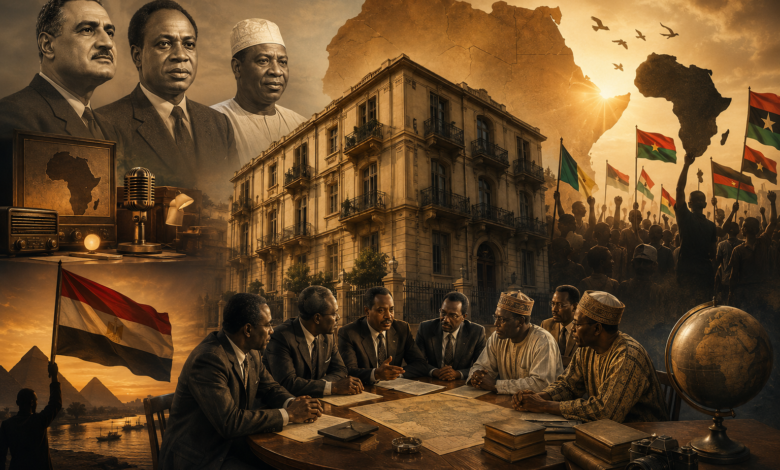
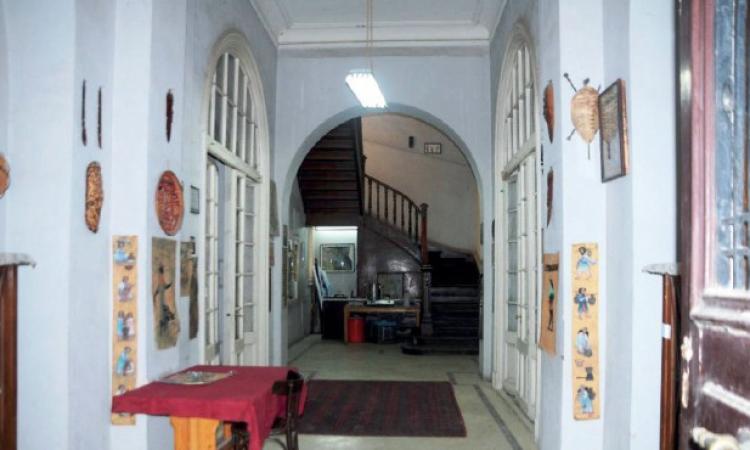
This address was not merely a residential building in one of Cairo’s distinguished districts, At a decisive historical moment, it became an African political operations room and a meeting place for leaders and activists from liberation movements across the continent , From this location, discussions were conducted, positions coordinated, and visions shaped regarding Africa’s future after colonialism, at a time when most African capitals remained under foreign rule.
This role emerged within the framework of a clear Egyptian vision that took shape following the July 1952 Revolution and matured under the leadership of Gamal Abdel Nasser, which linked Egypt’s national security to African liberation, Cairo understood early that the struggle for independence could not be confined within borders and that Africa represented Egypt’s natural strategic depth politically, securely, and civilizationally. Supporting liberation movements was therefore not a tactical choice, but part of a complete political doctrine.
At 5 Ahmed Heshmat Street, activists from West, East, and Southern Africa gathered. Meetings were held discreetly during a time when colonial intelligence services pursued every movement of liberation leaders. Through this headquarters and other undisclosed locations, Cairo provided safe spaces for communication and planning, helping to build a transnational African solidarity network.
This operational role was inseparable from Egypt’s political relations with leading African liberation figures, foremost among them Kwame Nkrumah and Ahmed Sékou Touré. Cairo became the meeting point between Arab nationalist thought and the dream of African unity, between Egypt’s struggle against British colonialism and Africa’s confrontation with French, British, and Portuguese colonial rule.
Hosting liberation movements at 5 Ahmed Heshmat Street was not an isolated act. It formed part of a broader system that included media support through “Voice of Africa,” diplomatic advocacy in international forums, and political coordination that later paved the way for the establishment of the Organization of African Unity. Yet the uniqueness of this address lies in the fact that it was a living site of history, where African decisions were shaped far from official conference halls.
Recalling the history of this place today is not merely documentation of a glorious past, but a reminder of Egypt’s foundational role in shaping modern African consciousness. At a time when global powers are competing for influence in Africa, this legacy constitutes a source of soft power and a clear message that Egypt’s relationship with Africa was never based on temporary interests, but on a shared struggle against colonialism and for national state-building.
5 Ahmed Heshmat Street stood as witness to an era when Cairo believed that Africa’s liberation was inseparable from its own, and that Egypt’s national security began in its African depth. It is a message that remains relevant today—perhaps more urgently than ever before.
read more