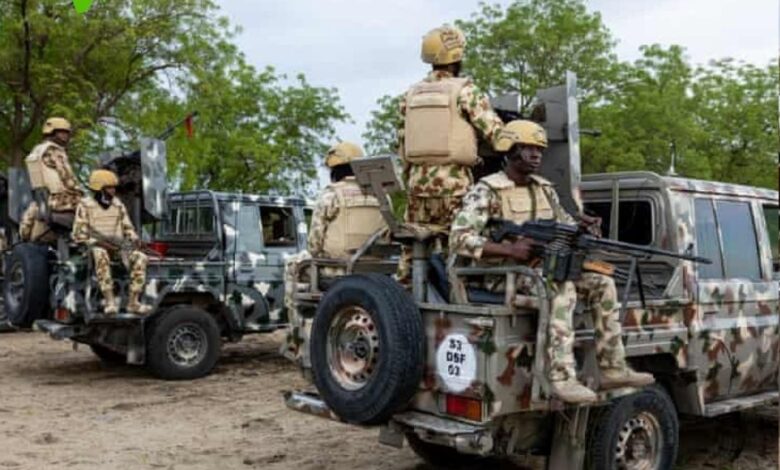
US President Donald Trump announced that Abu-Bilal al-Minuki, the global second-in-command of ISIS, was killed during a highly complex, joint military operation executed alongside the Armed Forces of Nigeria.
Characterizing the target as the most active terrorist in the world, the administration declared that the successful mission has fundamentally disrupted the militant group’s global operational capability.
Treasury records confirm al-Minuki was born in 1982 in Nigeria’s northeastern Borno State—a strategic border landscape adjacent to Chad, Niger, and Cameroon that has served as a historical epicenter for Islamist insurgencies.
He was officially labeled a Specially Designated Global Terrorist by Washington in 2023 for leading a Sahel-based general directorate responsible for funneling operational guidance and financing to regional affiliates.
While the precise geographic coordinates of the fatal strike remain classified, the operation highlights a deepening of Washington’s military footprint in West Africa following a major tactical pivot over the past year.
The U.S. has systematically scaled up its intelligence assets in Nigeria, deploying surveillance drones and an estimated 200 military personnel to provide advanced satellite reconnaissance and tactical logistics.
Though Nigerian defense officials have previously maintained that foreign troops operate strictly in a non-combat advisory capacity, the frictionless execution of this high-value target strike indicates substantial operational integration between the U.S. Special Operations Command Africa and Nigerian field units.
The strategic success coincides with delicate domestic and diplomatic friction surrounding the regional security crisis. The White House has previously leveled sharp criticism at Abuja, accusing Nigerian authorities of failing to adequately protect religious minorities from rising banditry and Islamist raids in the country’s northwest.
Security analysts and local observers emphasize that the underlying dynamics remain highly nuanced, noting that Nigeria’s vast population of 237 million is evenly split between Christians and Muslims, both of whom routinely fall victim to radical networks.
Furthermore, the broader security landscape continues to be severely complicated by underlying communal tensions, ethnic rivalries, and violent disputes between pastoral herders and agrarian farmers over dwindling access to localized land and water resources.
read more
Washington to send 200 troops to Nigeria to train It’s military