CIB Leads Shift in African SME Banking as Ecosystem Finance Goes Beyond Traditional Lending

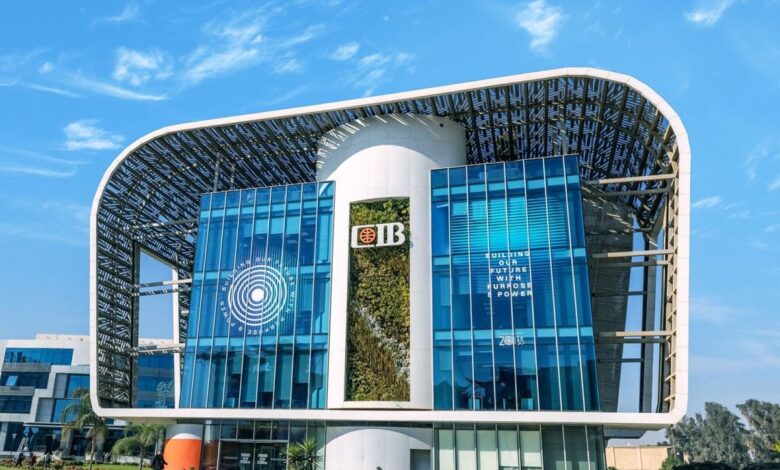
Egypt’s Commercial International Bank (CIB) is developing an ecosystem-based banking model aimed at giving African small and medium-sized enterprises access to a broader range of financial and business services, as banks across the continent seek new ways to address a financing gap estimated at $331 billion.
According to a report by Euromoney, the shift toward ecosystem banking comes as micro, small and medium-sized enterprises (MSMEs) account for more than 90% of businesses across Africa, prompting some banks to move beyond standalone lending products and combine financing with payments, digital tools and non-financial services.
Mobile technology and partnerships are helping banks extend their reach and address distribution gaps, but the expansion of ecosystem banking also requires financial institutions and their partners to ensure that inclusion remains responsible and commercially sustainable, while adapting their models to the specific characteristics of individual African markets.
CIB Builds an Integrated Banking Platform for SMEs
At Egypt’s Commercial International Bank (CIB), ecosystem banking is focused on building a connected platform for SMEs rather than offering financial products on a standalone basis.
“In practice, this translates into holistic financial services, where payments, lending, trade finance, and digital tools are bundled together,” said Islam Zekry, group chief finance and operations officer and executive board member at CIB, according to Euromoney.
The approach comes as high collateral requirements continue to prevent many African MSMEs from accessing formal finance, while informal business practices and limited financial records add to perceived credit risks.
A growing digital footprint in some African economies is nevertheless allowing more MSMEs to be assessed as potential borrowers, supporting the expansion of cashflow-based lending in markets such as Nigeria, Kenya and South Africa.
Digital connectivity and financial inclusion, however, remain uneven across the continent. As a result, serving MSMEs requires banks to develop channels beyond mobile applications and credit models based solely on digital transactions.
African Banks Move Closer to the Day-to-Day Operations of SMEs
Banks are increasingly seeking to position themselves within the day-to-day operations of small and medium-sized businesses, including invoicing, inventory management and cash movements.
“Banks now position themselves ‘within the SME’s actual operating rhythm; its invoicing, its inventory management, and the day-to-day cash movements that ultimately determine a business’s viability,’” said Kafui Bimpe, head of SME business across Access Bank’s African subsidiaries.
Physical distribution networks remain important in markets where digital penetration is lower. Banks are also working with fintech companies, telecommunications firms and other service providers to formalise and digitise business processes.
These partnerships can improve MSMEs’ access to vehicles, equipment, logistics support and human resources, allowing banks to become part of a broader ecosystem supporting business operations.
Through these ecosystems, banks are meeting customers where they are and moving beyond the traditional approach of providing MSMEs with standalone products to supporting the broader process of running and growing a business, said Abiodun Olubitan, group head of SME banking at Access Bank.
Development Finance Institutions Help Share Risk
Partnerships with development finance institutions can help ecosystem banking models expand by allowing banks to share risk while broadening MSMEs’ access to business support, market opportunities and growth capital.
Such partnerships can also help banks diversify their credit portfolios and offer MSMEs financing on longer and more affordable terms than their balance sheets alone would allow.
Olubitan described this as “a good example of the way partnerships can create value for both lenders and SMEs.”
The structure of these partnerships varies from one country to another.
In South Africa, deep capital markets are being mobilised to expand SME credit. In July 2026, the African Development Bank invested ZAR5.4 billion in a subordinated first loss after capital (Flac) instrument issued by Standard Bank Group.
The transaction was Africa’s first development-finance-institution-supported social Flac instrument listed on the Johannesburg Stock Exchange, with all proceeds earmarked for SME financing, including women-led businesses.
Risk-sharing structures can also help banks serve MSMEs in markets where financial inclusion is lower and digital coverage is more limited.
In May 2025, the African Export-Import Bank signed a €15 million factoring line of credit with Banque Postale du Congo to support SMEs in the Republic of Congo and expand the bank’s cross-border factoring activities.
Africa’s Trade Finance Gap Adds Pressure on SMEs
Africa’s trade finance gap is estimated by the African Development Bank at between $100 billion and $120 billion annually, with SMEs among those hardest hit by the shortfall.
Foreign exchange shortages and currency volatility are limiting MSMEs’ ability to scale, expand their operations, access vital inputs and reach international markets.
The historical dominance of hard-currency trade finance can add to these pressures. During this decade, the COVID-19 pandemic, higher tariffs and energy shocks linked to conflicts in eastern Europe and the Middle East have further compounded the challenges facing African businesses.
To help companies take advantage of opportunities created by the African Continental Free Trade Area (AfCFTA) and the Pan-African Payment and Settlement System (PAPSS), banks are expanding local-currency trade finance and cross-border payment options.
These products can reduce currency mismatches and dependence on scarce hard currency, although they do not eliminate foreign-exchange risks.
CIB Supports Egypt’s Ambition to Become a Trade Hub
Egypt is also seeking to strengthen its position as a trade hub, supported by the Suez Canal and its proximity to European, Middle Eastern and Asian markets.
Banks including CIB are using partnerships and in-house platforms to help MSMEs navigate export requirements, logistics and payments while supporting their efforts to enter new markets.
Rather than focusing solely on individual companies, some pan-African lenders, including Equity Bank, are broadening their ecosystems by financing upstream and downstream trade linkages.
Targeted financial solutions are also helping reduce friction along supply chains.
“For SMEs, the most profound challenge is often not demand, but the working capital needed to fulfil that demand,” said Collins Wanyonyi, director of SME banking at Equity Bank.
“Import duty financing helps keep goods moving through ports, purchase order financing supports order fulfilment, and invoice discounting unlocks liquidity from receivables.”
Balancing Innovation With Risk Management
The long-term test for ecosystem banking will be whether it can support sustainable MSME credit and growth without weakening banks’ underwriting standards or operational resilience.
Partnerships, digital applications and dedicated financing facilities are enabling banks to reach deeper into the MSME segment. However, increasingly complex ecosystems also create additional risks involving third parties, data governance, compliance and customer conduct.
Robust due diligence, clear accountability, strong data safeguards and continuous monitoring will therefore be essential as banks expand these models.
“The key challenge is balancing innovation with control – ensuring partners align with compliance and sustainability standards while managing risks around data security, credit quality and operational reliability,” said Zekry.
Evidence suggests that prudent oversight remains central to the emerging momentum behind ecosystem banking.
By maintaining a focus on responsible financial inclusion, banks can expand services to a vast and underserved MSME market while supporting economic activity and resilience across Africa.
read more