Ambassador Dr. Mohamed Hegazy Writes: From the “Legacy of Trusteeship” to the “Leverage of Sanctions” — Activating the United Nations’ Institutional Memory to Confront the Israeli Occupation

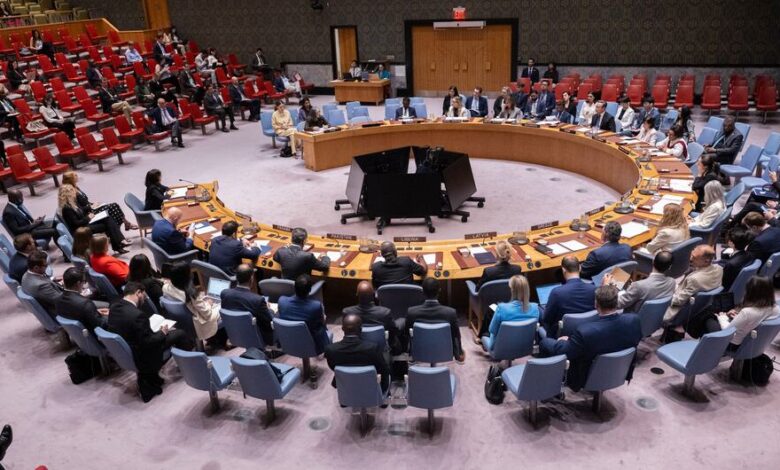
When the veto in the UN Security Council crushes every glimmer of hope for justice, attention turns toward the old mechanisms lying dormant in the corners of the international system, searching for a new point of leverage , The International Trusteeship System is precisely such a forgotten legal mechanism that deserves to be rediscovered, particularly after the International Court of Justice’s advisory opinion of July 2024 added a critically important legal dimension by characterizing the Israeli occupation as involving racial discrimination and apartheid, This characterization opens the door to activating established UN mechanisms that have remained dormant for decades.
Chapter XII of the United Nations Charter, adopted in 1945, established the International Trusteeship System to enable non-self-governing territories to move, under international supervision, toward gradual independence. The system supervised eleven territories, the last of which was Palau, which achieved independence in 1994. After that, the Trusteeship Council effectively entered a state of dormancy. Yet dormancy is not death. Article 87 still grants the Council authority to receive petitions, examine them, and organize periodic inspection missions. Indeed, the Charter requires it to establish detailed forms for measuring political, economic, social and educational progress among the populations of each territory under trusteeship.
Since 1967, the Palestinian territories have lived under an occupation that systematically constrains the rights of their inhabitants. The International Court of Justice has stated that the occupation, with its discriminatory structure, involves apartheid and constitutes a grave violation of the prohibition of racial discrimination. These descriptions intersect with the very objectives that the trusteeship system was designed to address. Reframing the Palestinian issue within this institutional framework could activate an existing system of monitoring, reporting and accountability, particularly since the Court concluded that all states are under an obligation not to recognize as lawful the situation resulting from the occupation and not to render aid or assistance in maintaining that situation.
The problem is that trusteeship is designed for “territories,” rather than “occupied territories,” and its operation requires the consent of the “administering authority.” Israel would not voluntarily accept such a role. Yet the legal mechanisms could operate in the absence of such consent as an instrument of normative pressure. The General Assembly could declare that the Palestinian territories are experiencing a “de facto international trusteeship vacuum” and call upon the Trusteeship Council to resume consideration of their affairs. The practical value of such a step would not lie in the Council actually administering Palestine, but rather in providing a legitimate institutional anchor upon which subsequent sanctions could be based. The trusteeship narrative carries an obligation upon the administering authority to promote the advancement of the population. When that obligation is set against the Israeli practices described in the advisory opinion, it can become a powerful legal basis for accountability.
If reviving the trusteeship track is a slow process, the more direct route is the characterization of the situation as the crime of apartheid. This is precisely the direction taken by the International Court of Justice’s advisory opinion in July 2024, which found that the occupation, through legislative, administrative and military policies based on systematic discrimination, involves practices of apartheid prohibited under the International Convention on the Suppression and Punishment of the Crime of Apartheid.
The term is not merely metaphorical; it carries a precise legal meaning. Once such a characterization is established by the highest international judicial body, an existing model becomes available: the Special Committee against Apartheid, established in the 1970s to address the South African apartheid regime, alongside the arms embargoes, economic sanctions and political isolation that accompanied it. Reviving this institutional model could be technically easier because the committee was originally created for precisely this purpose. The question would therefore not simply be why such a mechanism could be applied, but rather why it should not be applied to the Palestinian case. I would note here that Nelson Mandela stated that the international sanctions system was what ultimately brought the apartheid regime in South Africa to its knees.
Both tracks, however, confront the obstacle of the veto in the Security Council. The United States has used its veto dozens of times to protect Israel. Yet the path is not entirely blocked. Article 14 of the UN Charter grants the General Assembly the authority to recommend measures for the peaceful settlement of situations that threaten international peace. The precedent of the “Uniting for Peace” resolution of 1950 also established the possibility for the General Assembly to address matters of peace and security when the Security Council is unable to act.
This means that the General Assembly, through non-binding resolutions, can build a strong international consensus that applies the characterization of apartheid to Israel, drawing upon the judicial basis provided by the International Court of Justice’s July 2024 advisory opinion. It can also encourage states to adopt voluntary sanctions, including trade restrictions, divestment, and academic and cultural boycotts, as well as measures at the level of states, cities, municipalities, ports and airports.
The current 81st session of the UN General Assembly is being held in September 2026 under the theme “Rebuilding Trust and Managing Transitions: A United Nations that Works for All.” This slogan carries a painful paradox. When the Palestinian President is forced, for the second consecutive year, to address the General Assembly by video because the United States has refused to grant him a visa, the erosion of trust is manifested in its starkest form.
The host country is using its visa authority to obstruct the representative of a UN Member State, in violation of the Headquarters Agreement. The General Assembly’s response, allowing a pre-recorded address, represents a technical solution that nevertheless exposes the institution’s limitations in the face of power.
Against this backdrop, the trusteeship mechanism or apartheid sanctions should be clearly raised in the general debate of the 81st session. The Palestinian issue should no longer remain confined to the category of a “humanitarian crisis.” It should be reframed as a matter of an “institutional absence of accountability,” grounded in the advisory opinion of the Court. The dormancy of the Trusteeship Council and the institutional memory of the Committee against Apartheid should become formal items on the international agenda.
Ultimately, the liberation of Palestine cannot be achieved simply by reactivating an old mechanism. Trusteeship and apartheid sanctions do not themselves generate political will; rather, they provide instruments for that political will when it exists. Their value, however, lies in the fact that they offer a legal pathway supported by institutional foundations and precedents that can be invoked, enabling action to move beyond mere political declarations.
The International Court of Justice’s advisory opinion of July 2024 provided this rare legal foundation by characterizing the occupation in terms of racial discrimination and apartheid. If the slogan of the 81st session, “Rebuilding Trust,” is not translated in the Palestinian case into a concrete institutional step — whether through reopening the trusteeship question or reviving an updated version of the Committee against Apartheid, which remains part of the structures and institutional memory of the United Nations — then it will remain merely a slogan, an elegant phrase displayed on the walls of the United Nations.
History demonstrates that elegant words do not make an occupying power pay a price. It is determination, political will, the elevation of principles, and courage that make the difference. And it is from these qualities that we can create that difference.
read more
Ambassador Dr. Mohamed Hegazy Writes: BRICS at a Crossroads.. The Test of Viability