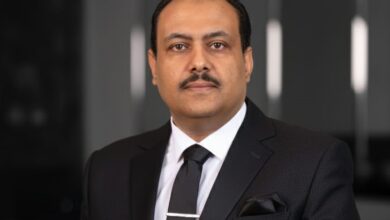
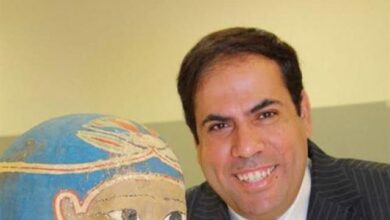
Ambassador Dr. Mohamed Higazy Writes: José Eduardo dos Santos — Angola’s Leader in the Era of State-Building and Strengthening Partnership with Cairo
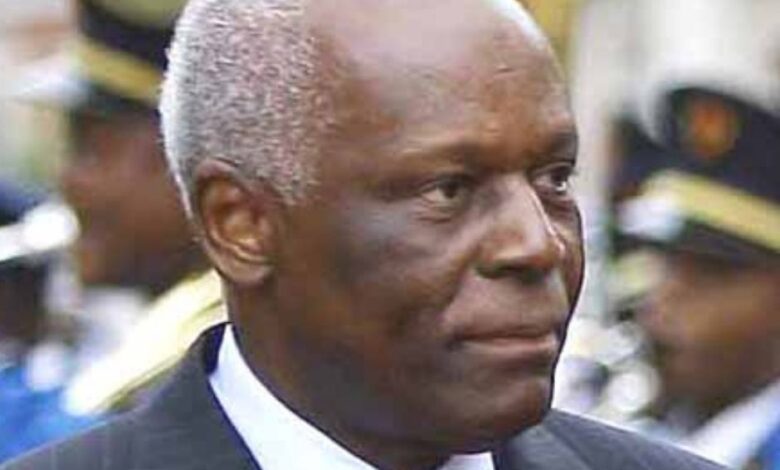
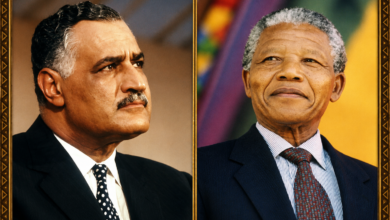
Following the wave of African national liberation, the continent faced a challenge no less formidable than the struggle for independence itself: building viable states and preserving their unity amid the rivalries of the Cold War and intense international competition , Among the leaders who confronted this difficult period, José Eduardo dos Santos stands out, He led Angola for more than three decades, overseeing the end of the country’s civil war and the beginning of national reconstruction, while Egypt maintained close relations with Angola, building upon the support it had extended to the Angolan liberation movement since the era of President Gamal Abdel Nasser.
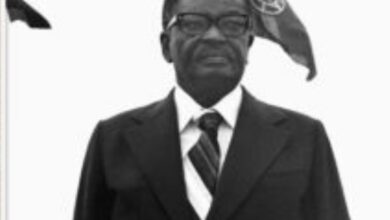
José Eduardo dos Santos was born on 28 August 1942 in Luanda, then under Portuguese colonial rule. As a young man, he joined the Popular Movement for the Liberation of Angola (MPLA), founded by a group of Angolan nationalists and led by prominent figures such as the poet and revolutionary Agostinho Neto.
As the struggle against Portuguese colonialism intensified, dos Santos left Angola and pursued higher education in the Soviet Union, where he studied petroleum engineering. He later assumed political and diplomatic responsibilities within the MPLA, representing the movement in several African and European capitals.
When Angola gained independence on 11 November 1975 under President Agostinho Neto, dos Santos emerged as one of the principal architects of the new state. He served in several important ministerial and diplomatic positions before being elected President of the Republic in 1979, following Neto’s death.
Dos Santos assumed office during one of the most difficult periods in Angola’s history. The country was engulfed in a devastating civil war between the government and the National Union for the Total Independence of Angola (UNITA), a conflict that lasted for decades and became deeply intertwined with Cold War geopolitics and regional rivalries. Despite these circumstances, he worked to preserve state institutions, maintain essential public services, and strengthen Angola’s role within African and international organizations.
Throughout this period, Egypt continued to cultivate its relationship with Angola. These ties had originated during the liberation struggle, when Cairo provided political, diplomatic, and media support to the MPLA, welcomed many of its cadres, and championed Angola’s independence in international forums.
During the presidency of dos Santos, Egyptian-Angolan relations expanded significantly in education, healthcare, agriculture, and technical training. Egyptian companies participated in infrastructure and reconstruction projects following the end of the civil war, while cooperation also extended to the fields of energy, irrigation, and water resources.
At the continental level, dos Santos was among the African leaders who promoted the role of the Organization of African Unity (OAU) and later the African Union (AU) after its establishment in 2002. He also contributed to conflict resolution efforts across Central and Southern Africa, drawing upon Angola’s enhanced regional standing after the war.
A decisive turning point came in 2002, when the civil war ended following the death of UNITA leader Jonas Savimbi. Angola then entered a new phase of reconstruction, utilizing its vast oil resources to rebuild roads, ports, airports, and public institutions. Nevertheless, the country continued to face challenges related to economic diversification and equitable development.
Dos Santos also played an important role in strengthening regional integration through the Southern African Development Community (SADC) and participated in mediation initiatives concerning crises in the Great Lakes region and the Democratic Republic of the Congo.
Although Angola experienced years of political stability and economic growth under his leadership, his administration also faced criticism over corruption, the concentration of power during his lengthy tenure, and inequalities in the distribution of oil revenues. Consequently, assessments of his legacy remain closely linked to the historical context in which Angola evolved during the decades following independence.
In 2017, dos Santos chose not to seek another presidential term, handing over power to João Lourenço after thirty-eight years as head of state—one of the longest presidencies in modern African history. He passed away on 8 July 2022 in Barcelona, Spain, after a political career spanning more than half a century.
As we revisit the life of José Eduardo dos Santos within the series “Cairo: Capital of the African Liberation Struggle,” we recall a period during which Egyptian-African relations evolved from supporting liberation movements to assisting newly independent states in their efforts toward development and reconstruction. Cairo consistently regarded Angola as a strategic partner in Southern Africa and continued to deepen bilateral cooperation across a broad range of sectors.
José Eduardo dos Santos belonged to the generation that inherited the responsibility of safeguarding the state after independence while confronting the immense challenges of war and reconstruction. For this reason, he occupies a distinguished place in this series as one of the leaders whose political journey became closely associated with the evolution of Egyptian-Angolan relations and with the major transformations that shaped Africa in recent decades.
read more