The apartheid regime in South Africa was not merely an unjust domestic system, but one of the most brutal forms of settler colonialism in the twentieth century and a critical test of Africa’s ability to transform solidarity into effective international action.
In this long struggle, Cairo emerged as a center of political and diplomatic mobilization against apartheid, employing politics, media, and international alliances to delegitimize and isolate the racist regime globally.
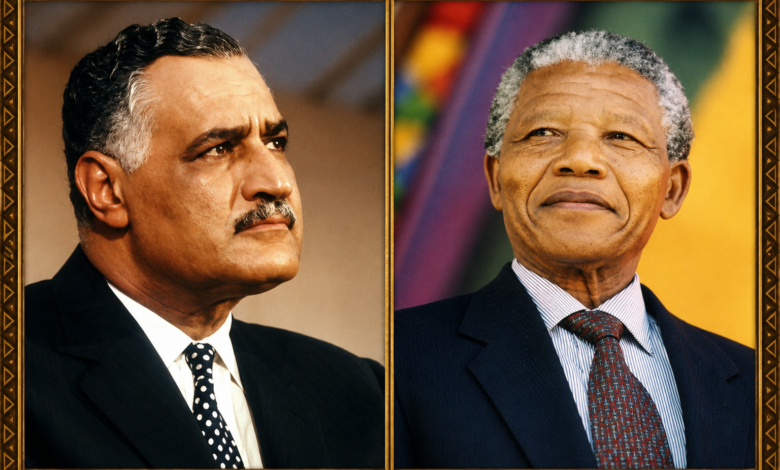
Egypt’s role stemmed from a vision linking Egypt’s national liberation with the broader liberation of Africa—a vision led by Gamal Abdel Nasser, which regarded apartheid as a moral and political threat to the entire continent. The issue was not simply a South African domestic affair, but a wound in the African body demanding a united continental response.
Cairo moved on multiple fronts simultaneously. Diplomatically, Egypt contributed to internationalizing the South African issue within the United Nations and the Non-Aligned Movement, supporting sanctions and the political, athletic, and cultural isolation of the apartheid regime.
In the media sphere, Egyptian outlets exposed abuses, challenged official apartheid propaganda, and transformed the issue into a matter of global public concern , Cairo also hosted activists and leaders, providing safe spaces for coordination and alliance-building.
In this context, Cairo served as a bridge between the internal South African struggle and broader African and international solidarity, helping unify the discourse against apartheid and thereby increasing pressure on the regime. These efforts aligned closely with the principles of the Organization of African Unity, which considered opposition to apartheid a core mission.
Egypt also distinguished itself by its ability to mobilize support across ideological divides during the Cold War, presenting apartheid not as an ideological issue, but as a question of human dignity, justice, and liberation. This broadened international support for the anti-apartheid movement and strengthened the cumulative momentum that eventually contributed to the collapse of the regime.
With the end of apartheid and the birth of democratic South Africa, this legacy endured as evidence that continental solidarity—when strategically managed—can achieve historic transformation. Together with other African capitals, Cairo helped transform isolation into an effective international policy and linked local struggle with global moral consensus.
Today, revisiting this chapter remains deeply relevant. In a world witnessing renewed forms of exclusion and discrimination, the South African experience—with Egyptian and African support—demonstrates that soft power and principled alliances can dismantle systems of oppression no matter how long they endure. It also confirms that Cairo, by making opposition to apartheid a central cause, reinforced its historic role as a capital of African struggle through sustained action and strategic patience.
read more