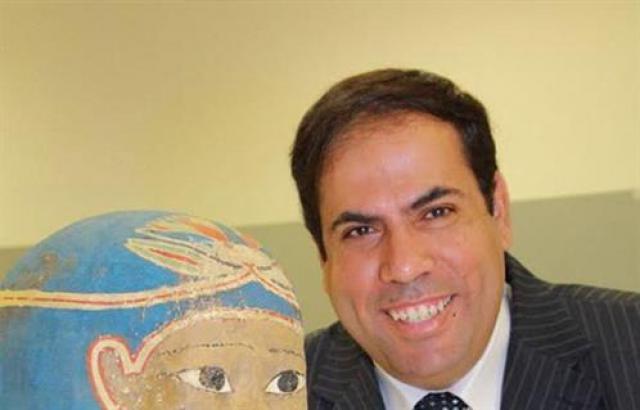
Dr. Hussein Bassir
Some people depart this world, and their physical presence disappears, yet they leave behind a void that no one can fill. Others leave, but their footprints remain deeply engraved upon the land they loved, as if the very soil refuses to forget them, Among these was Dr. Mohamed Abdel Maqsoud, the distinguished Egyptian archaeologist who devoted his life to serving Egypt’s history, protecting its heritage, and uncovering the hidden pages of its eternal civilisation.
Dr. Mohamed Abdel Maqsoud was not among those who built their reputation through publicity or noise; he built his legacy through patience, scholarship, and years of demanding fieldwork. He belonged to a generation that believed an archaeologist should not remain behind a desk, but must live among stones and sands, dedicating a lifetime to the pursuit of truth, even when it was buried beneath layers of earth or hidden behind thousands of years of history.
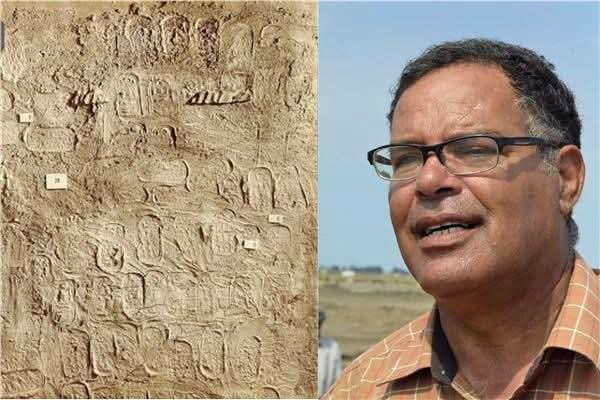
When we remember his name, North Sinai immediately comes to mind. That land was, for him, far more than a place of work; it was a life mission. There, he revived the story of the Way of Horus, the great military road that was used by the armies of ancient Egypt and which represented a vital line of defence for the Egyptian state for thousands of years, Thanks to the efforts of Dr. Mohamed Abdel Maqsoud and his colleagues, the Way of Horus was transformed from a historical reference mentioned in the inscriptions of Karnak into a remarkable archaeological reality that reveals the genius of ancient Egyptian civilisation.
He also contributed to the discovery and documentation of sites, fortresses, and defensive settlements that reshaped our understanding of the eastern borders of ancient Egypt, His work demonstrated that the ancient Egyptians were not only great builders and creators of civilisation, but also masters of protecting their homeland. His discoveries represented an important contribution to Egyptology and enriched our understanding of Sinai’s central role in Egyptian history.
When Dr. Mohamed Abdel Maqsoud assumed leadership positions within the Supreme Council of Antiquities, he continued to think and act first as an archaeologist and then as an administrator. He understood that positions are temporary, while scientific achievements remain forever. He stayed close to archaeological missions, researchers, and young scholars who shared his passion for knowledge. For him, administration was never a matter of power, but a profound responsibility toward a civilisation that spans thousands of years.
The passing of Dr. Mohamed Abdel Maqsoud is not only a loss for his family and colleagues; it is a loss for Egyptian archaeology as a whole. He was one of the devoted guardians of Egypt’s historical memory and one of the scholars who believed that Egyptian civilisation is not the possession of a single generation, but a legacy belonging to all humanity.
At this painful moment, I extend my deepest condolences and sincere sympathy to his honoured family, who have lost a noble father and a remarkable human being; to all Egyptian archaeologists, who have lost a colleague, mentor, and role model; to the Supreme Council of Antiquities, which has lost one of its distinguished leaders and scholars; and to the Ministry of Tourism and Antiquities, which has lost one of its most dedicated sons who devoted his life to preserving Egypt’s heritage. I also extend my heartfelt condolences to his students, admirers, and everyone who knew him and worked with him in Egypt and abroad.
True scholars never truly leave us. They remain through their discoveries, their writings, their students, and the lasting influence they leave upon the world. The name of Dr. Mohamed Abdel Maqsoud will forever be associated with the Way of Horus, the antiquities of North Sinai, every stone he uncovered, every site he protected, and every chapter of Egyptian history that he helped restore.
May Dr. Mohamed Abdel Maqsoud rest in peace. May God grant him abundant mercy and reward him for everything he gave to Egypt and to humanity, His legacy will remain an inspiration for every archaeologist who believes that serving civilisation is not merely a profession, but a mission; and that the greatest inheritance a person can leave behind is a meaningful contribution, knowledge that benefits others, and a noble memory that never fades.
read more