Nigeria Expands Army to 12 Divisions as Tinubu Orders Major Military Build-Up Amid Escalating Security Crisis


Abuja –Reuters
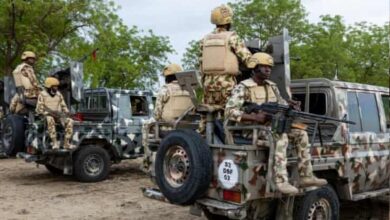
Nigerian President Bola Ahmed Tinubu has approved a major expansion of the Nigerian Army, increasing its structure from eight to 12 divisions and authorizing the recruitment of 28,000 additional military personnel as part of a comprehensive strategy to strengthen national security and address the country’s worsening security challenges.
The announcement was made on Friday by presidential spokesperson Bayo Onanuga, who confirmed that President Tinubu had approved the establishment of four new army divisions in Makurdi, Ilorin, Jalingo, and Benin City.
Nigeria to Establish Four New Army Divisions
Under the approved restructuring plan, the Nigerian Army will expand to a 12-division force, while maintaining its existing headquarters in eight cities. The newly created formations will provide enhanced military coverage across central, northeastern, and southern Nigeria, regions that continue to experience various forms of armed violence and insecurity.
The expansion is expected to improve the military’s operational capacity and enable faster responses to security threats across the country.
Government Approves Military Modernization and Increased Defense Investment
Alongside the structural expansion, the Nigerian government has approved a significant increase in investment aimed at modernizing the armed forces.
The approved measures include increased funding for:
- Military equipment and advanced defense capabilities.
- Operational readiness and rapid deployment.
- Welfare and support services for troops.
The modernization program is designed to enhance the effectiveness of Nigeria’s security forces as they confront multiple security threats simultaneously.
According to the presidency, the military expansion will be implemented in two phases.
The 5th, 9th, and 10th Army Divisions are expected to become operational by September, while the newly established 83rd Division, headquartered in Benin City, is scheduled to begin operations by December.
Nigeria Faces Multiple Security Threats Across Several Regions
Nigeria continues to battle one of Africa’s most complex security environments.
For the past 17 years, the country has faced a persistent Islamist insurgency in the northeastern region, while the northwest has witnessed widespread banditry, mass kidnappings, and attacks on rural communities.
The central region, commonly referred to as the Middle Belt, has experienced recurring communal violence, while separatist agitation continues to fuel tensions in southeastern Nigeria.
These overlapping security challenges have placed significant pressure on the country’s armed forces and security agencies.
United States Condemns Violence Against Christian Communities
In a related development, U.S. Senior Advisor for Arab and African Affairs Massad Boulos strongly condemned the continued violence targeting Christian communities and other vulnerable populations in Nigeria’s Middle Belt.
Boulos stated: “The ongoing violence against Christian communities and other vulnerable populations in Nigeria’s Middle Belt is intolerable.”
He reaffirmed Washington’s commitment to strengthening security cooperation with Nigeria, adding: “The United States remains committed to partnering with Nigeria to combat terrorism and violent extremism and to ensure that all Nigerians can live and worship freely, without fear of persecution or violence.”
His remarks underscore growing international concern over the deteriorating humanitarian and security situation in parts of Nigeria.
Bandit Attack Leaves at Least 24 Farmers Dead in Zamfara State
The military expansion announcement comes as armed bandits carried out another deadly assault in Zamfara State, highlighting the urgency of Nigeria’s security reforms.
Residents told Reuters that gunmen riding motorcycles attacked remote farming communities in the Sauna district of Talata Mafara Local Government Area on Tuesday at approximately 1300 GMT, opening fire on farmers working in their fields.
According to local residents, at least 24 farmers were killed, while several others sustained injuries during the attack.
Resident Auwal Sani told Reuters by telephone: “They killed at least 24 innocent farmers. We are still counting the losses.”
Attackers Traveled Nearly 50 Kilometers Without Security Intervention
Residents said the attackers traveled nearly 50 kilometers (31 miles) along the Mayanchi–Anka highway, one of the area’s major trade routes, before reaching the affected communities without encountering security personnel.
Another resident, Bello Aliyu, said the assault lasted for approximately three hours, allowing the gunmen to attack multiple farming villages before fleeing.
Police and military authorities were not immediately available to comment on the incident.
Zamfara Remains Epicenter of Nigeria’s Banditry Crisis
Zamfara State remains at the center of Nigeria’s escalating banditry crisis, where heavily armed criminal gangs frequently raid villages, abduct residents for ransom, kill civilians, and steal livestock.
The latest massacre underscores the scale of Nigeria’s ongoing security challenges and reinforces the government’s decision to significantly expand and modernize the armed forces as authorities seek to restore stability across the country.
read more