From Cairo to Addis Ababa .. How Egypt Contributed to the Birth of the Organization of African Unity” 6 “

By Ambassador Dr Mohamed Higazy, Former Assistant Foreign Minister for African Affairs
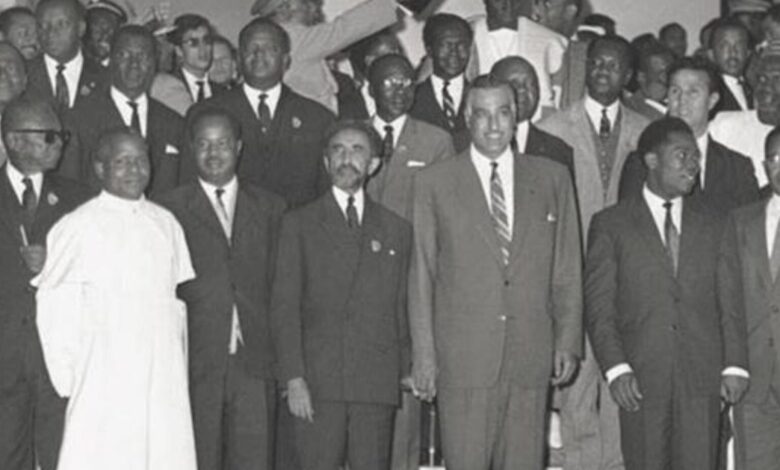
The establishment of the Organization of African Unity in 1963 was not a routine administrative event, but the culmination of a long political and intellectual struggle led by liberation capitals foremost among them Cairo, Before African independent states gathered in Addis Ababa, Cairo had already served as the political laboratory where ideas were formulated, visions debated, and the trust necessary to institutionalize solidarity was built.
This transformation reflected Egypt’s early understanding that support for liberation movements, however deep, required an institutional framework capable of preserving achievements and preventing regression. This understanding embodied the approach championed by Gamal Abdel Nasser, linking national independence with the creation of a regional African order capable of managing disputes and resisting external interference.
In Cairo, African liberation leaders met to debate the forms and limits of unity. Perspectives differed between advocates of immediate political union and supporters of gradual institutional integration. Cairo played the role of conciliator, promoting a formula that preserved the sovereignty of newly independent states while establishing a common African home. This balance proved decisive in overcoming divisions and paving the way for the historic Addis Ababa conference.
Egypt’s contribution extended beyond intellectual groundwork to diplomatic and organizational support: coordinating positions, bridging differences, and using media platforms to promote unity as a matter of African national security rather than ideological rhetoric. In this way, Cairo evolved from a capital of liberation into a driving force behind organized continental action.
Although the founding conference took place in Addis Ababa, Cairo’s imprint was evident in its principles and documents: respect for sovereignty, non-interference, support for liberation movements, and peaceful settlement of disputes. These principles reflected the lessons learned from anti-colonial struggle itself and from the heavy price of division in confronting colonialism.
The Organization of African Unity gave Africa a collective voice within the international system and provided a legitimate framework for completing decolonization in territories still under foreign rule. Egypt’s role served as a political guarantee for the continuity of the organization and helped preserve its momentum during its difficult early years.
Today, with the transformation of the OAU into the African Union, the moment of its birth remains proof that Egyptian soft power was never merely rhetorical, but reflected a real capacity to build consensus and institutions. Cairo—the city that hosted liberation fighters, coordinated revolutions, and wielded media as a tool of liberation—was also instrumental in constructing the African institutional order.
read more
Algeria and Cairo .. When Two Revolutions Met in One Struggle ” 5 “
5 Ahmed Heshmat Street, Zamalek