The Addis Ababa Meetings and the Search for a Sudanese Solution: A Political Breakthrough or a Reproduction of the Representation Crisis?

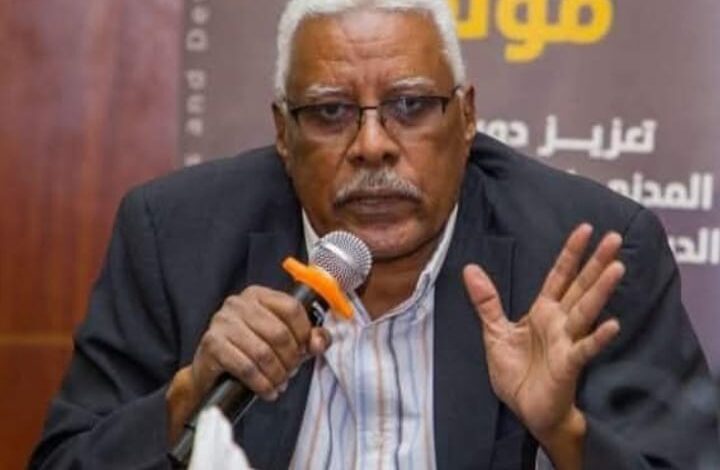
Professor: Hassan Bashir Mohamed Nour
The Addis Ababa meetings, bringing together the international quintet with a number of Sudanese political forces, civil actors, and armed movements, are taking place at a critical juncture in Sudan’s history.
The war is escalating, and its humanitarian, economic, and social consequences are expanding, while the need is growing for a political process capable of stopping the collapse and laying the foundations for a comprehensive national settlement.
The importance of these meetings lies in their attempt to revive the concept of Sudanese-Sudanese dialogue as an entry point for resolving the crisis, away from the logic of externally imposed solutions or reducing the conflict to only two military parties. However, the central question remains: To what extent have the Addis Ababa meetings succeeded in building a genuine national process, and have they managed to move from being merely a political gathering to becoming a practical step toward ending the war and rebuilding the Sudanese state?
In principle, any effort aimed at bringing Sudanese civil and political forces together around a project to end the war represents an important development, particularly given the failure of previous approaches that largely focused on negotiations between armed actors while neglecting the deep roots of the Sudanese crisis, including the nature of the state, the imbalance in the distribution of power and wealth, and historical development crises.
However, the success of any national dialogue, as we have repeatedly argued, is not measured only by the number of participants or the scale of international and regional support, but rather by its ability to achieve three fundamental conditions: inclusive representation, clarity of political vision, and the capacity to transform outcomes into practical and implementable steps.
From this perspective, the relationship between the Addis Ababa meetings and the Declaration of Principles that emerged from the Nairobi meeting last month becomes significant , The Nairobi Declaration attempted to establish a political foundation based on a number of important ideas, including the priority of a political solution, the necessity of building a broad civilian coalition, addressing the roots of the crisis rather than merely its symptoms, and preventing the reproduction of the system that led to the war.
There appear to be clear points of convergence between the two paths, particularly in emphasizing the need to end the war, rejecting the reduction of Sudan’s future to arrangements between military forces, and seeking a civilian political formula that would rebuild the state on new foundations.
However, the real test lies in moving from general principles to practical arrangements concerning how to stop the war, who possesses the legitimacy to represent the Sudanese people, and what form the next transitional phase should take.
Despite these areas of convergence, there are fundamental differences between the two approaches. The Nairobi meeting appeared to seek the development of a broader Sudanese political project that transcends the parties to the war, while the Addis Ababa meetings focused more on bringing together different forces around a political and negotiation track under international sponsorship.
This raises questions about whether the two paths complement each other or represent competition between two different visions of the nature of the solution.
One of the most significant challenges facing the Addis Ababa meetings is the absence of the Sudanese Armed Forces from the gathering. This absence raises a fundamental question: How can a political process to end the war be built without the participation of one of the main armed actors in the conflict? While a sustainable solution cannot be military in nature, ignoring one of the actual centers of power in the war means that any political outcomes will require additional mechanisms to ensure commitment and implementation.
On the other hand, the presence of some civil forces and armed movements was not sufficient to resolve the crisis of representation. Differences have emerged within some participating groups, including divisions within the Democratic Bloc itself.
Furthermore, the absence of influential forces such as the Sudan Liberation Army Movement led by Abdel Wahid Mohamed Nour and the Sudan People’s Liberation Movement – Democratic Current from signing the final statement reduces the inclusiveness of the outcomes.
The position of the Sudanese Communist Party, which met with the international quintet outside the official framework of the meetings, also reflects reservations among some political forces regarding the nature of the process and its outcomes. It may also express concerns about committing to a settlement whose conditions for success remain incomplete.
The most significant absence, however, is the limited participation of social forces that played a central role in the Sudanese revolution and in shaping the new political consciousness, particularly Resistance Committees, professional unions, independent associations, and a number of civil organizations representing broad sectors of society.
This absence raises a fundamental question about the possibility of building a genuine national project without broad civil society being an authentic partner in it.
One of the major challenges emerging from the Addis Ababa process is the attempt to discuss political arrangements while the war continues and in the absence of a comprehensive ceasefire and commitments to open humanitarian corridors.
How can a stable political process be built while millions of Sudanese are living under bombardment, displacement, hunger, and the collapse of basic services?
International experiences confirm that a political process requires a minimum level of humanitarian and security stability, This does not necessarily mean waiting for the complete end of the war before dialogue begins, but it does require simultaneous measures to protect civilians, stop violations, and provide basic humanitarian needs, so that the political process does not become an elite discussion detached from citizens’ daily realities.
From this perspective, any political process that fails to link ending the war, humanitarian assistance, and rebuilding state institutions will remain vulnerable to failure because it addresses the political dimension in isolation from the broader crisis.
Nevertheless, the political significance of the Addis Ababa meetings cannot be ignored. They have helped keep the idea of a political solution alive and have renewed the discussion about the need to build a civilian coalition capable of presenting an alternative to war and to the return of forces that contributed to producing the crisis. They may also represent a preliminary step if they develop into a more inclusive dialogue.
The danger, however, lies in such meetings becoming merely a platform for producing another political declaration without real change in the dynamics of the crisis.
Sudan does not need only an agreement among political elites; it needs a project to rebuild the state that addresses the roots of the conflict: the crisis of governance, uneven development, injustice in resource distribution, the relationship between the center and the regions, ending impunity, and building an economy capable of reconstruction and stability.
The civilian government Sudan needs after the war should not be merely a transitional arrangement between competing forces, but rather a new national project that rejects the logic of power-sharing quotas and the reproduction of crisis.
It should establish a broadly participatory democratic civilian rule capable of engaging with the international and regional communities from a position of national legitimacy.
Therefore, the assessment of the Addis Ababa meetings should not be based only on whether they succeed or fail, but on their capacity to evolve , If they open up to absent forces, link the political process to ending the war and addressing humanitarian needs, and transform from an elite gathering into a comprehensive national process, they could become an important turning point.
However, if they remain limited in representation, ignore key social forces, and discuss Sudan’s future without addressing the reality of the war, they may, instead of uniting forces opposed to the crisis, deepen divisions and complicate the path toward a solution.
Sudan stands before a historic moment that cannot tolerate temporary settlements. The goal is not only to end the war, but to end the conditions that made the war possible and to build a new state capable of achieving peace, development, and justice.
read more