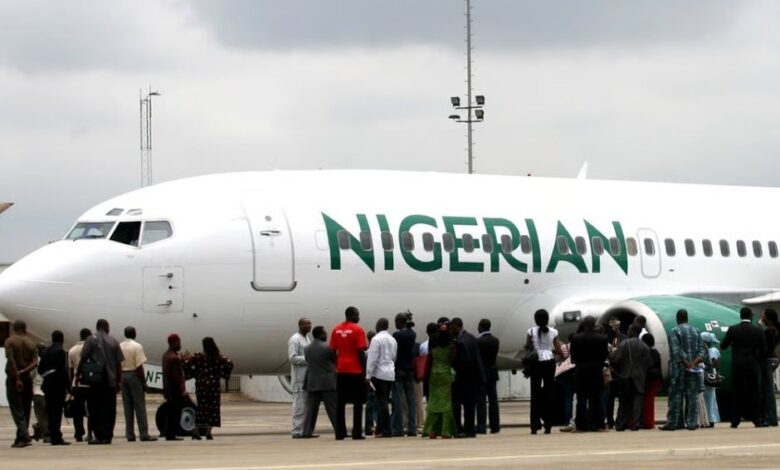
The skies over Africa’s most populous nation are about to go silent. In a move that threatens to paralyze the continent’s largest economy, the Airline Operators of Nigeria (AON) has issued a final warning: either jet fuel prices drop, or all domestic flights will be suspended starting April 20. This ultimatum isn’t just a labor dispute; it’s a symptom of a global energy market reeling from the Iran War, further complicated by what airlines call “artificial inflation” at home.
• A 270% Surge: The Anatomy of a Crisis
Since the end of February, jet fuel prices in Nigeria have skyrocketed by approximately 270%. While global oil benchmarks have climbed due to the U.S. blockade of the Strait of Hormuz, AON argues that the hike in Nigeria is “astronomical” and far outpaces international trends.
The industry body, representing about a dozen domestic carriers, delivered a blunt message to the Major Energies Marketers Association of Nigeria (MEMAN): “Current revenues are insufficient to cover the cost of fuel alone.” For African airlines, jet fuel accounts for up to 40% of operating costs—nearly double the global average—making them the first casualties of the energy war.
• The Dangote Paradox
The crisis is deepened by a baffling supply-side contradiction. Despite Nigeria hosting the massive Dangote Petroleum Refinery, the nation’s sole domestic jet fuel producer made zero deliveries to the local market in March.
While domestic tanks ran dry, tanker-tracking data from Kpler revealed a different story: Nigeria’s exports of clean petroleum products—including jet fuel—more than doubled in the same period. This suggests a “drain” of resources toward more lucrative international markets while the domestic aviation sector is left to starve, caught in a pincer movement between high global demand and local scarcity.
• The Domino Effect
A total shutdown of Nigerian aviation would be more than just a travel inconvenience; it would be a systemic shock. AON warned that if airlines are forced to ground their fleets, the fallout will hit the banking sector, evaporate thousands of jobs, and worsen the nation’s delicate security situation by cutting off rapid transport links across its vast territory.
Increasing ticket prices to match fuel costs is not a viable exit strategy, as it would likely lead to a “passenger exodus,” leaving planes flying empty.
• The Global Shadow
This local crisis is intrinsically linked to the broader conflict we’ve been tracking. As the U.S. continues to choke Iranian maritime trade, the resulting scramble for “alternative barrels” has turned refined products into liquid gold. For Nigeria, the irony is sharp: a nation that should be self-sufficient through the Dangote refinery is finding its wings clipped by the very same global energy fever it helps to supply.
read more
France Expands Uranium Strategy : Pivot from Niger to Botswana Reshapes Global Nuclear Supply Chains