ME conflict must not overshadow Israeli transgressions in occupied West Bank, Gaza, Egypt FM , Palestinian VP Affirm

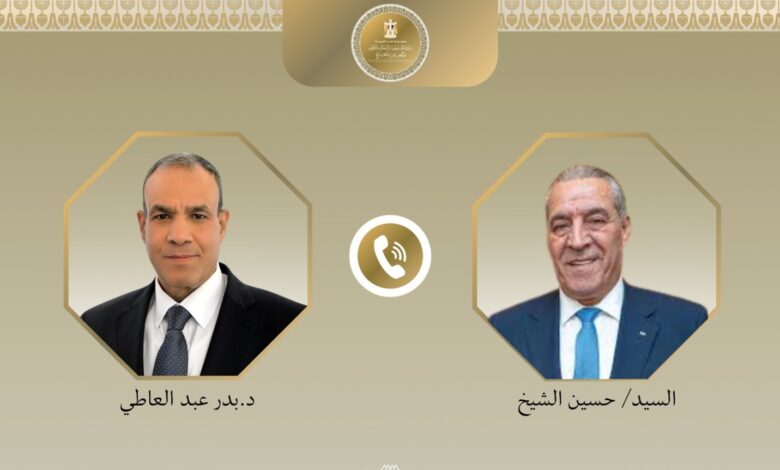
The current international and regional focus on escalating Middle East tensions should not overshadow Israel’s ongoing transgressions in the occupied West Bank and Gaza, Egyptian Foreign Minister Badr Abdelatty and Palestinian Vice President Hussein Al-Sheikh agreed during a phone call on Monday. The call reviewed developments in the occupied West Bank and Gaza Strip and their impact on security and stability, including a sharp rise in settler violence against the Palestinians, according to a foreign ministry statement.
During the call, FM Abdelatty reaffirmed Egypt’s condemnation of rising attacks by Israeli settlers on Palestinian civilians and their property, describing them as “blatant violations” of international law that undermine peace prospects.
He also stressed the need to implement all provisions of the second phase of US President Donald Trump’s plan, including the deployment of an international stabilization force and the entry of a Gaza administration committee to begin exercising its responsibilities, preparing for the Palestinian Authority’s full return to governance. The foreign minister underlined the importance of maintaining territorial unity between Gaza and the West Bank, reiterating Egypt’s opposition to any displacement plans that could liquidate the Palestinian cause, a fundamental pillar of the two-state solution.
Both sides agreed on the need to intensify international efforts to de-escalate tensions, ensure the protection of civilians, prioritize dialogue and diplomacy, and create the conditions necessary to resume a political process leading to a just and comprehensive settlement of the Palestinian issue. For his part, Al-Sheikh expressed appreciation for Egypt’s continued support for the Palestinian cause, stressing the importance of maintaining ongoing coordination and consultation.
The call comes as international and regional attention has increasingly shifted to the widening Middle East confrontation involving Iran, raising concerns that developments in the occupied Palestinian territories are being overshadowed despite continued escalation on the ground. In the West Bank, Israeli occupation army and settler violence have surged in recent months, with growing settler attacks on Palestinian communities, property, and agricultural land, alongside deadly military operations.
The situation has been compounded by recent Israeli legislation and administrative measures facilitating settlement expansion and the legalization of outposts, moves widely seen as entrenching occupation and undermining the viability of a two-state solution.In a joint statement on Saturday, diplomatic missions representing countries including Belgium, Canada, Denmark, the European Union, Ireland, Finland, France, Lithuania, the Netherlands, Norway, Portugal, Spain, the United Kingdom, Sweden, and Switzerland denounced what they described as “settler terrorism,” expressing shock over recent killings of Palestinians.They called on Israeli occupation authorities to halt such attacks, hold perpetrators accountable, and uphold international law obligations.
More than 36,000 Palestinians were displaced in the year to October 2025 amid intensified Israeli occupation army attacks on towns and villages, settlement expansion, and settler terror campaigns against the population, according to the United Nations High Commissioner for Refugees (UNHCR) and the Office of the UN High Commissioner for Human Rights (OHCHR).
The UN rights office documented 1,732 incidents of settler violence involving casualties or property damage during that period, up from around 1,400 a year earlier, warning that the cumulative impact is creating a “coercive environment” pushing Palestinians from their homes.
Human rights groups and eyewitness accounts point to near-daily attacks in parts of the occupied West Bank, particularly in vulnerable areas such as the Jordan Valley, involving arson, beatings, and property destruction. Israeli rights group Yesh Din reported that by the end of 2025, only about two percent of documented cases since October 2023 had resulted in indictments. The UN rights office has also warned that the scale and pattern of displacement, combined with accelerated settlement expansion, including the approval of tens of thousands of housing units and the establishment of new outposts, could amount to forcible transfer in violation of international law. In Gaza, the humanitarian situation remains tragic after over two years of war, with widespread infrastructure damage, mass displacement, and a critical lack of food, fuel, and medical supplies amid Israeli restrictions on the entry of humanitarian aid to the strip.
Egypt has maintained a central diplomatic role in efforts to de-escalate tensions, facilitate humanitarian access, and support ceasefire arrangements, while consistently advocating for a return to a political process based on the two-state solution. Cairo has also repeatedly warned against any attempts to separate Gaza from the West Bank or implement displacement plans, stressing that preserving their territorial unity is essential to any credible pathway toward a future Palestinian state and broader regional stability
read more
Warns of catastrophic repercussions, Egyptian FM reiterates condemnation of targeting region states