From Tutankhamun to the Sphinx.. Ramaphosa Discovers the Magic of Ancient Egyptian Civilization

The visit of South African President Cyril Ramaphosa to the Grand Egyptian Museum and the Giza Pyramids was more than just a stop on his official visit to Egypt. It was a brief journey into the heart of one of the world’s oldest civilizations—a journey that took him from the statue of King Ramesses II to the treasures of Tutankhamun, and from the grandeur of the Great Pyramid to the features of the Sphinx.
During the visit on October 5, 2026, Sherif Fathy, Minister of Tourism and Antiquities, accompanied the President of South Africa on his tour of the Grand Egyptian Museum and the Giza Pyramids, in a scene that brought together the present-day relations between Egypt and South Africa and the depth of history embodied by Egypt’s ancient monuments.
Tutankhamun.. A Moment with the Treasures of the Golden King
The tour began inside the Grand Egyptian Museum, accompanied by Dr. Ahmed Ghoneim, CEO of the Grand Egyptian Museum, and Ambassador Ahmed Ali Sherif, Egypt’s Ambassador to South Africa.
The tour included the museum’s outdoor plaza, the Main Hall and the Grand Staircase, before reaching the galleries of King Tutankhamun. For the first time, the treasures of the Golden King are displayed together in one place, through an integrated museum display concept.
There, the artifacts were more than simply archaeological objects on display for a visitor from South Africa. Ramaphosa stopped to admire some of the galleries’ most prominent pieces, particularly the coffins, chariots and shields. He expressed his admiration for their precision of craftsmanship and exquisite execution, as well as for what they reflect of the level of advancement and creativity achieved by ancient Egyptian civilization.
Ramesses II.. A Statue That Captured the South African President’s Attention
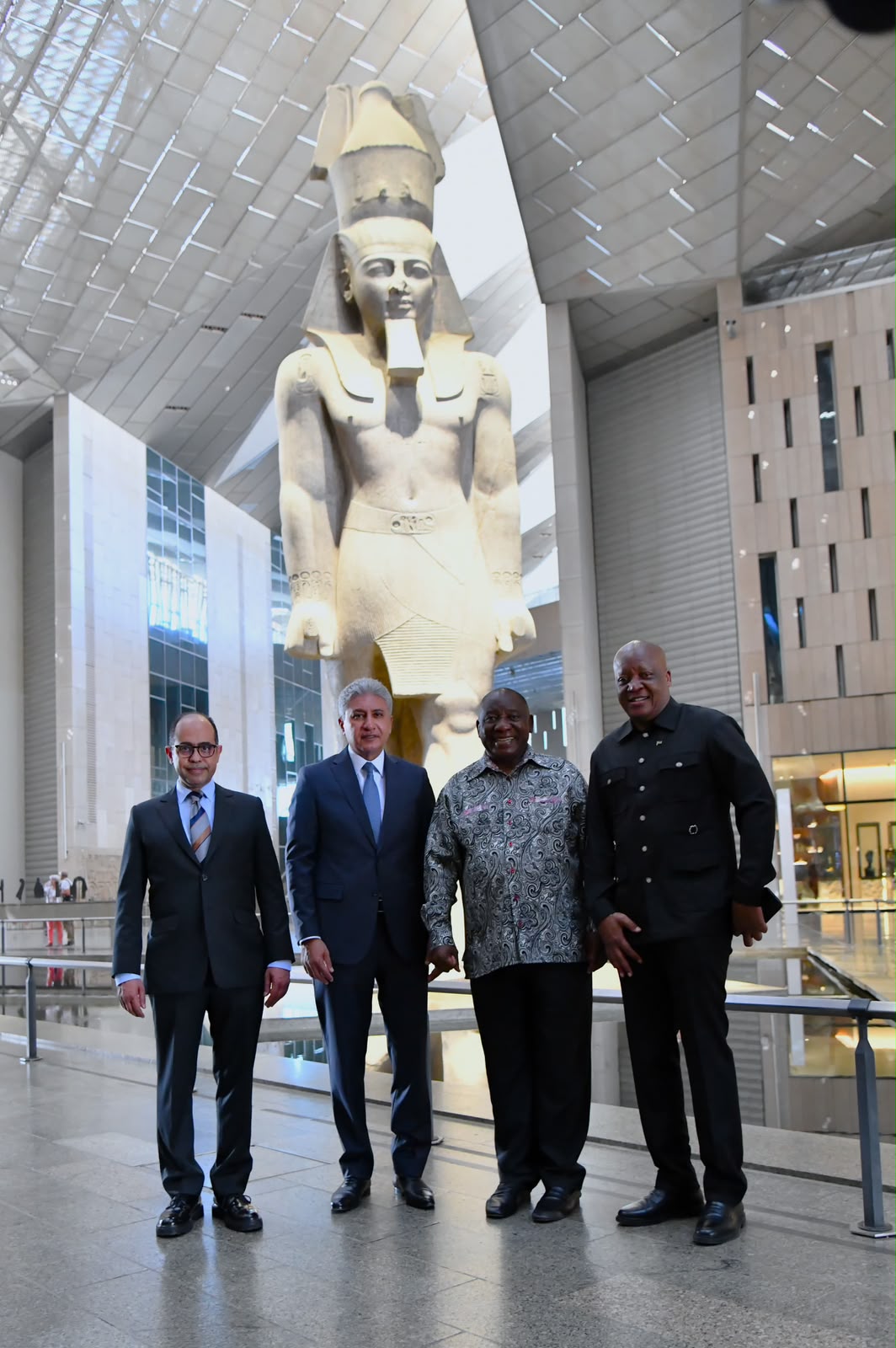
In the museum’s Main Hall, the statue of King Ramesses II was one of the highlights of the tour, President Ramaphosa stopped before the statue and expressed his amazement at its monumental size and the precision of its carving—a moment that reflected the enduring impact of ancient Egyptian monuments, even on a visitor from the far south of the African continent.
The suspended obelisk also captured his attention during the tour, alongside the artifacts of King Tutankhamun, whose details he explored while expressing his appreciation for the achievements of ancient Egyptian civilization in architecture, art and industry.
Ramaphosa expressed his great admiration for the Grand Egyptian Museum and its unique archaeological treasures, as well as for the museum experience it offers in presenting the grandeur of ancient Egyptian civilization.
He also praised the distinctive museum display concept in the galleries and the efforts devoted to preserving and safeguarding Egypt’s heritage and presenting it in a manner befitting its civilizational value.
The tour of the museum went beyond viewing archaeological artifacts. It gave the South African President an opportunity to engage with the details of a civilization that left its mark on architecture, art and industry, and whose legacy remains visible thousands of years later.
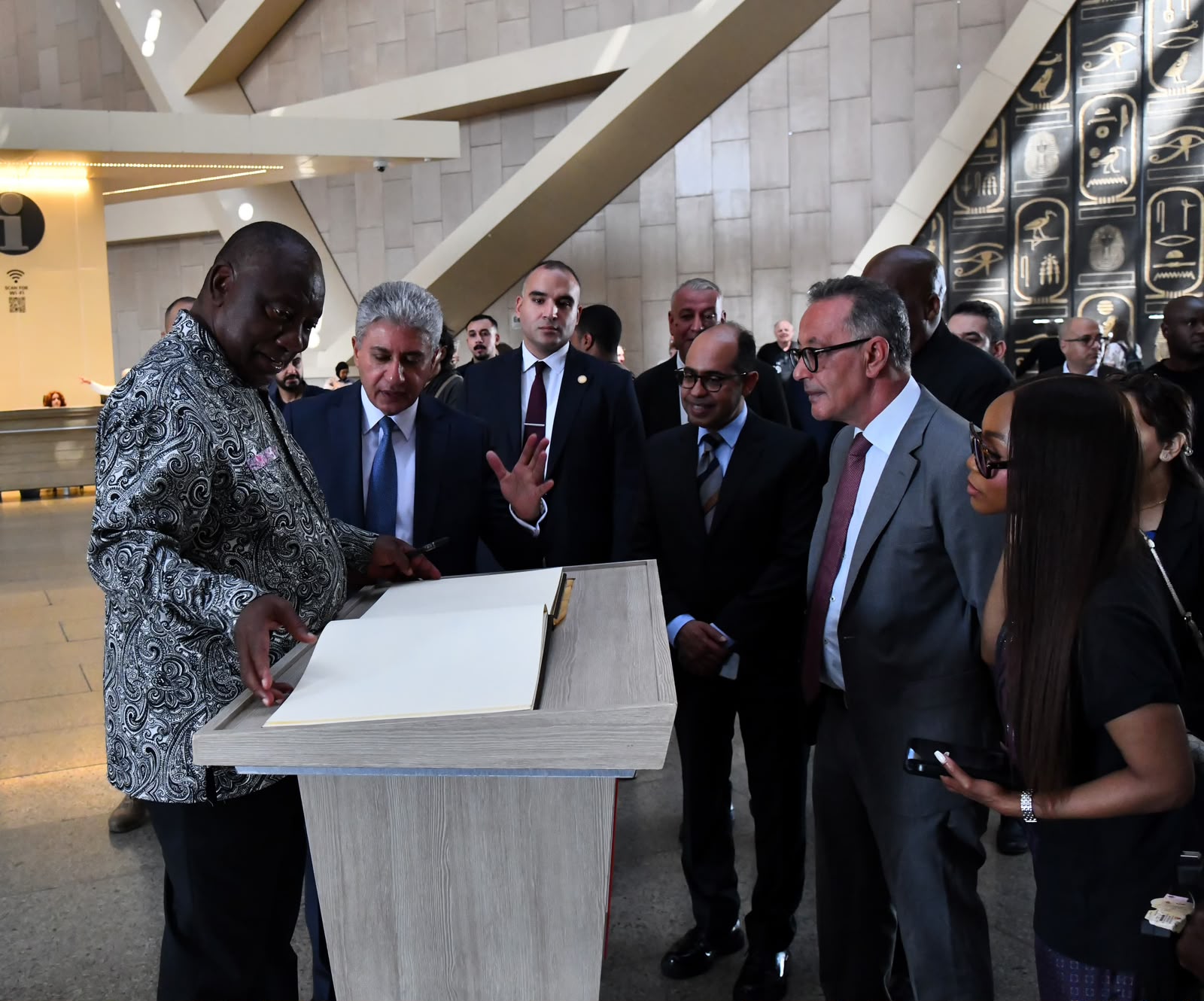
At the conclusion of his visit to the Grand Egyptian Museum, President Cyril Ramaphosa wrote a message in the visitors’ book, expressing his gratitude and appreciation for the visit and for the admiration and profound meaning it left with him.
Ramaphosa affirmed the importance of the visit in strengthening the partnership between Egypt and South Africa, bringing together, in that moment, the historical symbolism of the site and the course of relations between the two countries today.
From the Grand Egyptian Museum to the Great Pyramid
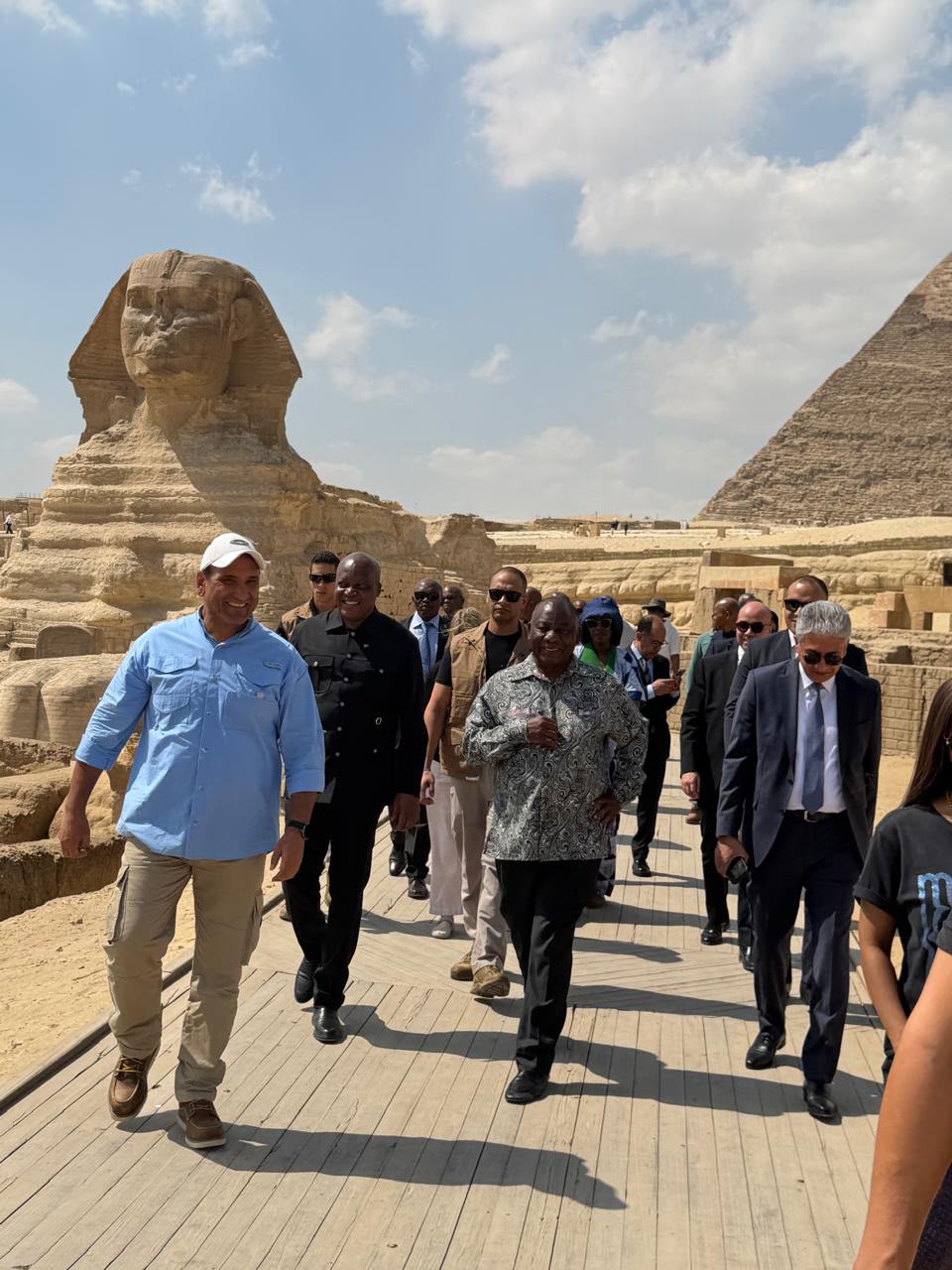
The tour then moved to the Giza Pyramids, where the Minister of Tourism and Antiquities accompanied the South African President, together with Ashraf Mohi El-Din, Director General of the Giza Antiquities Area.
There, Ramaphosa entered the Great Pyramid, experiencing firsthand one of the greatest architectural achievements in history.
The South African President expressed his amazement at the grandeur of the structure and the precision of the pyramid’s engineering design, describing what he saw as a testament to the ingenuity of the ancient Egyptians and their ability to construct this immense monument.
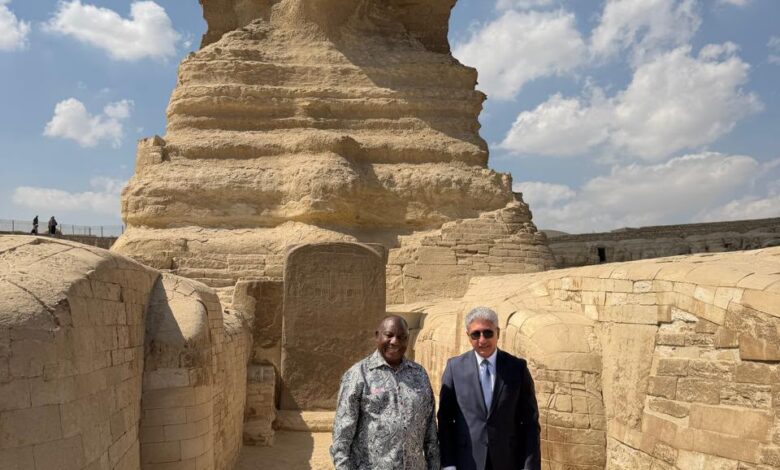
President Ramaphosa concluded his tour at the Sphinx, one of the most renowned symbols of ancient Egyptian civilization.
He showed great interest in the history of the statue and the way it was carved, bringing his visit to an end at one of the most prominent landmarks whose features encapsulate thousands of years of Egyptian history.
From the galleries of Tutankhamun, through the statue of Ramesses II and the suspended obelisk, to the Great Pyramid and the Sphinx, the South African President’s tour in Cairo and Giza offered a vivid glimpse of a civilization that continues to captivate its visitors, while also providing a new setting for highlighting the depth of the partnership and relations between Egypt and South Africa.
read more