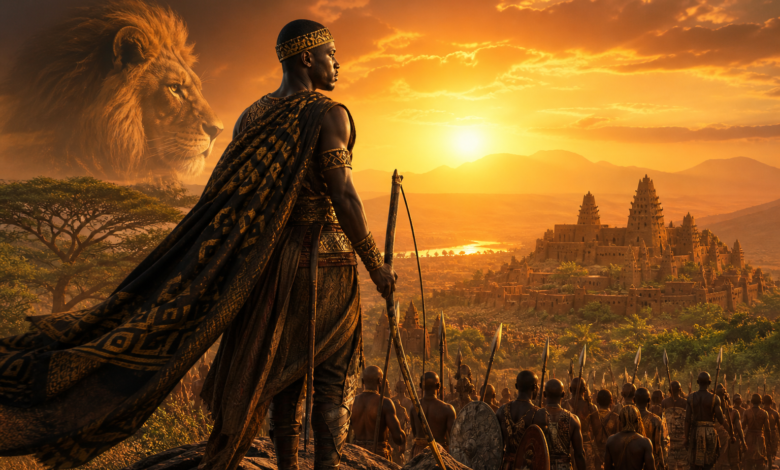
The oral tradition of West Africa, preserved for centuries by the rhythmic voices of the Griots, holds at its heart the majestic story of Sundiata Keita, This epic is not merely a tale of royalty; it is a profound narrative of human resilience, destiny, and the triumph of the spirit over physical frailty.
It serves as the foundational myth of the Mali Empire and has been adapted into numerous dramatic works, including theatrical plays, modern literature, and most famously, serving as the primary inspiration for the core themes in global cinema, most notably Disney’s The Lion King.
The Prophecy and the Exile
The story begins in the 13th century in the kingdom of Niani. According to the UNESCO General History of Africa, Sundiata was born to King Maghan Kon Fatta and his second wife, Sogolon Kedjou, a woman prophesied to bear a son who would become a formidable leader. However, Sundiata was born unable to walk, spending his early childhood crawling on the ground, Despite his physical limitations, he possessed a solitary strength of character that unsettled his detractors.
Upon the King’s death, the elder queen, Sassouma Bérété, seized power and forced Sundiata and his mother into exile. This period of wandering across the Sahel is described by scholar D.T. Niane in his classic translation, Sundiata: An Epic of Old Mali, as a transformative journey where the young prince gained the wisdom and allies necessary for his eventual return.
The Rise of the Lion
The climax of the epic occurs when Sundiata, driven by a desire to defend his mother’s honor, miraculously gains the strength to stand. Legend states he used an iron rod to pull himself up, which bent into the shape of a bow—a symbol of his future military prowess. He then unified the fragmented Malinké tribes to confront the sorcerer-king Soumaoro Kanté, the leader of the Sosso people.
The conflict culminated in the Battle of Kirina in 1235. According to historical assessments by the Smithsonian Institution, this battle was a lucid turning point in African history. Sundiata’s victory led to the establishment of the Mali Empire, characterized by the Kouroukan Fouga, one of the world’s earliest declarations of human rights and social peace.
Dramatic Legacy and Global Impact
The dramatic potential of Sundiata’s life has made it a recurring subject for international stage and screen. Beyond the metaphorical adaptation in The Lion King, the story has been transformed into grand operas and plays, such as the acclaimed production Sundiata: The Lion King of Mali by the Kennedy Center. These adaptations focus on the intrepid nature of his journey—moving from a state of total vulnerability to becoming the “Lion King” who brought justice and prosperity to his people.
Today, Sundiata Keita is remembered not just as a conqueror, but as a visionary who balanced power with urbanity and wisdom. His story remains a vibrant testament to the idea that true strength is born from the crucible of adversity, proving that the most luminous leaders are often those who have walked through the darkest of exiles.
read more