Africa’s vexillography—the art of flag design—is far more than a collection of Pan-African colors. Across the continent, national banners serve as visual manifestos, blending ancient mysticism, revolutionary fervor, and ecological pride. From prehistoric weaponry to celestial alignments, here are ten of the most intriguing symbols found on African National Flags and the profound meanings they carry.
1 – The Grey Crowned Crane (Uganda)
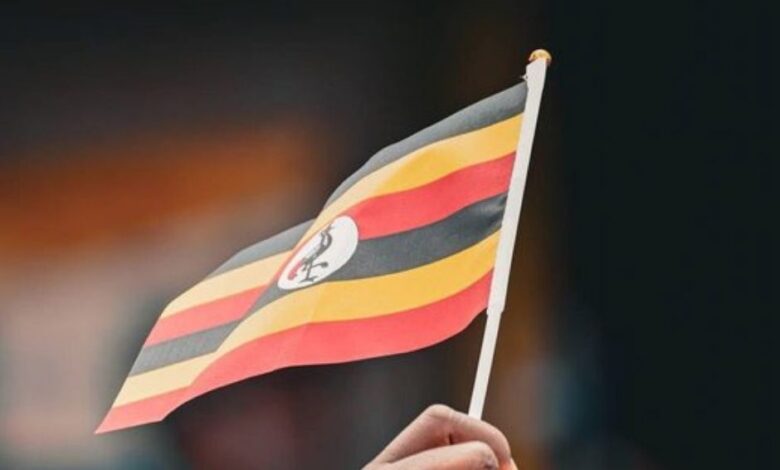
Standing gracefully at the center of six horizontal stripes, the Grey Crowned Crane is Uganda’s national soul. Chosen during the colonial era for its neutral, non-tribal elegance, the crane’s raised leg symbolizes a nation in forward motion. According to the Uganda National Museum, the bird’s gentle nature reflects the peaceful temperament of the Ugandan people, while its vibrant colors mirror the flag’s black, yellow, and red palette.
2 – The Kalashnikov AK-47 (Mozambique)
Mozambique’s flag is the only one in the world to feature a modern assault rifle. The AK-47, equipped with a bayonet, represents the armed struggle for independence from Portugal. As noted by BBC News Africa, the rifle is crossed with a hoe (symbolizing agriculture) and an open book (representing education). Together, they form a striking triad of defense, sustenance, and enlightenment.
3 – The Basotho Hat (Lesotho)
The “Mokorotlo” sits prominently in blue at the heart of Lesotho’s flag. This traditional conical straw hat is more than headwear; it is a symbol of the Basotho identity and the nation’s high-altitude geography. The Government of Lesotho officially adopted this design in 2006 to honor the country’s cultural heritage and the unity of the mountain kingdom.
4 – The Machete and Cogwheel (Angola)
Drawing clear inspiration from the Soviet hammer and sickle, Angola’s emblem features a crossed machete and a half-cogwheel. The machete honors the peasantry and the armed struggle, while the cogwheel represents the industrial working class. Documentation from Reuters highlights that this symbol was retained after the civil war to remind citizens of the labor required to rebuild the nation.
5 – The Black Star of Africa (Ghana)
While stars are common on flags, Ghana’s “Black Star” was a revolutionary first, inspired by Marcus Garvey’s Black Star Line shipping company. Adopted in 1957, it symbolizes African emancipation and the “Lodestar of African Freedom.” The Ghanaian Ministry of Tourism explains that it serves as a beacon for all who seek liberation from colonial rule.
6 – The Shield and Two Spears (Kenya)
The Maasai shield and two crossed spears dominate the Kenyan flag, symbolizing the defense of freedom. Unlike European heraldry, this iconography is deeply rooted in indigenous warrior traditions. Historical archives from the National Museums of Kenya confirm that the design was intended to signify that the nation’s independence was fought for and would be vigorously protected.
7 – The African Fish Eagle (Zambia)
Perched atop a tricolor block in the lower fly corner, the orange African Fish Eagle is a unique placement in flag design. Most symbols are centered, but Zambia’s eagle soars on the edge. It represents the people’s ability to rise above the nation’s problems. Al Jazeera’s cultural features often point to this bird as a metaphor for resilience and the expansive vision of a landlocked country.
8 – The Stars of the Southern Cross (Malawi)
Technically, Malawi’s flag features a rising sun, but its neighbors like the Comoros use the crescent and four stars. The Comoros flag is a mathematical marvel: four stripes and four stars representing the four islands of the archipelago (including Mayotte). It is a rare example of a flag being used to assert territorial claims and religious identity (Islam) simultaneously.
9 – The Tomb of the Askia (Mali – Historical/Cultural Context)
While Mali currently uses a simple tricolor, its cultural iconography often references the ancient empires. In the early 1960s, the flag featured a “Kanaga”—a stylized human figure with arms raised toward the sky. Though removed due to religious sensitivities regarding depictions of the human form, the Kanaga remains a powerful symbol of the Dogon people’s connection between Earth and the heavens.
10- The Sun with 24 Rays (Rwanda)
Rwanda’s flag features a golden sun with 24 rays in the top right corner. Following the 1994 genocide, the country replaced its old flag to shed associations with the past. The New Times Rwanda reports that the 24 rays represent enlightenment, transparency, and the “shining light” that guides a reconciled nation toward a prosperous future.