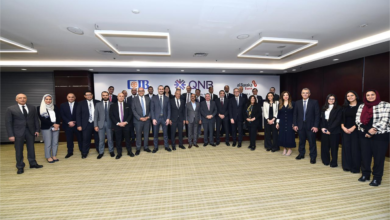
Source: Euromoney
Egypt is increasingly establishing itself as an attractive investment destination for export-oriented manufacturing, Government reforms, alongside bank financing for commercial infrastructure, are enabling the country to benefit from the ongoing restructuring of global supply chains.
“The strongest investment case is in export-oriented, foreign-currency-generating sectors such as ready-made garments and textiles, food and agribusiness processing, building materials and pharmaceuticals,” says Islam Zekry, Group Chief Finance and Operations Officer and Executive Board Member at Egypt’s Commercial International Bank (CIB).
Financing the Foundations of Industrial Growth
Commercial banks have played a pivotal role in financing the infrastructure developed to attract foreign manufacturers to Egypt.
CIB, the National Bank of Egypt, Banque Misr, Arab African International Bank, Banque du Caire, Abu Dhabi Commercial Bank Egypt and Suez Canal Bank have provided long-term financing, both individually and collectively, for the development of industrial and port infrastructure in the Suez Canal Economic Zone. This includes a joint EGP 10 billion loan agreed in 2021. Beltone Leasing and Factoring has also established a presence in the zone to offer financing solutions to investors.
The Suez Canal Economic Zone (SCZone) was established in its current form in 2015 to accommodate both established and emerging industries and leverage Egypt’s proximity and accessibility to high-value international markets.
In April 2026, Prime Minister Mostafa Madbouly announced that the SCZone had reached 200 operational factories, attracting investors from more than 28 countries, with total investments amounting to approximately $6.5 billion.
New inflows of foreign capital and the expansion of local manufacturers’ operations are creating additional lending and transaction banking opportunities for financial institutions.
Standard Bank Group, Africa’s largest bank by assets, opened a representative office in Egypt in November 2025, citing opportunities to strengthen trade and investment flows between Egypt, sub-Saharan Africa and the Middle East.
Strengthening Project Bankability
Whether investors are entering the Egyptian market for the first time or already have an established presence, banks evaluate project bankability from multiple perspectives to mitigate excessive risks.
“Sustainable export-oriented manufacturing projects are distinguished by their ability to capitalise on Egypt’s competitive advantages across key factors,” Zekry says.
These advantages include Egypt’s modern industrial infrastructure, as well as its diverse business incentives and trade agreements.
To secure financing from banks, manufacturers benefit from establishing relationships with creditworthy international buyers who make payments in hard currency, while demonstrating their ability to generate local added value through employment opportunities and horizontal integration.
For businesses that meet these criteria, banks can customise financing and advisory services to their needs.
“CIB offers specialised financial and non-financial packages designed to assist sound projects in overcoming cross-border trade friction, assessing key risk indicators, deciding on the lending structure and providing advisory reforms on the company’s management,” Zekry says.
Some exporters have identified complex local bureaucratic procedures as a factor that increases the time and cost required to execute transactions.
CIB, for example, “partners with key state bodies, such as the General Authority for Investment and Free Zones and the SCZone, to streamline investment procedures and approvals, and connect expanding businesses with ideal partners and localised opportunities,” Zekry says.
The evolving requirements imposed on exporters by international regulators represent another dimension of the guidance businesses need.
Manufacturers exporting goods covered by the European Union’s Carbon Border Adjustment Mechanism (CBAM) must also comply with its requirements, following the start of its definitive regime in January 2026, While the obligations apply to EU importers, Egyptian producers face demands to provide verified emissions data and growing pressure to reduce the carbon intensity of their products.
A binding directive issued by the Central Bank of Egypt in June 2025 requires banks to report on exporting clients subject to CBAM, with implementation scheduled to begin in the second half of 2026. This places greater emphasis on lenders’ capacity to evaluate their clients’ exposure to carbon-related trade requirements.
Managing the Risks of Expansion
Disruptions in the Strait of Hormuz have contributed to an increase in Suez Canal traffic by redirecting tanker movements, although security risks remain in the southern Red Sea.
For manufacturers, these disruptions add to a series of shocks that have affected global supply chains since the COVID-19 pandemic in 2020.
Egypt has also been affected by these developments.
Significant currency depreciation and shortages of foreign currency have created obstacles for investors, disrupting trade and restricting expansion.
Consequently, banks deploy various instruments to help investors manage currency and supply chain risks as central components of tailored financial solutions.
Manufacturers operating along newly established export corridors require traditional global transaction banking instruments. Letters of credit can help mitigate payment risks, documentary collections facilitate the exchange of documents against payment or acceptance, while forfaiting can convert export receivables into immediate liquidity.
However, “financing needs are becoming more sophisticated and currency-aware,” Zekry says. “They can be assessed from several angles, including working capital optimisation, structured trade finance, multi-currency cash management, and capex for scale and automation.”
Indeed, achieving sustainable expansion requires medium- and long-term capital expenditure financing to acquire advanced technologies and machinery. Such solutions can enhance and diversify a project’s future export revenue capabilities, while enabling manufacturers expanding their export operations to compete through higher productivity and lower unit production costs.
The diversity of business requirements and changing market demands make banks’ ability to customise financing according to the operating cycles and risk profiles of export-oriented manufacturers increasingly important.
Banks’ capacity to provide the right financial instruments at the right time and on appropriate terms is essential to companies’ ability to secure critical raw materials, export finished products, enter new markets and maintain healthy profit margins.
By improving risk assessment and strengthening cooperation with relevant government bodies, Egypt’s commercial banks can attract more business by helping investors navigate domestic procedures and international trade requirements. Their long-term opportunity lies in supporting manufacturers as their initial investments evolve into sustainable export revenues.
read more