Ambassador Dr. Mohamed Higazy : The US–China–Russia Trilateral Summit in China: A Defining Moment to Test the Future of the International Order and Reshape Strategic Balances

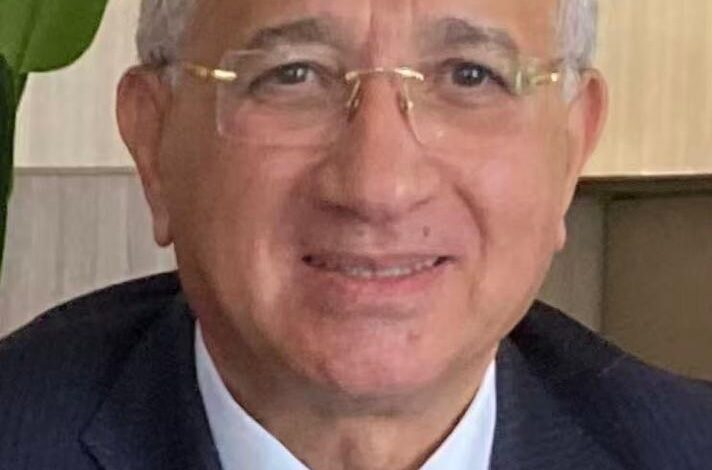
Ambassador Dr. Mohamed Higazy, Former Assistant Foreign Minister, stated that the forthcoming trilateral summit bringing together US President Donald Trump, Chinese President Xi Jinping, and Russian President Vladimir Putin represents a development of considerable significance in the evolution of international relations , Its implications go far beyond a diplomatic meeting between three leaders, opening the door to important possibilities concerning the future of the international order, the management of competition among major powers, and the reshaping of the rules governing global security and stability.
Higazy explained that the summit’s significance stems, first and foremost, from the fact that it would constitute the first direct trilateral meeting bringing together the leaders of the United States, China, and Russia. Collectively, these three countries command exceptional political, economic, military, and nuclear power, while remaining key actors in determining the direction of the international system over the coming decades. The very convening of such a meeting therefore carries an important political message: direct channels of dialogue among major powers remain indispensable, even amid sharp disagreements and conflicting interests and strategic priorities.
He noted that nuclear weapons, non-proliferation, and the reduction of nuclear arsenals are expected to constitute some of the summit’s most important areas of discussion, particularly following the expiration of the New START Treaty between the United States and Russia in February, which resulted in the absence of the principal bilateral constraints governing the world’s two largest nuclear arsenals. This has heightened concerns about the emergence of a new nuclear arms race, extending beyond the development of conventional military capabilities to encompass strategic weapons and advanced military technologies.
He added that the American ambition to establish a new framework for nuclear arms control, incorporating China alongside Russia, faces significant objective challenges. These include the substantial disparity in the size of the respective nuclear arsenals and China’s position that the primary responsibility for nuclear disarmament rests with the two countries possessing the largest nuclear stockpiles. This makes negotiations over a new trilateral agreement particularly complex, requiring confidence-building measures and the establishment of balanced and verifiable commitments.
Higazy emphasized that the summit’s importance extends beyond the nuclear issue to encompass the leaders’ ability to manage strategic differences and define the boundaries between competition and cooperation. This is particularly relevant in light of the Russia–Ukraine war, military developments in the Middle East, and the conflict involving Iran, as well as the implications of these crises for energy security, international trade, maritime routes, and global supply chains.
He pointed out that China stands to benefit from hosting the meeting by reinforcing its position as a major international power capable of bringing competing parties together and opening channels of dialogue on major global issues. Russia, meanwhile, seeks to strengthen its standing as an indispensable participant in international security arrangements, while US President Donald Trump views the meeting as an opportunity to explore the possibility of reaching direct understandings with Moscow and Beijing on arms control and international security.
Higazy stressed the importance of avoiding exaggerated expectations of immediate outcomes or historic agreements emerging from a single meeting. Differences among the three countries remain profound, and their strategic interests are not necessarily aligned. Reaching understandings on nuclear weapons requires lengthy technical and political negotiations, alongside effective mechanisms for monitoring, verification, and compliance. Nevertheless, the summit’s real value may lie in launching a new process of strategic dialogue and restoring the importance of direct diplomacy in managing international crises.
In conclusion, Higazy affirmed that the world is facing a significant moment that will test whether major powers can move away from the logic of open confrontation and zero-sum competition towards a framework of mutual understanding and the management of shared interests. The success of the summit should not be measured solely by the agreements that may emerge from it, but also by its ability to establish the foundations for more stable international relations and prevent the world from sliding into broader confrontations or arms races that may prove difficult to contain.
He further added that what should be of particular concern to the Arab region, and Egypt specifically, is that any new understandings among major powers will have direct implications for regional security, the future of the Middle East, energy security, maritime routes, and the balance of international influence. This makes it imperative to strengthen the Arab world’s presence in shaping international arrangements, rather than remaining merely on the receiving end of understandings reached among the major powers.
read more