Egyptian Foreign Minister to MENA : No military solutions to regional crises as Egypt steps up diplomatic efforts to de-escalate tensions

CAIRO- (MENA) :
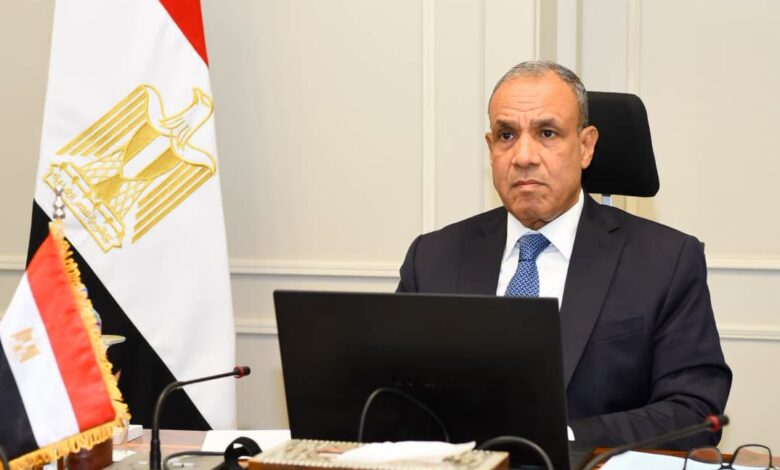
Egyptian Minister of Foreign Affairs, International Cooperation and Egyptian Expatriates Badr Abdelatty stressed that regional de-escalation has become indispensable amid the critical and dangerous circumstances facing the world and the Middle East, underscoring that military solutions cannot resolve ongoing crises.
In an interview with the Middle East News Agency (MENA) following his return from Paris, where he participated in the G7 ministerial meetings, Abdelatty outlined Egypt’s position on regional crises, efforts to ease tensions, food security and safeguarding Red Sea security and freedom of navigation.
He said Egypt had clearly conveyed its vision on the need for de-escalation during its participation in the G7 meetings, both in his address at a session dedicated to the Middle East and through several bilateral meetings held on the sidelines
>> What were the circumstances surrounding Egypt’s participation in the G7 meetings in Paris?
– Egypt’s participation in the G7 meetings hosted by Paris came at the invitation of the French presidency, reflecting the distinguished relationship between President Abdel Fattah El Sisi and French President Emmanuel Macron. It followed the Egyptian president’s participation in the group’s summit in Evian last June.
The ministerial meetings provided an important platform to present Egypt’s perspective on developments across the Middle East, particularly amid growing concerns over the possible resumption of military operations and renewed escalation.
During my participation, both in my address at the Middle East session and in the several bilateral meetings I held on the sidelines, I made Egypt’s position clear: there are no military solutions to crises, and regional de-escalation is indispensable given the critical and dangerous circumstances facing the world and the region.
>> What were the main issues discussed during your participation in meetings held on the sidelines of the G7 meeting?
– “My meetings generally focused on mobilising and intensifying joint efforts to reduce tensions, contain crises and prevent their escalation.”
“I stressed that there are no military solutions to the current crises and that negotiations are the only way to address disputes and resolve conflicts. This principle must be conveyed to all parties and applies to every crisis in the region without exception, particularly those involving Iran, Yemen, Sudan and Palestine.”
“I also emphasised that food security is a fundamental pillar of international peace and stability. I highlighted the impact of conflicts, geopolitical tensions, climate change and disruptions to global supply chains on food prices, as well as the growing burdens these developments place on developing countries.”
“In this regard, I outlined Egypt’s national efforts to strengthen food security through increasing agricultural production, diversifying import sources and developing storage and distribution systems.”
“I also stressed the need to ensure the regular flow of food commodities and agricultural production inputs, and to safeguard freedom of navigation through vital maritime routes.”
“Egypt rejects the use of food as a tool of political pressure or a weapon in conflicts. I also underscored the importance of protecting civilians and agricultural facilities and ensuring the delivery of humanitarian assistance.”
>> How did participating countries respond to Egypt’s position at the G7 meetings?
-“I sensed broad agreement among the participating countries with the positions advocated by Egypt. My meetings included foreign ministers from Germany, Canada, France, the United States, Britain, South Korea and Ukraine, as well as the European Union’s High Representative for Foreign Affairs and Security Policy, among others.”
“I also held an important trilateral meeting with Qatari Prime Minister and Foreign Minister Sheikh Mohammed bin Abdulrahman Al Thani and Saudi Foreign Minister Prince Faisal bin Farhan. The meeting took place following the Qatari prime minister’s recent visit to Washington, where he met with senior US administration officials.”
“The trilateral meeting reflected a convergence of views on the need to prioritise political solutions and rule out military escalation, both regarding the crisis with Iran and the situation in Yemen. We stressed the importance of dialogue and diplomacy and the ineffectiveness of military solutions.”
“There was also full agreement on the need to safeguard freedom of maritime navigation in the region and avoid any escalatory steps that could disrupt it.
We also stressed the importance of working towards sustainable regional security arrangements that preserve Arab national security while taking into account the mutual concerns of regional and international parties.”
>> What is Egypt’s position on the crisis in Yemen?
– “As I mentioned, Egypt’s position on the crisis in Yemen is firm and unchanged. It is based on the importance of preserving Yemen’s unity and sovereignty, safeguarding its national institutions and strengthening them.”
“At the same time, we believe the crisis must be addressed at its roots through a Yemeni-owned dialogue that ends the suffering of the Yemeni people and meets their legitimate aspirations for stability and development.”
This should also help establish sound neighbourly relations, while ensuring that the security and stability of brotherly countries and freedom of navigation in the Red Sea are not threatened.
“I reiterate the importance of de-escalation and focusing on political solutions and dialogue, as there are no military solutions to the crisis in Yemen.”
>> Did you present an Egyptian vision on developments in the Horn of Africa?
-“Certainly. My several meetings addressed developments in Sudan and Somalia, as well as Red Sea security, given the close links between these issues and their direct impact on Egypt’s national security.”
“I stressed that no country should be allowed to impose its will by force on other countries in the region through unilateral and escalatory policies that disregard the interests of neighbouring states and the principles of international law.”
These principles include good-neighbourly relations, non-interference in the internal affairs of states and refraining from supporting illegitimate entities within them.
Regarding Sudan in particular, I reaffirmed Egypt’s support for Sudanese national institutions and for preserving the country’s unity and territorial integrity.
“I also stressed the importance of neighbouring countries respecting Sudan’s sovereignty and security and refraining from interfering in its internal affairs. Regional and international efforts must be intensified to reach a comprehensive political settlement that ends the crisis and fulfils the Sudanese people’s aspirations for security and stability.”
As for Somalia, I reaffirmed Egypt’s full support for its unity, sovereignty and territorial integrity, as well as efforts to build its national institutions.
Egypt categorically rejects any unilateral measures that undermine Somalia’s unity or territorial integrity. We also support efforts to build the capacities of Somali personnel to extend state authority across the entire Somali territory.
read more
Egyptian Foreign Minister Reopens the Historic Premises of Egypt’s Embassy in Libya