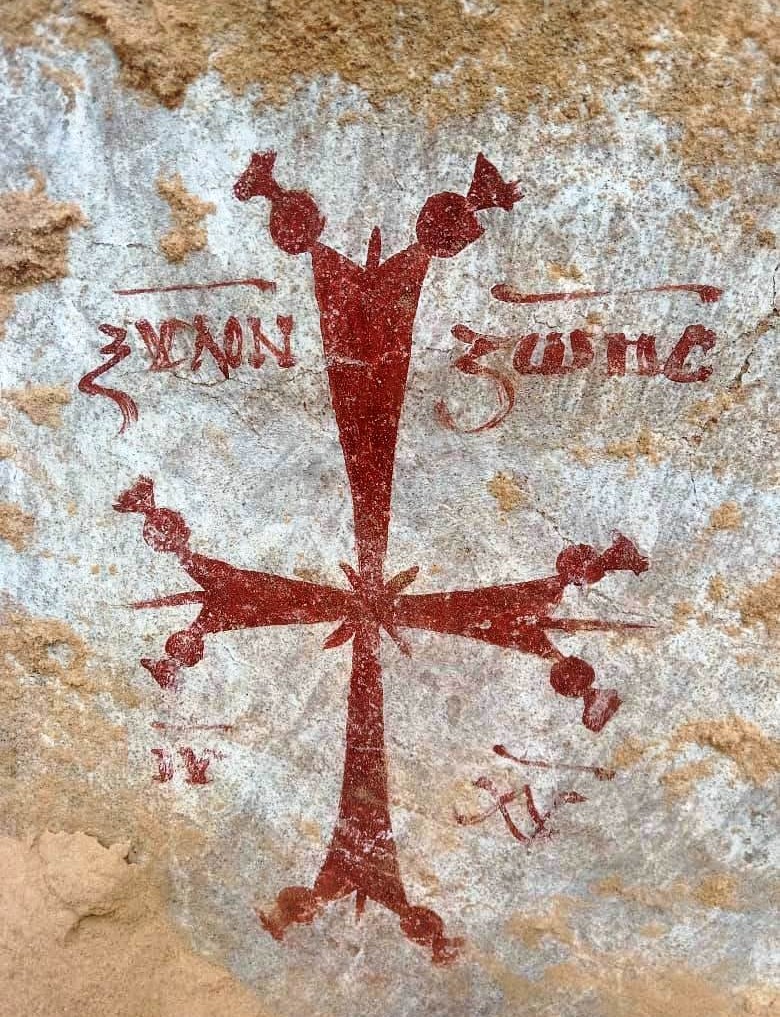
An Egyptian archaeological mission jointly conducted by the Supreme Council of Antiquities and the Faculty of Archaeology at Cairo University has uncovered the remains of an ancient monastic building dating back to between the 4th and 6th centuries AD. The discovery was made in the buried monasteries area of Wadi El Natrun in Beheira Governorate—one of the most Important centers for the emergence of monasticism in Egypt and worldwide.
This discovery represents a significant milestone in understanding the development of early monastic life, offering new insights into the architectural planning of the earliest monasteries in this historically and spiritually significant region.
Architectural Features of the Discovered Monastic Complex
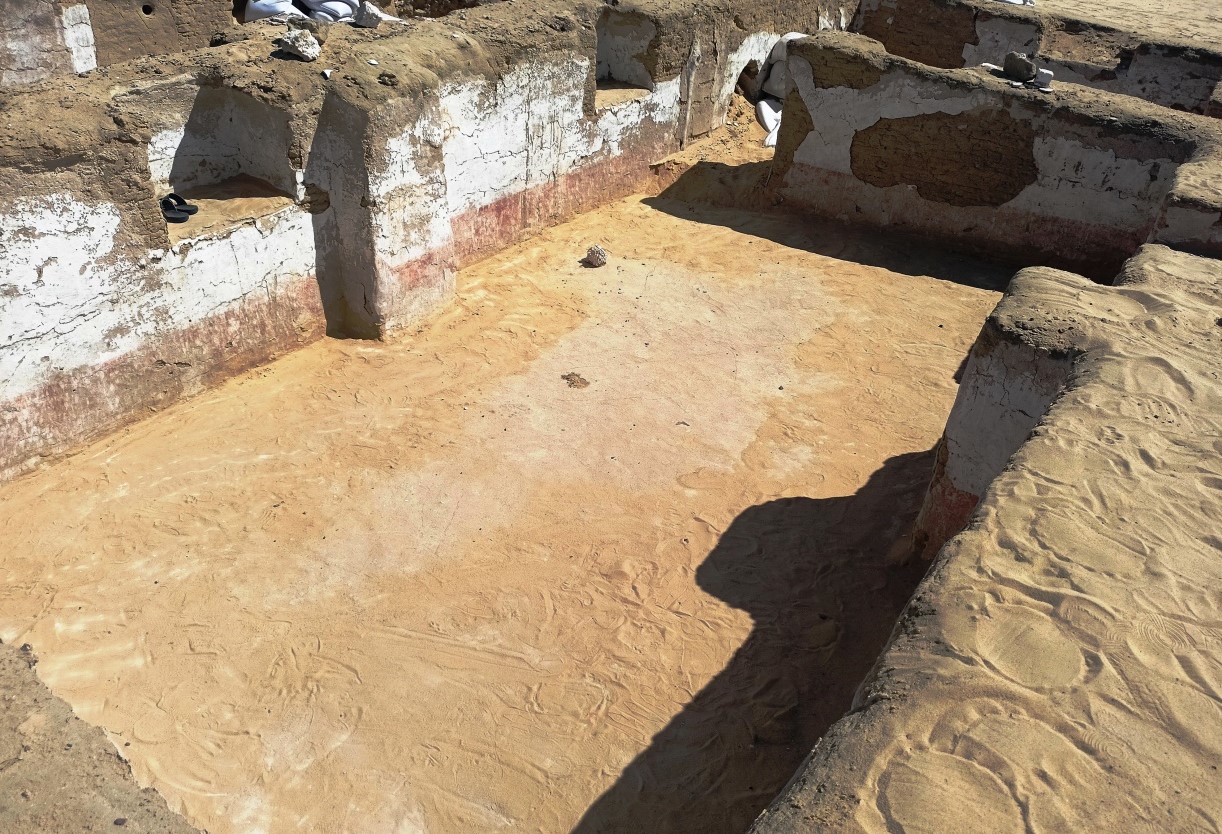
The unearthed structure spans approximately 2,000 square meters and was constructed using mudbrick. The outer walls reach a thickness of up to one meter, while the internal walls range between 60 and 70 centimeters in thickness, with heights varying from 1.80 to 2.20 meters—reflecting the construction techniques of the period.
At the heart of the complex lies an open central courtyard, forming the core of the layout. Surrounding it are multiple architectural units, including secondary courtyards that open onto monks’ cells (qelaly), which vary in shape and size between square and rectangular forms, indicating functional diversity within the monastery.
Excavations also revealed a series of service annexes located in the western section of the building, including fully equipped kitchens, ovens, and storage areas for provisions—offering valuable insight into the daily life and self-sustaining nature of early monastic communities.
Burials and Coptic Inscriptions Document Monastic Life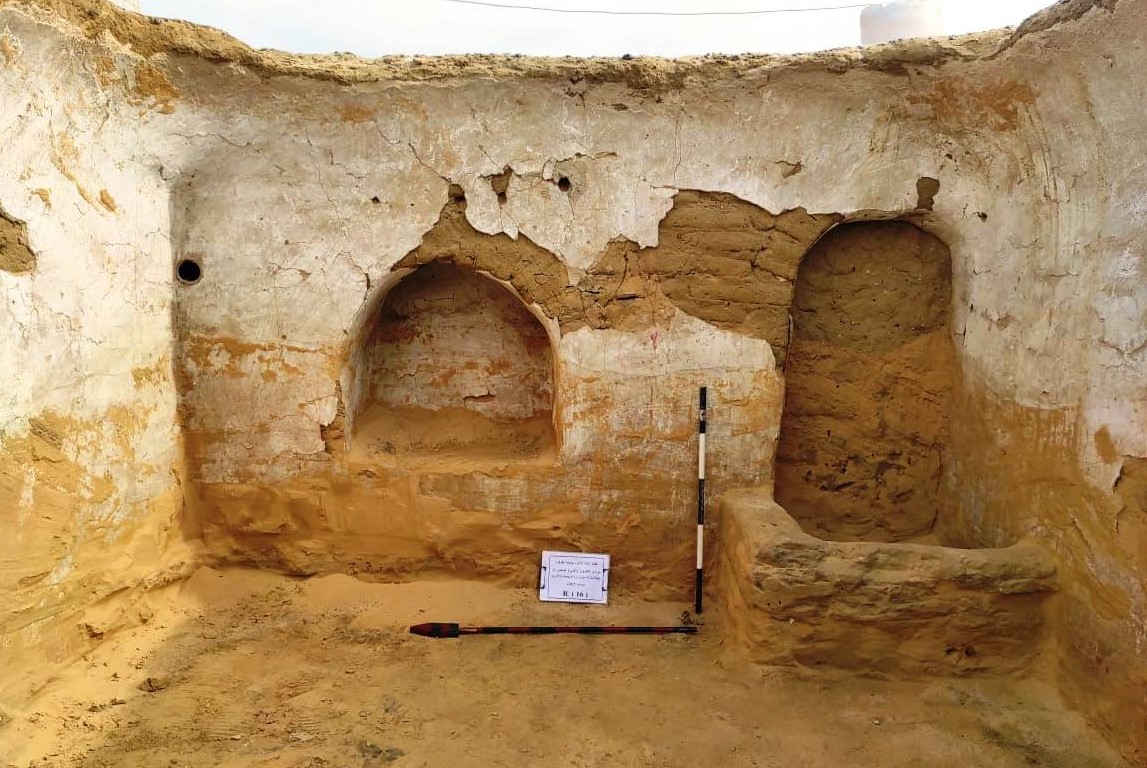
Archaeological work further uncovered a number of burial sites the structure, containing human skeletal remains believed to belong to monks of the monastery. This finding highlights the funerary dimension closely associated with monastic life during that period.
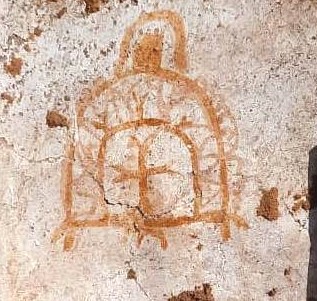
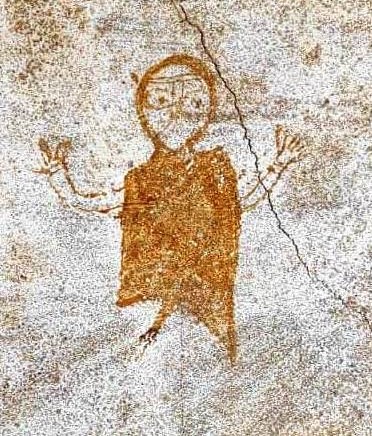
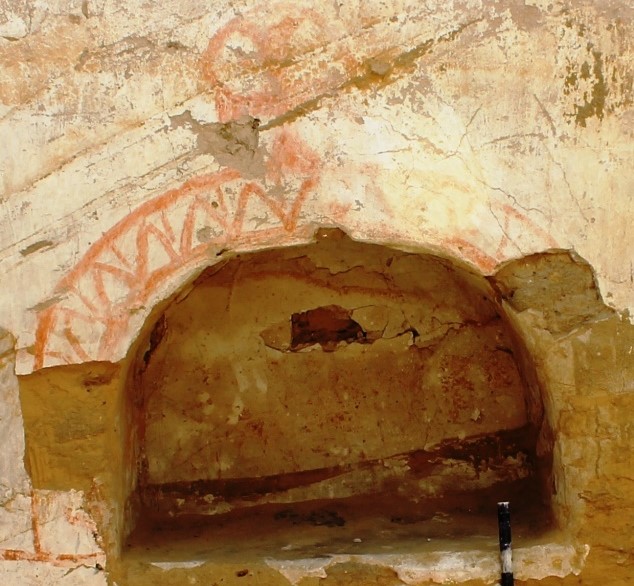
Architectural studies also revealed the use of diverse roofing systems, including vaults and domes constructed from mudbrick. The walls were coated with a layer of white plaster and adorned with mural paintings featuring crosses, palm trees, and a variety of geometric and vegetal motifs.
Among the most significant finds are Coptic inscriptions bearing the names of monks who once resided in the monastery, alongside religious texts invoking mercy and forgiveness. These inscriptions play a crucial role in dating the structure and documenting the spiritual and daily life of its inhabitants.
Officials: Discovery Enhances Egypt’s Religious and Cultural Tourism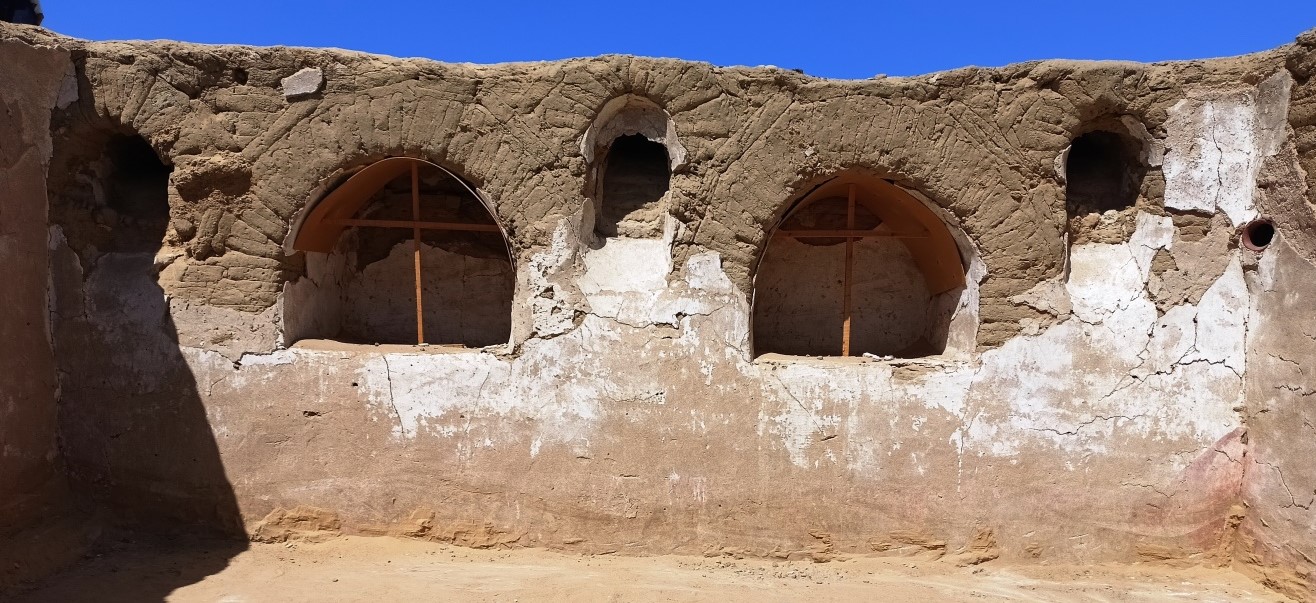
Sherif Fathy, Egypt’s Minister of Tourism and Antiquities, expressed his satisfaction with the discovery, emphasizing that it represents a valuable addition to the understanding of the origins of monasticism in Egypt, which later spread from Egypt to the rest of the world.
He noted that Wadi El Natrun remains one of Egypt’s most important spiritual and historical centers, and that this discovery further strengthens its position on the global map of religious and cultural tourism.
He also highlighted the ministry’s commitment to integrating Coptic heritage sites into comprehensive tourism programs, particularly within the Holy Family Trail, in order to enrich the visitor experience and showcase the diversity of Egypt’s cultural heritage.
Egyptian Expertise and Scientific Documentation
For his part, Hesham El-Leithy, Secretary-General of the Supreme Council of Antiquities, stated that the discovery comes ongoing efforts to uncover and preserve Egypt’s buried heritage, noting the growing attention given to Coptic sites in recent years.
Mohamed Sami Abdel Sadek, President of Cairo University, affirmed that the excavation was carried out entirely by Egyptian hands using the latest scientific methods, reflecting strong cooperation with the Ministry of Tourism and Antiquities.
Meanwhile, Mohsen Saleh, Dean of the Faculty of Archaeology, confirmed that the mission has developed a comprehensive plan to document and conserve the discovered structure according to the latest scientific standards, taking into account the nature of mudbrick construction and sustainability principles.
A Model of Early Monastic Architecture
Diaa Zahran, Head of the Islamic and Coptic Antiquities Sector, explained that the building represents a complete model of early monastic architecture, as it retains most of its original architectural elements.
Mohamed Taman added that the discovery provides new dimensions for understanding the planning of early monasteries, particularly due to the presence of internal burial areas reflecting the nature of monastic life.
Concluding the statements, Yasser Ismail Abdel Salam, Head of the archaeological mission, emphasized that the discovery constitutes important material evidence supporting historical accounts of the origins of monasticism in Wadi El Natrun. He noted that the structure reflects a transitional phase in the evolution of monastic architecture—from individual hermit cells to large, organized monasteries.
Wadi El Natrun: A Global Hub of Monasticism
This new archaeological discovery reaffirms the exceptional status of Wadi El Natrun as one of the world’s most significant centers of monasticism. It also strengthens Egypt’s ongoing efforts to promote cultural and religious tourism while highlighting the richness and diversity of its historical heritage.
read more
“Vibrant Artery”: Egypt’s 56.5km Monorail Redefines African Urbanism