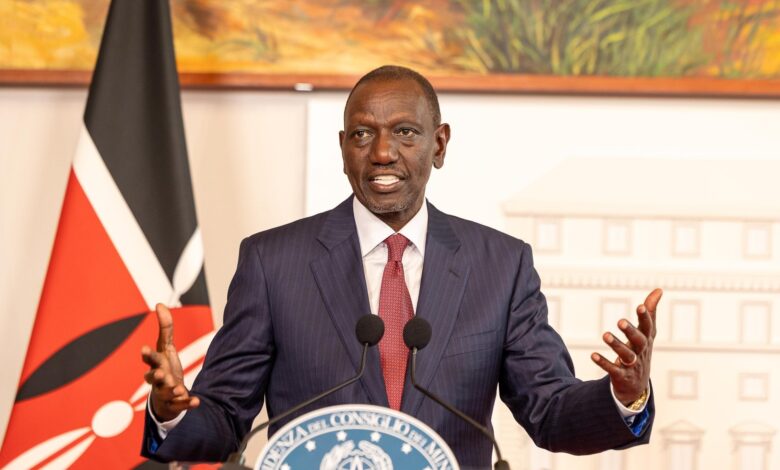
A diplomatic and economic Friction has ignited across East Africa following remarks by Kenyan President William Ruto regarding the region’s surging fuel costs, Speaking at a gathering in Karen, Ruto sought to justify Kenya’s record-high fuel prices—which have seen petrol climb to KSh206.97 per litre—by framing the country as a middle-income vanguard that outpaces its “least developed” neighbors in both economic complexity and infrastructural scale.
This narrative, intended to soothe domestic frustration, has instead triggered a sharp Geopolitical Rebuttal from Tanzania, exposing a widening Ideological Schism regarding regional growth and fiscal responsibility.
President Ruto’s defense centers on the claim that Kenya’s advanced economic standing necessitates steeper fuel taxes to maintain a road network he described as superior to any in the region. By asserting that Kenya possesses over 20,000 kilometers of asphalt roads, Ruto positioned the fuel levy as a vital Fiscal Anchor for national development. However, this characterization of neighboring states as trailing behind sparked an immediate Systemic Disputation from Dar es Salaam.
Tanzanian Works Minister Abdallah Ulega countered the assertion, clarifying that Tanzania is also a lower-middle-income nation and presenting statistics that directly challenge Kenya’s claims of regional dominance.
Ulega noted that Tanzania’s own tarmac network reaches 16,000 kilometers, arguing that the regional total makes Ruto’s claims of singular superiority a Statistical Fallacy.
This exchange highlights a profound Structural Impasse within the East African Community as nations grapple with the fallout of the global energy crisis.
While Kenya now sits at the apex of the region’s fuel price rankings, neighbors like Uganda and Tanzania maintain substantially lower rates, averaging around KSh189 and KSh185 respectively. This price gap has created a Market Distortion that undermines Ruto’s attempt to link high costs exclusively to middle-income status. Critics argue that the disparity is less about economic “maturity” and more about differing Monetary Strategies and subsidy.
read more
“Strategic Altitude”: Kenya Airways Capitalizes on Global Airspace Reconfiguration