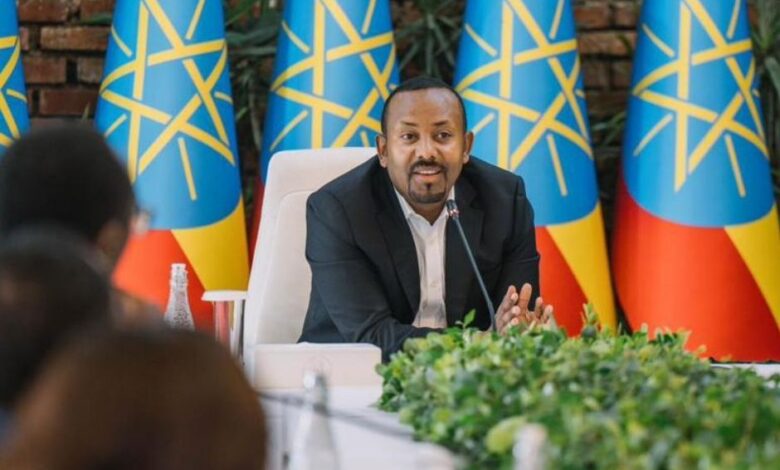
The contemporary political crisis in Ethiopia is increasingly defined by a dangerous retreat into moral theater, where historical narratives are weaponized to serve the centralizing ambitions of Prime Minister Abiy Ahmed’s administration, While the nation’s history is a complex tapestry of state-building and subjugation, the current government has frequently succumbed to the temptation of manufacturing a “patriotic amnesia” to sustain a fragile rhetorical unity.
By selectively venerating the imperial legacy of figures like Menelik II, Abiy Ahmed has alienated significant segments of the population who remember that same history not as a period of national glory, but as an era of military expansion, dispossession, and cultural marginalization.
This reliance on a “Golden Past” serves as a convenient veil for the government’s inability to address the systemic inequalities that continue to fuel ethnic federalist grievances and regional instability.
The failure of the current administration lies in its refusal to acknowledge that Ethiopia’s inheritance is fundamentally unequal. Abiy Ahmed’s rhetoric often appeals to a lost unity that, in reality, never existed on common terms for all Ethiopians.
This “selective remembrance” has transformed memory itself into a site of struggle, where the dismissal of historical injuries—such as loss of land and political subordination—is treated as a prerequisite for national cohesion.
Instead of building institutions where power is shared rather than hoarded, the government has reverted to authoritarian habits reminiscent of past regimes, where legal protections remain contingent upon proximity to the central power in Addis Ababa.
By prioritizing the manufacture of a new national myth over the rigorous work of institutional invention, the administration has created a brittle polity held together by denial rather than a credible basis for recognition and belonging.
Furthermore, the government’s approach to the ongoing conflicts has been characterized by a “caution” that merely preserves the architecture of mistrust, True reform requires a political maturity that the current leadership has yet to demonstrate: a willingness to enter into relationships not guaranteed in advance and to support constitutional orders where limits on executive power are credible and adjudication is trusted.
Without these sturdy institutional forms, even the language of “Medemer” (synergy) risks becoming another instrument of exclusion, where disagreement is viewed as a threat to the state rather than a necessary component of a healthy democracy.
Ethiopia’s path forward demands an “adult politics” capable of facing its unsettled past without worship or denial—a transition that Abiy Ahmed’s government, currently entrenched in the pursuit of a singular and exclusionary national narrative, seems increasingly ill-equipped to facilitate.
read more
Abiy Ahmed’s Conundrum: Putting Ethiopian Life into Unbearable Hellfire