Mali’s military-led government has announced a massive multi-million-dollar bounty targeting the most prominent militant leaders in the Sahel, a move that highlights the immense pressure facing state authorities as armed insurgencies rapidly intensify across the country.
In an official declaration signed by Security and Civil Protection Minister Major General Daoud Aly Mohammedine, the state offered a reward of 2 billion CFA francs, equivalent to approximately $3.55 million, for information leading to the capture, arrest, or neutralization of Iyad Ag Ghaly, the veteran jihadist figure who commands Jama’at Nusrat al-Islam wal-Muslimin (JNIM), al-Qaeda’s formidable affiliate in the region.
Corresponding bounties were also issued for other high-profile commanders, including Amadou Koufa, a vital JNIM operational chief, and Alghabass Ag Intalla, a prominent Tuareg separatist leader accused of orchestrating aggressive strikes against Malian sovereignty.
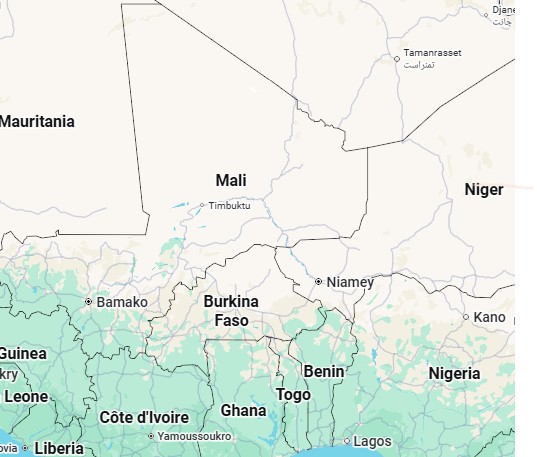
This sweeping legal maneuver follows what security analysts describe as the most devastating military setback the Malian state has encountered in years. In late April 2026, a series of highly orchestrated, simultaneous offensives struck multiple strategic locations across Mali, breaching heavily fortified zones in Kidal, Gao, Mopti, and even the vital military garrison town of Kati near the capital, Bamako.
The operation proved highly unprecedented, signaling an overt, operational alliance between ideological jihadist factions and secular Tuareg separatist movements under the newly unified Azawad Liberation Front (FLA).
This combined front succeeded in capturing critical military installations, temporarily isolating vital transport hubs, and dealing a severe blow to the ruling junta’s leadership by claiming the life of Defense Minister Sadio Camara.
The severe escalation punctures the long-standing narrative of stabilization maintained by the military junta since it assumed power. Despite the complete withdrawal of Western forces and the integration of Russian-backed Africa Corps mercenaries, large swathes of northern and central Mali continue to slip from state control as insurgent networks successfully weaponize local grievances and exploit weak border governance.
For Mali and its immediate neighbors within the Alliance of Sahel States, the expanding footprint of this unified insurgency has evolved from a localized territorial dispute into an existential macroeconomic threat, leaving the private sector crippled by transport blockades and placing the central government under an unprecedented state of strategic siege.
read more
French-Backed Contractor Exits Mali’s Largest Gold Mine Amid 600 Job Cut