On the Political and Economic Repercussions of a U.S. / Israeli War on Iran


Prof. Dr. Hassan Bashir Mohammed Nour
It is evident that the declared or undeclared objective of any large-scale military confrontation between the United States and Israel on the one hand and Iran on the other would be to weaken the Iranian regime or seek its overthrow. However, achieving such an objective would depend largely on the regime’s ability in Tehran to endure and prolong the conflict—a capacity that should not be underestimated given the complexities of Iran’s internal structure and its extensive regional entanglements.
The Iranian economy has suffered significantly since the reimposition of U.S. sanctions in 2018 following the withdrawal of President Donald Trump’s administration from the nuclear agreement. Iran’s GDP contracted cumulatively during the period from 2018 to 2020, while annual inflation exceeded 40 percent in several years. The Iranian rial lost a substantial portion of its value, with the exchange rate in the parallel market declining from approximately 40,000 rials per U.S. dollar prior to 2018 to more than 500,000 rials per dollar during certain periods in 2023 and 2024. Youth unemployment has exceeded 20 percent in some estimates. These indicators contributed to widespread waves of protest in 2019 and 2022, which were met with significant security force responses.
Nevertheless, the Iranian regime possesses structural elements of strength. Iran’s population is approximately 85 million. The regime draws upon a deeply rooted religious and political social base since the establishment of the Islamic Republic in 1979 under the leadership of Ayatollah Khomeini. Iran has also developed significant non-conventional military capabilities, including a missile arsenal estimated in the thousands, with some models having a range exceeding 2,000 kilometers, in addition to an advanced drone program that has played visible roles in several regional conflicts. Tehran is further connected to a network of regional allies in countries such as Iraq, Syria, Lebanon, and Yemen, granting it strategic depth and the ability to respond indirectly.
From a geo-economic perspective, the risks of a large-scale war in the Gulf are substantial. The region surrounding the Arabian Gulf produces approximately 20 percent of total global oil output, roughly 20 million barrels per day out of a global production level of about 100 million barrels per day. Between 17 percent and 20 percent of global seaborne oil trade passes through the Strait of Hormuz, in addition to a significant share of liquefied natural gas trade, particularly from Qatar, which is among the world’s largest LNG exporters with export capacity exceeding 75 million tons annually. Any prolonged disruption to these flows could drive oil prices up by tens of dollars per barrel, as seen in previous crises, and raise gas prices in Asia and Europe by 30 to 60 percent depending on the scale and duration of the disruption.
The repercussions would not be confined to energy markets. Global supply chains would be affected, along with increased shipping and maritime insurance costs. Insurance premiums for tankers operating in conflict zones often multiply several times compared to normal conditions. Aviation, tourism, and investment sectors in Gulf countries would also be impacted. Revenues from vital maritime corridors such as the Suez Canal could decline due to reduced vessel traffic or rerouting.
Politically and security-wise, war could ignite latent tensions within Iran itself. Persians constitute approximately 60 percent of the population, while Azeris account for between 15 and 20 percent, Kurds about 10 percent, in addition to Arabs, Baloch, and other groups. In the context of a prolonged war, separatist or protest movements could intensify. The conflict could also expand into already fragile regional arenas such as Iraq, Syria, and Yemen. Any escalation might place neighboring countries such as Turkey, Pakistan, or Azerbaijan before complex security calculations, potentially triggering a broader wave of instability.
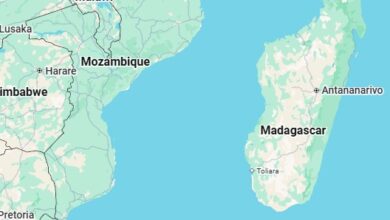
The consequences of such a conflict would not stop at the Levant and the Gulf. They could extend to countries already suffering from internal wars, such as Sudan. Sudan, which has been experiencing war since April 2023, faces one of the world’s worst humanitarian crises, with more than 12 million people displaced or seeking refuge according to United Nations estimates, alongside severe economic contraction and declining public revenues. Any significant rise in global fuel and food prices would intensify pressure on public finances and citizens’ livelihoods. Moreover, a major crisis in the Gulf could divert international political, media, and humanitarian attention away from Sudan, weakening aid flows. Regional instability could also expand smuggling networks across the Red Sea and the Horn of Africa, including arms and gold trafficking, thereby exacerbating Sudan’s internal fragility.
The danger of a comprehensive war lies in the absence of a clear vision for the “day after.” Overthrowing a regime that has been in place for more than 45 years without a coordinated and agreed-upon alternative could open the door to a wide power vacuum, particularly in a country the size of Iran, whose territory exceeds 1.6 million square kilometers. Given the ideological nature of the regime and its transnational networks, various forms of resistance or asymmetric conflict could persist even if central leadership were to change. The positions of major powers such as Russia and China would remain decisive, whether through formal stances in the UN Security Council or through indirect support shaped by strategic interests in a region that represents one of the world’s most critical energy hubs and maritime corridors.
Based on the above, any broad military escalation would not constitute an isolated event but rather a turning point capable of reshaping regional and international balances for many years. The direct economic cost could amount to hundreds of millions of dollars per day, while the indirect costs to stability and development in a region already marked by deep structural fragility would be far greater.